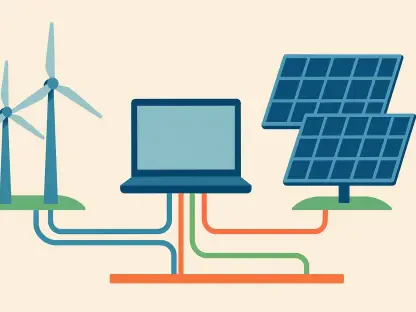

The Korea Industrial Complex Corporation launched the Measurement, Reporting, and Verification platform in June to help firms transition away from inefficient spreadsheet-based accounting. As the global regulatory landscape shifts toward strict environmental transparency, South Korean exporters find themselves at a critical juncture where manual data entry no longer suffices. Major trading partners, particularly within the European Union, are demanding granular information regarding the carbon footprint of imported goods, ranging from steel to semiconductors. This systemic shift is not merely an administrative hurdle but a fundamental transformation in how industrial competitiveness is defined on the world stage. Local manufacturers must now prove their sustainability credentials with the same precision they apply to quality control. Failure to provide accurate, real-time emissions data carries the risk of financial penalties or exclusion from overseas markets. Consequently, the push for digital carbon management has evolved into a vital strategy for long-term viability.
Global Regulatory Shifts and the Compliance Challenge
Impact of International Carbon Border Taxes
The implementation of the Carbon Border Adjustment Mechanism has fundamentally altered the trade dynamics between South Korea and international markets. Under these regulations, exporters in energy-intensive sectors like steel and chemicals are required to report the direct and indirect emissions embedded in their products. This requirement forces companies to look beyond their own operations and investigate the environmental impact of their entire upstream supply chain. The complexity of gathering this data is immense, as it involves coordinating with hundreds of suppliers who may not have sophisticated monitoring systems. Without a standardized digital framework, the risk of data inconsistency remains high, which can lead to disputes during the verification process. South Korean firms are now establishing robust internal protocols that can withstand the scrutiny of international auditors while ensuring that their cost structures remain competitive despite the added burden of carbon reporting.
Challenges in Supply Chain Data Integrity
Beyond immediate logistical hurdles, the financial implications of carbon-related trade barriers are becoming clear for domestic industries. As full financial obligations for emissions reporting begin to take effect from 2026 to 2028, the cost of carbon certificates will depend on the efficiency of manufacturing processes. Companies that fail to optimize energy consumption or source cleaner raw materials will face a direct hit to their profit margins when exporting to major economies. Furthermore, other nations are observing these trends, suggesting that similar carbon-intensity standards could soon be adopted globally. This reality creates a sense of urgency for exporters to adopt advanced analytics and automated reporting tools. By integrating carbon accounting into enterprise resource planning systems, firms can gain a clearer picture of where emissions hotspots exist and implement targeted reduction strategies that align with both domestic goals and international mandates.
Technological Integration and Future Resilience
Empowering Small and Medium Enterprises
Small and medium enterprises often find themselves at a disadvantage when facing rigorous international carbon reporting standards. Unlike large conglomerates that possess dedicated sustainability departments, many smaller manufacturers struggle with limited manpower and a lack of technical expertise in greenhouse gas accounting. To address this gap, national initiatives provided financial subsidies and technical consulting to help these firms upgrade their monitoring capabilities. These programs focus on simplifying the data entry process and providing guidance on how to interpret complex international regulations. By lowering the barrier to entry, these efforts aim to prevent a green divide where only the largest companies can afford to maintain access to overseas markets. The success of the broader export strategy depends heavily on the ability of these smaller suppliers to adapt, as they form the backbone of production chains for major industries where supply chain transparency is now essential.
Advancing Global Digital Standardization
Industry leaders and policy makers recognized that the successful adoption of these standards required a shift in corporate culture toward proactive environmental stewardship. The transition was characterized by a move away from reactive compliance toward the strategic use of carbon data for long-term operational resilience. Companies that prioritized the integration of environmental metrics into their core decision-making processes were able to identify new efficiencies and develop lower-carbon product lines. The focus shifted to refining digital tools to incorporate real-time adjustments based on changing energy mixes. This approach ensured that the industrial sector remained agile. To maintain this momentum, stakeholders emphasized the need for continuous investment in digital infrastructure and the creation of standardized verification hubs to streamline global trade, ensuring that sustainability remained a primary driver of national value.