
Mead and Hunt has been tasked with the engineering and construction of a sophisticated refinery that upgrades raw biogas to meet strict pipeline quality standards. This specific initiative at the Lena Road Landfill in Manatee County represents a critical turning point for Florida’s utility management strategies. By addressing the atmospheric release of methane—a greenhouse gas significantly more potent than carbon dioxide—the project transforms an environmental liability into a high-value commodity. The $50 million investment, entirely funded by Nopetro Energy, underscores a shift toward private-sector-led infrastructure improvements that serve the public good. As construction crews mobilize across the site, the project sets a definitive timeline to reach full operational capacity by 2027. This facility is not merely a waste management tool; it is a foundational piece of a larger regional effort to secure domestic energy independence while simultaneously decarbonizing the heavy-duty transportation sector in the Southeastern United States.
The Partnership: Modernizing Infrastructure through Collaboration
The success of this $50 million undertaking relies on a sophisticated multi-party agreement that aligns the technical strengths of private industry with the long-term waste management goals of the public sector. Nopetro Energy serves as the central pillar of this alliance, acting as the primary owner and operator while providing the necessary capital to bring the vision to fruition. Supporting this effort is Johnson Controls, a global leader in energy solutions, which developed the foundational design and engineering framework. Under a comprehensive 20-year energy savings performance contract, Johnson Controls will also manage measurement and verification services to ensure the plant operates at peak efficiency. This structure allows the county to bypass traditional debt-based funding models, instead relying on Nopetro’s private investment to modernize local utility assets. By integrating these specialized roles, the project minimizes technical risks and ensures the highest standards of safety and production are maintained throughout.
Building on this collaborative foundation, the role of Mead & Hunt as the engineering, procurement, and construction partner ensures that the facility’s physical components are integrated seamlessly with existing landfill operations. Manatee County’s participation is equally vital, as it provides the raw feedstock necessary for gas production while integrating the site into its broader waste-to-wealth strategy. This public-private partnership (PPP) model serves as a template for other municipalities looking to upgrade their energy infrastructure without placing a heavy financial burden on taxpayers. By utilizing specialized expertise from each partner, the project effectively navigates the complex regulatory and technical requirements associated with renewable fuel production. The synergy between these organizations ensures that every stage of development, from initial groundbreaking to full-scale operation, is handled with precision, creating a stable environment for long-term growth and demonstrating the power of shared regional interests in sustainable energy.
Resource Transformation: Generating Clean Fuel and Community Revenue
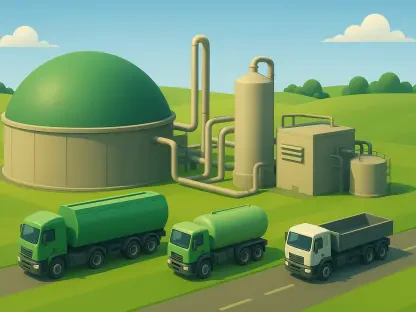
At the heart of the facility is an advanced purification system designed to solve a persistent environmental challenge: the uncontrolled release of methane from decomposing organic material. Landfills are naturally occurring bioreactors where anaerobic bacteria break down waste, producing a biogas rich in methane. While traditional methods often involve flaring this gas—burning it off to reduce its immediate impact—the Nopetro facility captures these emissions directly from the collection system. This raw gas is then subjected to a rigorous series of processing steps to remove moisture, carbon dioxide, hydrogen sulfide, and other impurities. The resulting product is a high-grade, carbon-neutral renewable natural gas that is chemically indistinguishable from conventional fossil-fuel gas. This transformation represents a paradigm shift in resource management, where a hazardous byproduct of human consumption is reclaimed as a fuel for the heavy-duty transportation sectors that are normally difficult to decarbonize.
Stakeholders determined that the successful implementation of the Manatee County project established a viable blueprint for municipal energy transitions across the country. The integration of private financing with public waste resources demonstrated how regions managed to overcome budgetary constraints while meeting aggressive carbon reduction targets. Industry analysts observed that the facility’s move toward full operation in 2027 provided a critical case study in the scalability of landfill gas purification technology. The project successfully offset emissions equivalent to 5.3 million gallons of gasoline annually, while providing the county with a revenue stream reaching up to $2.1 million. Future considerations included the potential for other Florida counties to adopt similar public-private models to reclaim their own waste streams. By prioritizing domestic fuel production, the initiative proved that environmental goals were best achieved through market-based innovations that generated tangible economic value for the community.