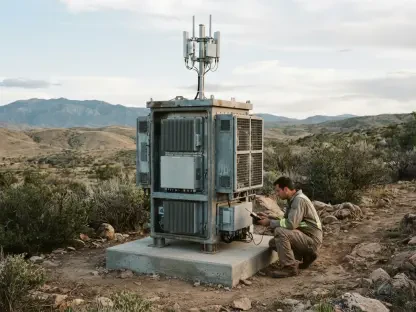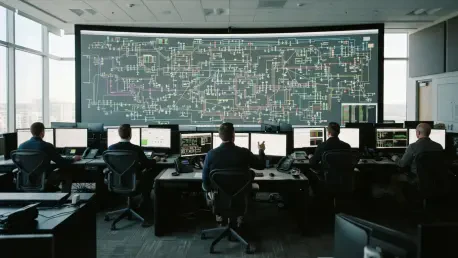

Testing on high-performance hardware shows that the fusion model achieves an inference latency of 1.5 milliseconds per sample, facilitating near-instantaneous alerts for control center operators. The global transition toward digitized electrical power grids has fundamentally redefined the operational paradigms of modern utility providers, pushing them toward a state of constant connectivity and real-time responsiveness. These infrastructures have evolved into sophisticated cyber-physical systems that integrate traditional electrical engineering with high-speed digital communication and automated control logic. While this digital metamorphosis has significantly enhanced situational awareness and the efficiency of energy distribution, it has concurrently expanded the systemic attack surface. Modern control centers now manage a continuous influx of telemetry from geographically dispersed sensors, including phasor measurement units, physical protective relays, and network-layer intrusion detection systems. The interconnected nature of these channels introduces a specific vulnerability where sophisticated cyber adversaries can execute coordinated attacks. By combining digital command spoofing with measurement tampering, attackers can mimic the signatures of natural physical disturbances. When sensor channels are compromised by noise, data dropouts, or intentional manipulation, standard automated classifiers often struggle to differentiate between a legitimate equipment failure and a malicious intrusion. This challenge necessitates the development of advanced fusion architectures capable of evaluating evidence reliability across heterogeneous data streams while adhering to the fundamental laws of electrical power-flow physics.
Evaluation Challenges: Addressing Flaws and Data Leakage
A primary contribution of recent research in this field is the identification of a pervasive flaw in how intrusion detection models are traditionally evaluated. In power system testbeds, data are collected continuously during specific events, such as a line fault or a coordinated cyberattack, producing thousands of highly correlated adjacent time samples. When researchers use standard random sample-level splitting, neighboring time slices from the same physical event end up in both training and testing sets. This creates within-event data leakage, allowing models to achieve high accuracy through simple memorization rather than by learning the underlying principles of cyber-physical anomalies. This statistical oversight often results in a false sense of security for grid operators, as models that appear highly competent in a laboratory setting may fail to generalize when faced with entirely new, unseen disturbance patterns in a live environment. The high temporal correlation means that if a model sees one millisecond of a fault during training, it can easily predict the next millisecond during testing without understanding the physical nature of the fault itself.
Experimental data highlights the severity of this issue, as models that perform well under random splits often fail during more rigorous testing. For instance, a standard classifier might achieve an impressive score under a random split but drop precipitously when subjected to an event-isolated partition where entire events are withheld from training. This performance gap demonstrates that many current models lack true generalizability, as they rely on identifying specific timestamps rather than the relational logic between sensors. The Cross-Modal Evidence Conflict Fusion framework was specifically designed to bridge this gap, showing significantly higher stability and performance under realistic evaluation protocols. By maintaining a robust macro-averaged F1 score even when entire events are isolated, this fusion architecture proves that it is learning the fundamental behavioral signatures of grid disturbances. This shift in evaluation methodology is critical for the implementation of security systems that must operate reliably from 2026 through the end of the decade, ensuring that defenses remain effective against evolving threat actors who specialize in crafting novel attack vectors.
Structural Design: The Specialized Four-Stage Fusion Process
The Cross-Modal Evidence Conflict Fusion framework is structured around four functional stages designed to process disparate data types into a unified decision-making vector. The process begins with specialized representation encoding, which serves as the foundational layer for data interpretation. Rather than flattening the input into a single, unorganized string of values, the model utilizes specialized sub-heads to encode unique features from various sensors independently. This preservation of local spatial identity ensures that the unique characteristics of each monitoring device, from phasor measurement units to discrete control logs, are maintained before they are projected into a shared geometric space for comparison. The model handles a total of 128 dimensions, encompassing 116 continuous physical features and several discrete log vectors. By treating each sensor modality as a distinct source of information, the encoder can capture the nuances of electrical telemetry without losing the context provided by network-layer alerts, creating a more holistic view of the grid’s health.
The second stage focuses on evidence conflict and credibility evaluation, moving beyond simple data aggregation to a more skeptical analysis of sensor input. Recognizing that sensors can be tampered with or suffer from environmental noise, the network calculates a credibility scalar for each data modality. By forming a semantic graph and calculating the distance between embeddings, the model can identify when sensors disagree on the state of the system. This mechanism prevents a compromised or noisy sensor from skewing the final classification, effectively isolating the impact of a single point of failure. A dedicated conflict supervision loss forces the network to associate high cross-modal disagreement with the presence of deliberate cyber intrusions, using a lack of consensus as a diagnostic signal. This approach reflects a sophisticated understanding of modern warfare in the digital domain, where the absence of a unified story from sensors is often a more reliable indicator of an attack than the actual readings themselves. By weighting inputs based on their trustworthiness, the system remains resilient even when a portion of the telemetry has been successfully hijacked or spoofed by an adversary.
Technical Integration: Physics-Consistency Regularization
Unlike many black-box neural networks, the new architecture integrates physical operational constraints directly into its training process to ensure that its conclusions remain grounded in reality. Specialized physics-informed loss functions are applied to the internal embeddings to ensure they align with the fundamental reality of power system operations. These include phase-consistency and frequency-consistency losses, which prevent the model from accepting readings that are physically impossible under the laws of electromagnetics. For example, if one sensor reports a frequency deviation that is mathematically incompatible with the readings of its neighbors, the model identifies this discrepancy as a sign of potential tampering rather than a legitimate physical event. Additionally, protection-logic alignment ensures that physical disturbances are reflected in the appropriate relay and control logs, creating a robust internal check against sophisticated digital spoofing that lacks a corresponding physical footprint.
Applying these constraints at the embedding level has proven far more effective than applying them to raw input data because it allows the laws of physics to guide the learning process from the inside out. This approach enables the fundamental laws of power-system physics to actively shape the internal weights of the neural encoders through backpropagation, creating a model that “understands” the grid it is protecting. By grounding the model in electromagnetics, the system becomes significantly less vulnerable to adversarial mimicry, where attackers try to hide their presence by making malicious commands look like routine maintenance or minor faults. This physics-based reality check ensures that the model maintains its integrity even when digital signals are expertly manipulated. In the high-stakes environment of energy infrastructure, where a single incorrect decision can lead to cascading failures, this integration of domain knowledge provides an essential layer of validation that purely data-driven models simply cannot replicate.
Operational Standards: Performance Benchmarks and Real-World Efficiency
The framework has been evaluated against several established architectures using comprehensive datasets that include tens of thousands of samples across diverse operating events. Under rigorous event-isolated benchmarks, the model consistently outperforms competitors in macro-averaging scores and false-positive suppression, which are the most vital metrics for utility operators. While some baseline models show high raw accuracy, they often suffer from high false-alarm rates, which can lead to “alarm fatigue” among human operators who may begin to ignore alerts if they are frequently triggered by routine events. The new fusion model is superior at distinguishing routine physical disturbances from actual attacks, a critical requirement for grid operators who must avoid unnecessary shutdowns that could impact millions of residents. By focusing on the specificity of the detection, the model provides a reliable stream of information that control center personnel can act upon with confidence during a crisis.
Beyond accuracy, the model is highly resilient to sensor degradation, such as Gaussian noise or communication perturbations that are common in large-scale industrial networks. While traditional machine learning models often collapse when faced with noisy or incomplete data, the fusion framework retains the vast majority of its performance by dynamically down-weighting unreliable channels through its credibility mechanism. From a computational standpoint, the model is optimized for the low-latency requirements of modern energy infrastructure. With minimal training time and near-instantaneous inference latency, the system is ready for real-time deployment on standard high-performance computing hardware. This speed ensures that the system can provide immediate alerts to control center operators during a coordinated strike, giving them the precious seconds needed to initiate protective protocols or disconnect compromised segments of the network. The balance between deep analytical capability and rapid execution makes this model a practical solution for the immediate security needs of the 2026 power grid.
Strategic Directions: Enhancing Cyber-Physical Resilience
The analysis of this framework reveals a growing consensus that simple data concatenation is insufficient for modern grid defense as threats become more integrated across physical and digital layers. Effective security requires models that understand the modality-specific nature of data and can dynamically measure source reliability rather than treating all inputs as equally trustworthy. Furthermore, researchers now recognize that true model performance must be measured by the ability to identify completely unseen physical events, moving away from laboratory settings that rely on repetitive data patterns. This shift toward event-level evaluation helps prepare systems for the zero-day nature of modern cyber threats that have not been previously recorded in training sets. By prioritizing generalizability, the industry can better defend against the next generation of attacks that are specifically designed to bypass legacy detection systems by exploiting known gaps in pattern recognition.
Ultimately, the goal of this research is to create a self-healing and self-aware grid that can autonomously distinguish the “fog of war” created by cyber adversaries from the routine fluctuations of a complex physical system. The integration of multimodal deep learning and physics-informed constraints provides a resilient defense layer that moves beyond simple pattern recognition into the realm of intelligent reasoning. Future development will involve testing these architectures across more diverse grid topologies and varying communication fabrics to ensure the performance gains are statistically robust and ready for global production environments. Utility providers should consider transitioning toward these fusion-based models as they modernize their control centers from 2026 to 2030. Ensuring that detection algorithms are grounded in physical laws while maintaining high computational efficiency will be the cornerstone of a secure energy future, providing the necessary buffer against the increasing frequency and sophistication of state-sponsored and criminal cyber activity.