
Scanning electron microscopy at five thousand times magnification reveals that columnar ettringite needles precipitate within the pores of slag-stabilized soil to reinforce the interfacial zones. This microscopic structural transformation marks a significant breakthrough in civil engineering, where the search for greener alternatives to Portland cement has become an urgent priority for modern infrastructure. As the world transitions toward a clean energy economy, the lithium extraction industry is generating mountains of industrial residue that often sit idle in landfills. By repurposing this lithium slag as a stabilizing agent for clay-based road subgrades, researchers have found a method to turn a waste management challenge into a high-performance construction material. The integration of these materials does more than just fill space; it fundamentally alters the chemical matrix of the soil, providing a robust foundation for highway systems while simultaneously tackling the massive carbon footprint associated with traditional cement manufacturing. This approach aligns with the growing demand for sustainable geomaterials that can withstand the rigors of heavy traffic and environmental weathering without compromising on structural integrity or environmental safety.
1. The Environmental Imperative: Addressing Carbon and Waste
The global construction industry is currently facing a two-pronged crisis defined by the staggering carbon footprint of Portland cement and the logistical nightmare of escalating industrial waste. Portland cement manufacturing is responsible for approximately 2.06 billion tons of carbon dioxide emissions every year, with more than half of that amount originating from production facilities in China. This carbon-intensive process is becoming increasingly incompatible with the stringent environmental goals set for the mid-2020s. Simultaneously, the rapid expansion of the clean energy sector, particularly lithium battery production, has inadvertently created a massive surplus of solid mineral residues known as lithium slag. Depending on the specific extraction method used—whether sulfuric acid or alkaline-based—refining processes can generate between eight and twenty tons of slag for every single ton of lithium produced. This accumulation presents a significant land-use and environmental challenge that requires immediate and innovative engineering solutions to pivot toward a more circular economy model.
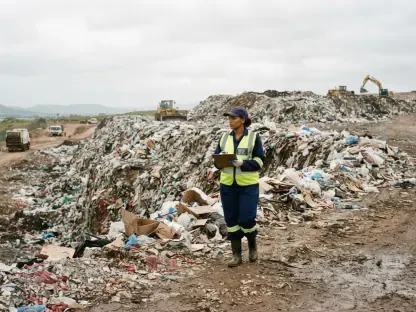
Current industrial utilization rates for lithium slag remain alarmingly low, often staying below ten percent, which forces massive quantities of this material into storage or disposal sites. In major lithium-producing regions like Australia and China, annual outputs exceed hundreds of thousands and even millions of tons, respectively. By the year 2023, these countries supplied the vast majority of global lithium resources, and the resulting slag production has continued to grow as demand for electric vehicles accelerates. Incorporating this mineral waste into road pavement bases offers a large-scale application that can consume significant volumes of byproduct while reducing reliance on virgin cement. This strategy effectively addresses two ecological dilemmas at once by mitigating the environmental damage of slag accumulation and lowering the net carbon emissions of road construction projects. The shift toward these alternative binders is not merely a technical preference but a necessary evolution in the way modern societies manage industrial byproducts and finite natural resources.
2. Material Foundations: Characterizing Clay and Slag
To establish a reliable baseline for engineering performance, the investigation focused on brownish-yellow clay excavated from an in situ depth of two to three meters. Geotechnical classification confirmed that the material was a low-liquid-limit clay, a common soil type that often requires stabilization before it can support heavy pavement loads. The clay was meticulously screened to ensure it was free from organic root debris and other contaminants that could interfere with the chemical binding process. Preliminary tests determined that the soil possessed an optimum moisture content of 19.8%, a critical parameter for achieving maximum density during compaction. By understanding the physical and chemical properties of the base soil, engineers can more accurately predict how it will interact with various concentrations of lithium slag and cement binders. This foundational knowledge ensures that the resulting road base is tailored to the specific characteristics of the local landscape, providing a more predictable and durable structural layer.
The light gray lithium slag powder used in the study was sourced from industrial facilities in Xinyu City and prepared through a rigorous screening process. The slag was passed through a 0.075-millimeter sieve to achieve a high degree of fineness, which is essential for maximizing its surface area and subsequent chemical reactivity. Before being integrated into the binder system, the material was oven-dried at 105 degrees Celsius for twenty-four hours to eliminate any residual moisture or volatile compounds that might destabilize the mixture. The final binder utilized a blend of this prepared slag and ordinary Portland cement, allowing for a systematic evaluation of various substitution ratios. By replacing different percentages of the cement fraction with lithium slag, the researchers were able to observe the precise point at which the slag enhances the material’s properties rather than diluting its strength. This detailed preparation phase is vital for creating a consistent geomaterial that can meet the rigorous standards required for modern expressway construction.
3. Procedural Standards: Preparing the Stabilized Matrix
The preparation of stabilized clay specimens followed a strict protocol to ensure uniform particle dispersion and consistent structural performance across all test batches. First, the pulverized clay, cement, and oven-dried lithium slag were combined in a mechanical mortar mixer and blended for five minutes to ensure the dry components were thoroughly distributed. Once the dry mixing phase was complete, water was gradually introduced until the mixture reached its optimum moisture content of 19.8%. Mechanical stirring continued until the blend reached a completely homogeneous state, which is necessary to prevent weak spots within the final structure. This meticulous mixing process ensures that the chemical reactants are in close proximity to one another, facilitating the complex hydration and pozzolanic reactions that will eventually provide the road base with its strength and durability. Any inconsistency at this early stage could lead to premature failure under the stress of heavy traffic or environmental weathering.
Following the mixing phase, the material was transferred into cylindrical steel molds and compacted using static pressure to achieve the desired density. The specimens were then demolded within one hour to prevent early-stage bonding with the steel surfaces, which could cause microfractures during removal. To inhibit moisture evaporation and ensure proper hydration, the cylinders were immediately wrapped in plastic film and placed in a curing room maintained at twenty degrees Celsius and ninety-five percent relative humidity. After the designated curing periods of seven, fourteen, and twenty-eight days, the specimens underwent a twenty-four-hour water immersion bath to simulate the saturated conditions often found in real-world subgrades. Finally, the samples were subjected to axial loading at a constant displacement rate of one millimeter per minute until peak compressive stress was recorded. This standardized testing sequence allows for a direct comparison between different material blends and provides the data needed to validate the material for highway use.
4. Mechanical Strength: Performance at the Optimal Threshold
Experimental measurements revealed that the mechanical performance of stabilized soil is highly sensitive to the lithium slag substitution ratio. The data demonstrated a pronounced convex relationship between unconfined compressive strength and the slag replacement level, with the 18.75% threshold emerging as the optimal point for enhancement. At this specific ratio, the specimens exhibited a 37.76% increase in compressive strength compared to conventional cement-stabilized soil after only seven days of curing. This strength gain continued to grow over time, recording a 46.23% increase at fourteen days and remaining significantly higher than the control group after nearly a month of hydration. These results indicate that lithium slag does not merely act as a filler but actively participates in the development of a stronger internal matrix. This enhanced structural capacity allows the material to meet the rigorous design requirements for heavy traffic on expressways, surpassing the capabilities of traditional soil-cement mixtures.
While the 18.75% replacement ratio provided exceptional results, exceeding this limit proved detrimental to the material’s structural integrity. When the substitution ratio was increased to 50%, the specimens suffered a dramatic reduction in compressive strength across all curing durations, with some samples showing a nearly 39% decrease compared to the control batches. This drop in performance suggests that a minimum amount of Portland cement is necessary to trigger the secondary chemical reactions that make the slag effective. Without enough cement to provide the necessary alkalinity and calcium hydroxide, the reactive silica and alumina in the slag cannot form the strength-giving gels that bind the soil particles together. This finding emphasizes the importance of precision in material formulation; finding the “sweet spot” is essential for maximizing both performance and sustainability. By adhering to the 18.75% ratio, engineers can create a road base that is both stronger and more environmentally friendly than traditional alternatives.
5. Durability Metrics: Resilience Against Hydrothermal Stress
To evaluate how the lithium slag-enhanced soil would perform under real-world environmental conditions, researchers subjected the samples to twenty cycles of intensive wetting and drying. This process, conducted in accordance with international ASTM standards, involves alternating between five-hour water immersion baths and forty-two-hour drying periods at elevated temperatures. Initial cycles typically accelerate the propagation of microcracks as moisture infiltrates the structure and thermal evaporation causes the material to expand and contract. However, the specimens containing the 18.75% slag blend demonstrated remarkable resilience throughout this process, showing the lowest cumulative mass loss of all the tested groups. While the surface of the control samples began to spall and degrade, the slag-enhanced matrix maintained its structural cohesion. This robust resistance to hydrothermal deterioration is a key indicator of a long service life, suggesting that road bases built with this material will require less frequent maintenance and repair.
The strength of the material also showed a fluctuating but ultimately positive trajectory during weathering tests. Interestingly, the compressive strength of the samples actually increased during the initial cycles of wetting and drying, a phenomenon driven by the accelerated hydration of the remaining cement and slag particles under high thermal exposure. The 18.75% blend reached its peak strength after ten cycles, gaining significantly more durability than the 50% slag mixtures, which began to fail almost immediately. Even after the full twenty cycles of exposure, the strength of the optimal blend remained far superior to the control group, dropping only slightly from its peak performance. This stability is attributed to the dense microstructural network created by the slag, which limits the penetration of water and reduces the internal stresses caused by drying. These findings confirm that lithium slag not only improves the initial strength of the road base but also protects it against the cyclical stresses of the natural environment.
6. Microstructural Analysis: The Chemistry of Reinforcement
The underlying cause of the material’s enhanced performance was revealed through detailed scanning electron microscopy, which provided a close-up look at the internal chemical architecture. In traditional cement-stabilized soil, the microstructure is often dominated by granular calcium silicate hydrate gels and large crystals of calcium hydroxide, which can leave open pores and weak interfacial zones. In contrast, the specimens containing the optimal amount of lithium slag displayed a much denser and more complex network of fibers and crystals. Microscopy showed that the reactive silica and alumina from the slag reacted with the byproducts of cement hydration to form calcium aluminosilicate hydrate gels. These gels possess a more robust polymerization and a lower calcium-to-silicon ratio, making them more resilient than standard cement gels. Furthermore, the presence of dissolved sulfate in the slag triggered the formation of needle-like ettringite crystals that effectively filled the internal voids and reinforced the bonds between individual soil particles.
This chemical transformation, known as a pozzolanic reaction, is the primary driver behind the material’s superior mechanical properties. The lithium slag contains high concentrations of silicon dioxide and aluminum oxide, which are essentially dormant until they are activated by the alkaline environment created by the hydrating cement. Once activated, these compounds begin to bridge the gaps between soil grains, creating a continuous and interlocking structural web. This dense spatial architecture not only provides more surface area for bonding but also creates a tortuous path for water and chemicals, making the material less permeable and more resistant to external degradation. By carefully balancing the ratio of slag to cement, engineers are able to maximize these reactions, ensuring that as much of the industrial waste as possible is converted into high-strength binding agents. This microscopic reinforcement translates directly into the macroscopic durability and load-bearing capacity required for the most demanding highway applications.
7. Economic Viability: Quantifying the Circular Advantage
Beyond technical performance metrics, the use of lithium slag in road construction offers compelling economic and environmental benefits quantified through life-cycle assessments. Because lithium slag is classified as an industrial byproduct, it is treated as a “zero-burden” material in environmental accounting, meaning it carries no initial energy debt or carbon emissions from its production. When researchers compared standard cement-stabilized soil to the 18.75% slag blend, they found that the latter achieved a 34.6% reduction in carbon intensity and a 33.7% decrease in energy consumption. These figures represent a significant improvement in the sustainability profile of highway projects, allowing construction firms to meet strict green building standards while reducing their overall environmental impact. As carbon taxes and environmental regulations become more prevalent throughout this decade, the ability to lower emissions through waste recycling will become a significant competitive advantage in the global construction market.
The economic incentives are equally persuasive, as the reduction in material costs can be substantial for large-scale infrastructure projects. By replacing a portion of expensive Portland cement with a zero-cost industrial byproduct, the total material cost for the stabilized road base dropped by more than 30%. When these savings are normalized against the increased compressive strength of the material, the efficiency gains become even more apparent. The 18.75% blend offers the best value, providing a higher-quality product at a significantly lower price point than traditional methods. This cost-effectiveness makes it an attractive option for government agencies and private contractors looking to maximize their infrastructure budgets without sacrificing the quality or safety of the road network. The combination of lower costs and higher performance creates a powerful business case for the widespread adoption of lithium slag as a primary component in sustainable road design.
8. Future Directions: Implementation and Environmental Safety
The investigation concluded that the strategic implementation of lithium slag in road construction offers a dual-purpose remedy for industrial waste and infrastructure durability. Engineers determined that the 18.75% substitution ratio optimized the balance between chemical reactivity and structural load-bearing capacity, effectively meeting the stringent requirements for heavy-traffic expressways. It was observed that the chemical immobilization of heavy metals within the hydration products ensured environmental safety, keeping leaching levels well below international regulatory thresholds. This encapsulation process proved that the material was not only physically strong but also chemically stable, preventing hazardous runoff into the surrounding soil or groundwater. The study confirmed that up to half of the cement could be replaced while still maintaining leaching levels at only one percent of allowable limits, providing a high margin of safety for environmental protection.
Stakeholders identified that scaling this technology required standardized quality control measures to account for the inherent variability in slag composition across different refining batches. Since the chemical makeup of the slag can change based on the lithium extraction process, continuous monitoring and testing were deemed necessary to ensure consistent performance in the field. These findings provided a clear roadmap for highway departments to transition toward more sustainable pavement designs, emphasizing the economic and ecological necessity of circular economy practices in the civil engineering sector. Future projects were encouraged to incorporate these findings into their standard operating procedures, paving the way for a new generation of roads that are as resilient as they are environmentally responsible. By moving forward with these validated methods, the construction industry took a significant step toward a low-carbon future where waste is no longer a liability but a valuable resource.