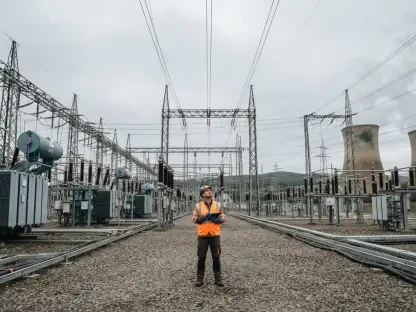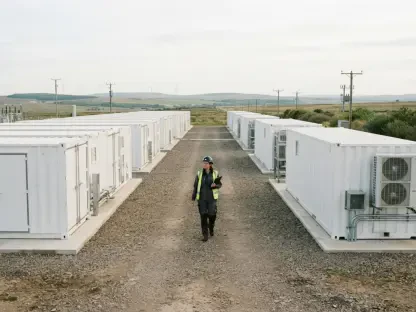

A two-layer Graph Attention Network processes organizational containment and operational coupling to understand the contextual proximity between personnel and system logs. The rapid modernization of global energy infrastructure has necessitated a shift from traditional human-centric oversight to the deployment of autonomous intelligent agents. These sophisticated software entities are now responsible for critical operations, including predictive maintenance, real-time control-loop inspections, and demand-response coordination across vast geographic areas. However, as these agents function across various organizational boundaries, they often require immediate and frequent access to highly sensitive telemetry data, supervisory control and data acquisition records, and internal system logs. Traditional access control mechanisms, such as Role-Based Access Control, have proven far too rigid to accommodate the dynamic, high-velocity requirements of autonomous software. Conversely, purely statistical machine learning models often lack the deterministic guarantees required by stringent international regulatory frameworks like ISO 27001 or regional data security laws. This tension between operational agility and legal safety creates a significant hurdle for utility providers seeking to fully embrace automation. To bridge this gap, engineers have developed the Compliance-Aware Permission Prediction framework, which uses a specialized hybrid architecture to ensure that every data request is both efficient and strictly lawful.
The Conflict: Operational Speed and Regulatory Safety
The integration of advanced artificial intelligence into power generation and distribution facilities introduces a fundamental paradox between independence and security. Autonomous agents require significant speed and independence to effectively manage the complex data environments of 2026. If every data request made by an automated system required a human supervisor to intervene and manually grant permission, the primary benefits of using AI—specifically its speed and efficiency—would be completely neutralized. However, granting these agents unfettered access or relying on standard probabilistic models that might occasionally miscalculate permissions poses an unacceptable risk to national infrastructure and individual data privacy. Previous attempts to automate these permissions have historically suffered from critical flaws, most notably a failure to provide the hard guarantees required in regulated sectors. Older statistical models could assign a high probability to an access request, but in the context of critical energy infrastructure, even a small margin of error can lead to catastrophic unauthorized data exposure.
Existing permission prediction paradigms have struggled with high false-positive rates, which reached as high as sixteen percent in some industrial tests. Such inaccuracies are particularly dangerous when dealing with high-stakes data that governs the physical stability of the electrical grid. Furthermore, earlier models often relied on flat context representations, treating variables like user roles or geographic locations as isolated data points without understanding their inherent relationships. This lack of situational awareness meant that the AI could not distinguish between a routine diagnostic check and a suspicious attempt to access core control loops. The development of the Neural Collaborative Filtering with Compliance Gating model addresses these vulnerabilities by moving away from purely “black box” predictions. Instead, it implements a hybrid system that enforces non-negotiable regulatory boundaries while maintaining the predictive agility of deep learning. This ensures that autonomous agents can function with the necessary speed while remaining safely within the confines of established legal and corporate mandates.
Structuring Context: Business Knowledge Graphs
At the core of this new approach to governance is the Business Knowledge Graph, which serves as the foundational structure for the system’s contextual awareness. Unlike traditional security models that treat entities as independent attributes, this knowledge graph models the entire industrial environment as a complex, heterogeneous relational network. This sophisticated mapping includes five distinct entity types, such as business functional areas, operational tasks, software tools, personnel roles, and specific data categories. These entities are meticulously linked by six different edge types that represent organizational containment, operational coupling, and the standard flow of data within a utility company. By organizing information in this manner, the system can understand the profound relational proximity between different components of the grid. For instance, it can recognize that a specific maintenance engineer using a diagnostic tool on a remote site has a legitimate reason to access fault logs, even if that specific combination of factors had not been explicitly programmed into a traditional database.
To process this intricate web of information effectively, the architecture employs a two-layer Graph Attention Network that uses learned projection matrices to analyze neighborhood relations. The network calculates normalized attention coefficients to determine which nodes in the graph are most relevant to a specific access request. This process allows the model to capture structural dependencies that are invisible to flat data models. These complex relational states are eventually pooled into a unified context embedding, providing the AI with a nuanced and highly accurate view of the current operational landscape. By prioritizing structural awareness, the system ensures that access decisions are based on the reality of the task at hand rather than just a simplistic set of identity markers. This graph-based approach allows the AI to adapt to changing organizational structures and evolving operational needs without requiring a complete overhaul of its underlying security logic, making it a robust solution for the modern energy sector.
Refining Predictions: Neural Collaborative Filtering
The second primary component of the architectural framework is a preference estimator that calculates the likelihood of an access grant based on deep historical patterns. This branch of the system utilizes a generalized matrix factorization paradigm to generate detailed embeddings for users, data, and the operational context. Rather than relying on simple inner products, which can miss subtle interactions between variables, the model uses a bilinear formulation with trainable interaction matrices. This produces a scalar score between zero and one, which serves as a statistical prediction of whether access should be granted. These scores are not just arbitrary numbers but are carefully mapped to four specific operational categories. These categories—AlwaysAllow, Ask, NeverAllow, and Delegate—provide a clear path for every request, ensuring that routine operations proceed without delay while suspicious or high-risk requests are immediately flagged for human intervention or administrative escalation.
The use of fixed anchors and established thresholds allows the model to maintain well-defined safety margins, which significantly improves the accuracy of its classifications compared to standard statistical approaches. By maintaining these strict boundaries, the preference estimator can distinguish between common data requests and those that deviate from established behavioral norms. This capability is essential for detecting potential security breaches or malfunctions in autonomous agents before they can cause damage. Furthermore, the model’s uniform dimensionality across all embeddings ensures that the system remains computationally efficient, even when processing thousands of requests per second. This balance of statistical depth and operational speed is what allows the framework to support the high-velocity requirements of modern smart grids. The resulting system is not just a passive observer but an active participant in the security of the infrastructure, providing a predictive layer that anticipates needs while proactively managing the inherent risks of automation.
Implementing Deterministic Gates: Risk Mitigation
The most innovative feature of the current governance model is the inclusion of a “Hard” Compliance Gate, which operates as a symbolic policy decision point in parallel with the AI branch. This gate holds absolute priority over the entire system, meaning that its decisions cannot be overridden by the statistical predictions of the neural network. Every access request is evaluated against an explicit set of regulatory and corporate rules that have been encoded into the gate’s logic. If a specific rule dictates that a particular user-data pair is restricted under any circumstances, the gate immediately issues a denial. This ensures that the system remains compliant with international safety standards and national security laws, providing a deterministic safety net that the AI alone could never guarantee. The gate only remains silent when no specific regulatory rule applies, at which point the system defers to the statistical AI prediction to determine the most efficient course of action.
This hybrid design effectively harnesses the flexibility of machine learning for day-to-day efficiency while ensuring that the final word on security always belongs to non-negotiable safety protocols. By integrating these two distinct methods of decision-making, the framework provides a level of reliability that is necessary for critical infrastructure. For example, if an AI model erroneously predicts that a field agent should have access to sensitive financial records due to a statistical anomaly in the training data, the compliance gate will step in to block the request based on established privacy rules. This prevents the “black box” problem that has long plagued the adoption of AI in sensitive industries. The presence of the gate provides transparency and accountability, allowing auditors to see exactly why a request was granted or denied. This structural division of labor between the flexible AI and the rigid gate creates a resilient security posture that can withstand both the complexity of modern grid operations and the scrutiny of regulatory oversight.
Optimizing Neural Networks: Legal Compliance
To ensure that the statistical branch of the model does not diverge from the rules enforced by the compliance gate, researchers have introduced an auxiliary compliance-margin loss function during the training phase. This specialized loss function is designed to penalize the neural network if it assigns high preference scores to user-data pairs that are known to be restricted by law or policy. By integrating these regulatory constraints directly into the optimization objective, the AI’s internal representation space is regularized to align with discrete legal boundaries before it is ever deployed in a real-world environment. This pre-alignment is crucial because it reduces the friction between the AI’s predictions and the gate’s enforcement, leading to a more harmonious and efficient system. It prevents the AI from learning behaviors that would be consistently blocked, thereby improving the overall throughput of the permission system and reducing the frequency of human intervention.
In addition to the compliance-margin loss, the model employs a pairwise user similarity regularizer to maintain consistency across different personnel roles. This component analyzes the interaction histories of various users to ensure that those with similar professional responsibilities and clearances maintain consistent access profiles. If two users show a high degree of similarity in their past successful access requests, the model penalizes any geometric distances between their embeddings in the vector space. This ensures that the autonomous agents do not develop erratic or unpredictable behavior patterns that could lead to security vulnerabilities. By enforcing this type of organizational consistency, the system promotes fairness and predictability, making it easier for administrators to manage large numbers of agents across multiple facilities. These advanced training strategies transform the AI from a simple pattern matcher into a sophisticated governance tool that understands the complex interplay between operational necessity and regulatory compliance.
Analyzing Quantitative Results: Domain Performance
Rigorous testing of the framework against thousands of permission decisions has demonstrated that it significantly outperforms existing state-of-the-art security models. In extensive benchmarking, the system achieved an overall accuracy of nearly ninety percent, coupled with a notable reduction in false-positive rates compared to traditional hybrid models. These metrics are not merely academic; they represent a significant step forward in the reliability of industrial AI governance. Statistical tests have confirmed that these improvements are consistent across different types of grid environments, indicating that the model is robust enough for widespread deployment. The precision and recall rates further underscore the system’s ability to correctly identify legitimate access needs while successfully blocking unauthorized attempts. Such high levels of performance are essential for building trust among utility operators who are understandably cautious about delegating security decisions to automated software.
The impact of this framework was particularly evident in highly sensitive data categories, where previous systems often struggled to maintain accuracy. For example, in the management of financial records and payment details, the model saw a sharp increase in predictive accuracy while the rate of unauthorized access events plummeted. Furthermore, the system proved resilient in “cold-start” scenarios, which occur when the AI must make decisions for new users or data types with limited historical records. By relying on the structural information provided by the Business Knowledge Graph and the deterministic rules of the compliance gate, the system can make safe and accurate decisions even when individual behavioral data is sparse. This capability is vital for the dynamic nature of the energy sector in 2026, where new personnel and software tools are frequently introduced to the network. The ability to maintain high security standards during these transitions ensures that the grid remains protected even as it evolves and expands.
Advancing Implementation: Industrial Pilot Programs
The framework established a new engineering blueprint for AI governance, which was recently validated through a series of comprehensive ablation studies. These investigations revealed that every component of the architecture played a vital role in its overall success; for instance, removing the compliance gate led to an immediate and dangerous surge in false positives. Similarly, omitting the Graph Attention Network resulted in a significant drop in accuracy, proving that understanding the relational context of the smart grid was just as important as the statistical modeling of user behavior. A qualitative case study further illustrated these findings by showing how the model successfully blocked a maintenance engineer from accessing sensitive records when they were outside a designated control zone. This real-world scenario confirmed that the integration of hard rules and environmental context provided a level of protection that earlier, ungated versions of the model simply could not match.
The practical value of this research moved beyond the laboratory as it was implemented in a three-phase pilot deployment at a major electric power utility. This pilot program transitioned from retrospective audits of historical data to a “shadow” deployment where the AI suggested decisions that were then reviewed by human supervisors. Ultimately, the system moved into full production, where it now manages thousands of automated access requests daily. Although challenges remained, such as the need to better track multi-step execution histories to prevent sequence-level vulnerabilities, the pilot demonstrated that the balance between autonomy and compliance was achievable. Future developments were planned to refine the model’s ability to handle entirely new scenarios through improved zero-shot learning techniques. As the energy sector continued to transition toward a fully automated grid, these frameworks became essential for maintaining the security and integrity of critical national infrastructure.