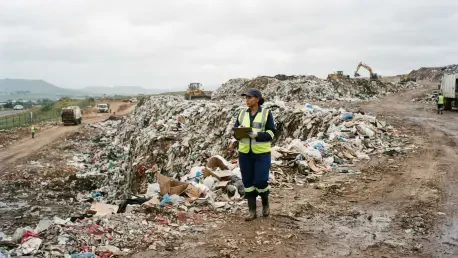

The Free State province is currently facing a catastrophic waste management crisis, as environmental inspectors recorded zero compliant landfill sites across the entire region during their latest assessment. This alarming revelation is a focal point of the National Environmental Compliance and Enforcement Report for the 2025/26 period, which marks the twentieth anniversary of the Environmental Management Inspectorate. Known as the Green Scorpions, this unit has spent two decades attempting to enforce the country’s environmental laws, yet the latest data suggests that the battle against municipal negligence is far from won. The report unveils a systemic collapse in waste management infrastructure that transcends simple administrative oversight, pointing instead to a deep-seated failure in local governance. As urban populations continue to swell and waste volumes increase, the gap between stringent environmental legislation and practical on-the-ground execution has widened into a chasm. This situation creates a volatile environment where public health is secondary to budgetary constraints and poor maintenance, necessitating a drastic reevaluation of how waste is handled.
Assessment of Municipal Failure
National and Regional Performance
The national landscape of waste management is currently defined by a staggering level of non-compliance, with 83 out of 159 assessed municipal landfill sites failing to meet basic regulatory standards. When including facilities that were only deemed partially compliant, the data indicates that a vast majority of the country’s waste infrastructure is in a state of terminal decline. While Gauteng showcased a relatively higher proportion of compliant sites, the overall national average remains dangerously low, reflecting a widespread inability to manage the environmental impact of modern waste disposal. The geographical disparity in these findings highlights a crisis of localized governance, where specific provinces lack the resources or the political will to maintain essential environmental safeguards. This failure is not merely a matter of messy sites; it represents a fundamental breach of the constitutional right to a safe and healthy environment for millions of citizens who live near these poorly managed facilities.
Beyond the immediate visual and olfactory impact, the failure of these sites poses an escalating threat to South Africa’s vital groundwater resources and surrounding ecosystems. The risk-based inspection strategy employed by environmental authorities focuses on facilities that pose the greatest potential for environmental disaster, suggesting that the actual state of unassessed landfills could be even more dire than currently reported. In many areas, the lack of proper liners and leachate management systems means that toxic runoff is seeping directly into the soil, potentially contaminating water tables that support both agricultural activities and human consumption. This environmental degradation is often irreversible in the short term, creating a long-term liability for the state and local communities. The consistent inability to rectify these issues despite repeated warnings suggests that the current municipal waste management model is no longer fit for purpose and requires immediate, large-scale intervention to prevent a total ecological breakdown.
Regulatory and Criminal Interventions
In a direct response to the deepening crisis, environmental inspectors have ramped up their use of administrative and criminal enforcement tools under the National Environmental Management Act. During the current reporting cycle, authorities issued 15 pre-compliance notices, seven formal compliance notices, and seven directives aimed at forcing immediate corrective action at high-risk sites. Furthermore, the Green Scorpions have initiated or continued 75 criminal cases specifically targeting the mismanagement of municipal landfill sites. These legal actions focus on critical violations such as the failure to cover waste, the absence of proper fencing, and the illicit disposal of hazardous materials in general waste facilities. While these measures aim to hold local officials accountable, the persistence of the problem suggests that administrative pressure alone is insufficient to overcome the structural decay and chronic underfunding that plague municipal waste departments across the country.
The disconnect between regulatory enforcement and actual infrastructure improvement remains a primary obstacle to achieving national waste goals. Inspectors often find themselves in a repetitive cycle of issuing directives to municipalities that lack the technical expertise or the financial liquidity to implement the required changes. Consequently, many landfill sites remain in a state of legal limbo, where they are technically under investigation or subject to orders that are never fully executed. This pattern of non-compliance has forced the national government to consider more drastic steps, including the potential for direct intervention in municipal waste functions. Without a significant injection of capital and a fundamental shift in how local authorities prioritize waste management, the current flurry of legal notices risks becoming a mere bureaucratic exercise that fails to protect the environment from the encroaching threat of systemic infrastructure failure.
Enforcement Trends and Corporate Responsibility
Investigative Growth vs. Judicial Stagnation
The latest figures from the Green Scorpions show a clear upward trend in frontline investigative activity, with arrests related to environmental crimes rising to 616 and the number of criminal dockets increasing to 682. This surge in enforcement activity demonstrates the growing capability of the inspectorate to identify and document violations across various sectors. There has also been a notable jump in the number of cases referred to the National Prosecuting Authority, which reached 343 in the current period. These statistics suggest that the investigative arm of environmental enforcement is operating at a high level of efficiency, utilizing advanced forensic techniques and improved inter-agency cooperation to build complex cases. The increased frequency of admission-of-guilt fines, which more than doubled this year, provides a swift mechanism for penalizing minor infractions and generating revenue for further enforcement efforts.
Despite these gains in investigative output, the judicial system appears to be struggling to keep pace, with the number of court convictions for environmental crimes remaining virtually stagnant. The complexity of environmental litigation, often involving intricate scientific evidence and corporate liability issues, creates a significant bottleneck in the legal process. This delay in achieving finality in criminal cases can undermine the deterrent effect of enforcement, as offenders may feel that the likelihood of facing a severe court sentence is minimal. To address this, there is a growing call for specialized environmental courts or enhanced training for prosecutors and magistrates to ensure that these cases are handled with the necessary expertise and urgency. The current gap between investigation and conviction highlights the need for a more integrated approach where legal resources are aligned with investigative priorities to ensure that environmental criminals are held fully accountable.
Industrial Oversight and Future Strategic Paths
Industrial negligence remains a persistent challenge, with major facilities like the Polokwane Smelters and the Vissershok landfill being flagged for recurring environmental violations. In Limpopo, the smelter facility was found to be exceeding legal limits for sulfur dioxide emissions, while groundwater contamination from slag dumps continues to threaten local water sources. Similarly, in the Western Cape, leachate leaks and contaminated stormwater at the Vissershok site have impacted the surrounding river systems. These cases underscore the ongoing struggle to integrate environmental mitigation into core industrial operations, especially when aging infrastructure is involved. In response, South African courts have begun imposing record-breaking fines on both private and public entities. For instance, the Emalahleni Local Municipality received a massive R650 million fine for its role in polluting the Olifants River, signaling a new era of high-stakes financial accountability for environmental degradation.
The environmental ministry established a clear roadmap for the 2026/27 cycle, focusing on the decentralization of enforcement powers and the integration of advanced forensic tools. Authorities shifted their attention toward a zero-tolerance stance on municipal sewage mismanagement, ensuring that massive fines were leveraged specifically to rehabilitate crumbling pump stations and waste treatment plants. South Africa took a leading role on the international stage by championing a fourth protocol for the UN Convention against Transnational Organized Crime, which targeted the movement of illegal waste across borders. Furthermore, the legislative body finalized the groundwork for an amendment bill that enabled administrative penalties for minor violations, effectively clearing the court dockets for more severe environmental felonies. These strategic shifts represented a comprehensive attempt to move beyond mere monitoring toward a model of restorative justice that prioritized ecological health over administrative compliance.