
The glass-walled corridors of Brussels are currently humming with a nervous energy as policymakers attempt to redefine the very mechanics of the world’s most ambitious environmental experiment. As the European Union moves toward its 2040 milestone, the tension between atmospheric science and industrial survival has reached a boiling point. The Emissions Trading System, long considered the crown jewel of climate policy, is undergoing a transformation that many fear could dilute its efficacy. At stake is the credibility of a continent that has staked its reputation on being a green pioneer.
This struggle centers on the proposed 90% reduction in net emissions by 2040, a target that serves as the essential bridge to total neutrality. However, a series of legislative maneuvers suggests a shift in priorities. By introducing new flexibilities for heavy industry, policymakers are attempting to shield domestic manufacturers from global competition. This pivot raises a fundamental question: Is the Union trading long-term climate integrity for short-term economic stability?
The High-Stakes Collision: Climate Ambition and Industrial Reality
Europe’s climate leadership is facing its most rigorous stress test as the Emissions Trading System (ETS) enters a period of radical and controversial restructuring. The Union is currently attempting to balance a monumental 90% emissions reduction target for 2040 against an industrial sector reeling from high energy costs and aggressive global competition. What was once a straightforward regulatory framework is now morphing into a complex shield for domestic manufacturers, raising questions about whether political survival is being prioritized over atmospheric science.
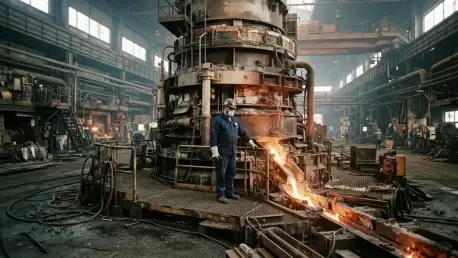
Industrial sectors in steel and chemicals argue that the transition pace outstrips the availability of affordable clean energy. They warn that without concessions, the risk of “carbon leakage” will become a reality as production moves to regions with lower standards. This pressure has forced a reevaluation of the ETS as lawmakers seek a middle ground that keeps factories operational while keeping the 2040 roadmap on life support.
The Fragile Foundation: The 2040 Net-Zero Roadmap
The 2040 climate goals represent more than just a policy milestone; they are the bridge to total carbon neutrality by 2050. Achieving a 90% reduction in net emissions requires a massive transformation, yet the legislative tools intended to drive this change are currently being softened. This debate matters because any dilution of the carbon market today creates a carbon debt that future generations may be unable to repay.
As the Irish Presidency of the EU Council maneuvers to find a consensus among 27 diverse member states, the integrity of the world’s most advanced carbon market hangs in the balance. Wealthier nations advocate for high carbon prices to end fossil fuel dependency, while others fear industrial collapse. This fragmentation creates a volatile market signal, making it difficult for investors to commit to long-term electrification projects if they suspect prices will be artificially suppressed.
Strategic Erosion: The Emissions Trading System
The core mechanism of European climate policy is undergoing modifications that critics label as a tactical retreat. By altering the rules of the ETS, policymakers are attempting to lower the immediate financial burden on heavy industry. Current proposals suggest a shift in how firms receive free permits. Under a new compromise, companies could retain 80% of their free allowances simply by submitting a decarbonization plan, rather than proving they have actually implemented it.
This change effectively decouples financial rewards from environmental performance, potentially allowing laggards to stay in the market without modernizing. Furthermore, the Union is considering a return to international carbon credits to fill the gap in its targets. The plan involves setting aside 260 million tons of carbon allowances for projects outside the bloc. While this offers a cheaper path to compliance, it introduces risks regarding the quality of those reductions.
Expert Analysis: The Risks of Accounting Flexibility
Scientific bodies have expressed deep skepticism regarding the new measures introduced into the ETS framework. A study by the Öko-Institut suggests that the current reform trajectory is mathematically incompatible with the 90% reduction goal. The research highlights that the accumulation of accounting tricks—such as allowing emissions today based on the promise of future carbon removals—creates a loophole that the climate cannot afford.
Policy documents reveal an increasing reliance on Direct Air Capture to justify current emission levels. Experts warn that these technologies do not yet exist at the scale required to offset industrial output. Relying on future permanent removals is seen as a dangerous gamble that prioritizes political expediency over physical realities. This reliance on nascent technology suggests that the bloc is betting its future on solutions that remain largely unproven at a commercial scale.
Navigating the Transition: Strategies for Industrial Adaptation
While the reforms are being debated, industries must find a path forward that aligns with long-term climate targets. To secure the final 20% of free allowances under the proposed rules, firms must move beyond planning and into the construction phase of clean-tech projects. Companies should prioritize modular upgrades and electrification that can be initiated quickly to ensure they do not lose their financial shield.
Industries can no longer rely solely on the availability of free permits. A robust strategy involves investing in internal efficiency and securing long-term Power Purchase Agreements to hedge against carbon-driven price spikes. Firms should actively apply for Innovation Fund grants derived from carbon auction revenues. By positioning themselves as first movers in green steel, companies can transform regulatory pressure into a competitive advantage in the global market. Recent negotiations continue to shape the continent’s industrial future.