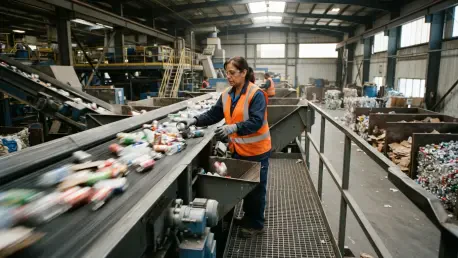

Although automation has revolutionized the waste management industry, human workers are still required to manually intercept hazardous items and non-recyclable debris at sorting facilities. Public skepticism regarding the efficacy of municipal recycling programs has reached a fever pitch, fueled by viral content suggesting that household sorting is a futile exercise designed to appease the public while waste companies quietly dump recyclables into landfills. To confront these “curbside conspiracy theories,” an investigative team conducted a data-driven experiment across King, Pierce, and Snohomish counties. By utilizing Apple AirTags to track the movement of typical household items, the study sought to provide a definitive answer to the persistent question of whether sorted waste actually reaches its intended destination. This empirical approach aimed to bypass anecdotal claims and provide a high-fidelity snapshot of standard operating procedures within the regional waste stream, specifically focusing on items that were properly cleaned and sorted.
Tracking Results: Material Destinations
The tracking experiment yielded results that directly contradict the narrative of a systemic recycling scam, revealing a highly functional, albeit complex, industrial logistics network. Twelve distinct items, ranging from corrugated cardboard boxes to heavy-grade plastic detergent bottles and aluminum beverage cans, were monitored as they moved through the waste infrastructure. The data showed that every single item tracked in the study successfully bypassed the local landfill, navigating instead through a series of specialized recovery facilities. This movement into a legitimate supply chain for raw materials proves that the infrastructure is robust when residents adhere to guidelines. These materials are not merely being moved from one pile to another; they are being actively harvested as commodities. The successful diversion of these goods into a “closed-loop” cycle demonstrates that domestic recycling remains a vital component of the manufacturing sector, providing essential materials for a wide variety of industrial applications.
Specific journeys captured by the tracking devices illustrated the geographic scale of this industrial process, showing that items often travel hundreds of miles to reach the correct processor. For instance, a tracker attached to a cardboard shipping box traveled approximately 130 miles from its initial collection point to a specialized paper mill located in Longview. At this facility, the material was pulped and processed into fresh cardboard, completing a full cycle of reuse. Similarly, steel food cans were traced through sorting centers in Woodinville before moving 170 miles south to a scrap-metal hub in Vancouver. There, the metal was baled and prepared for international shipment, destined to be melted down for use in large-scale construction projects such as rebar and structural beams. These results underscore the fact that recycling is a global business driven by market demand for materials rather than a performative act of environmentalism with no tangible output.
Challenges: Sorting and Technology
While the tracking study confirms that clean materials follow the correct path, facility data indicates that the system struggles with inherent inefficiencies that prevent total recovery. Internal assessments from regional material recovery facilities suggest that roughly 14 percent of the incoming stream—amounting to tens of thousands of tons—is ultimately classified as residual material and sent to landfills. The most troubling aspect of this data is that nearly half of the residue is composed of perfectly viable recyclables that the system simply failed to capture. This includes significant quantities of cardboard, PET plastic water bottles, and aluminum cans that were lost during the high-speed sorting process. These losses represent a massive missed opportunity for resource conservation and economic gain, highlighting a “sorting gap” that persists despite technological advancements. The reality is that even a well-funded system cannot achieve 100 percent efficiency in its current state.
Inside a modern material recovery facility, the sorting process is a sophisticated display of engineering that utilizes a diverse array of sensors to manage the daily influx of waste. High-speed conveyor belts transport materials through several stages of separation, starting with mechanical screens that sort items by size and weight. Following this, optical sorters equipped with infrared cameras scan the moving stream to identify the molecular composition of different plastics and papers. When a specific material is identified, precisely timed bursts of compressed air are used to “shoot” the item off the belt and into the correct bin. Simultaneously, powerful magnets and eddy currents are employed to instantly pull ferrous and non-ferrous metals from the pile with high precision. This level of automation allows facilities to process hundreds of tons of material daily, transforming a chaotic mountain of household waste into sorted bales of raw material ready for industrial reuse.
The Crisis: Landfill Capacity
A far more urgent concern than facility residue is the immense volume of recyclable material that never enters the recycling stream at all, ending up instead in traditional garbage bins. Recent waste characterization studies reveal that a staggering percentage of the material currently buried in landfills consists of high-value items like aluminum, steel, and heavy plastics. In some regions, nearly 20 percent of the total waste being deposited could have been diverted and repurposed if it had been disposed of correctly at the source. This widespread oversight represents a massive loss of energy and resources, as creating new products from recycled materials is significantly more efficient than extracting virgin raw materials. This failure to capture recyclables at the curb accelerates the environmental footprint of modern consumption and places an unnecessary burden on the municipal infrastructure responsible for managing long-term waste disposal and environmental safety.
The persistent disposal of recyclables in the trash has led to a looming infrastructure crisis as regional landfills rapidly approach their maximum operational capacity. In areas like King County, the local landfill is projected to reach its limit within the next decade, a timeline that is significantly shortened by the inclusion of divertible waste. To visualize the scale of this problem, officials estimate that the weight of potentially recyclable material entering the landfill annually is equivalent to several dozen major city landmarks. As space becomes increasingly scarce and the costs associated with transporting waste to distant sites rise, the importance of diversion has shifted from an environmental preference to a civic necessity. Extending the life of existing disposal sites requires a concerted effort to ensure that metal cans and plastic jugs stay out of the garbage stream, thereby preserving remaining landfill space for materials that truly have no other destination or use.
Consumer Impact: System Integrity
The investigation ultimately proved that the municipal recycling system was effective when participants adhered to the established sorting guidelines. The data gathered from the tracking experiment successfully debunked the narrative that recycling was a deceptive practice, as every properly sorted item reached a facility where it was transformed into a raw material. It became clear that the integrity of the recycling ecosystem relied on a combination of sophisticated industrial automation and the diligent habits of individuals. However, the study also highlighted that the greatest threats to the system were human error and the introduction of contaminants that hindered mechanical performance. The findings confirmed that when residents took the time to ensure their recyclables were clean and loose, the system delivered on its environmental promises. This evidence suggested that the public played a far more significant role in the success of the process than many previously realized.
Moving forward, ensuring the longevity of the recycling infrastructure requires a shift in consumer behavior toward more precise disposal habits. Residents are urged to eliminate “wish-cycling” by strictly following local acceptance lists and avoiding the temptation to include non-recyclable plastics or textiles in the bin. A critical safety takeaway involved the management of lithium-ion batteries, which posed a severe fire risk to facilities and were never intended for curbside collection. The future success of these programs depends on an informed community that views recycling as a precise industrial input rather than a general disposal method. By focusing on high-quality sorting and the exclusion of hazardous materials, households directly contribute to a more stable and efficient supply chain. This active participation remains the most effective tool for reducing the strain on regional landfills and ensuring that valuable resources are preserved for the manufacturing needs of tomorrow.