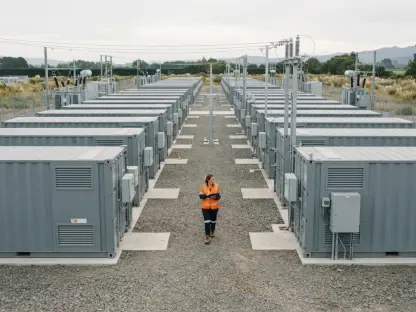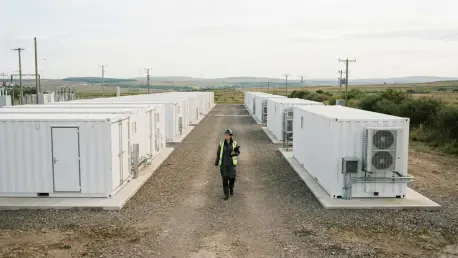

Continuous remote monitoring via a NERC-registered control center will provide constant oversight for the newly announced international battery projects, marking a pivotal advancement in the deployment of utility-scale infrastructure through this significant collaboration between Canadian Solar’s e-STORAGE business and the global renewable energy developer X-ELIO. The agreement encompasses five massive projects with a combined capacity of 590 MW / 1.43 GWh, strategically located to address the most pressing grid stability needs. As the world moves toward 2028, these installations will become vital assets in the transition away from fossil-fuel-based power generation. By integrating high-capacity storage directly into the grid, the partnership aims to mitigate the intermittency of solar energy in Texas and Australia. This announcement underscores a broader industry trend where hardware manufacturers are taking on more substantial roles in the long-term operational health of global energy networks.
Technological Foundations: Reliability and Innovation
Engineering: High-Density Storage Solutions
The technological backbone of these expansive projects is the SolBank 3.0, a high-density lithium-iron-phosphate battery system that sets a new benchmark for efficiency. Each 20-foot containerized unit is designed to provide over 5 MWh of nominal capacity, utilizing advanced 314 Ah cells to optimize energy storage within a compact footprint. This design is particularly effective for large-scale deployments where land use and installation complexity must be minimized. Beyond the raw power capacity, the SolBank 3.0 features sophisticated active-balancing battery management and thermal control systems. These components work in tandem to ensure that the cells operate within safe temperature ranges, thereby maximizing the lifespan and safety of the equipment. Such engineering precision is necessary to handle the high-cycle demands of modern utility grids. By choosing LFP chemistry, the developers are also prioritizing safety and environmental sustainability, as these batteries offer superior thermal stability compared to traditional alternatives.
Software Integration: Management and Control
For the largest of these installations, a 200 MW project located in Texas, e-STORAGE is deploying its proprietary EQ-S energy management system to provide granular control. This software platform acts as the brain of the facility, optimizing energy flows and ensuring that the system can respond to grid fluctuations in real time. The EQ-S system is integrated with the NERC-registered control center to facilitate continuous oversight and rapid response to any technical anomalies. This level of sophisticated plant control is essential for participating in complex energy markets where speed and accuracy are rewarded. Furthermore, the integration of advanced diagnostic tools allows for predictive maintenance, reducing downtime and operational costs over the life of the project. By combining robust hardware with intelligent software, the partnership ensures that the storage assets are not merely passive reservoirs of energy but active participants in grid stabilization. This integrated approach represents the current gold standard for utility-scale energy storage implementations worldwide.
Global Deployment: Impact on Power Grids
Regional Markets: Balancing Supply and Demand
The strategic placement of these projects in Texas and New South Wales addresses specific regional energy challenges that have emerged during the current transition. In Texas, the ERCOT grid often experiences significant strain after sunset, when solar production drops off just as evening demand begins to peak. The four Texas-based projects are designed to bridge this gap by shifting midday solar generation to the evening hours, thereby reducing the need for natural gas peaking plants. Meanwhile, the project in Australia is tailored to support a grid that is rapidly moving away from its historical reliance on coal. As New South Wales retires its aging thermal power stations, the need for fast-acting, dispatchable power has become critical to maintaining system frequency and reliability. These batteries will provide the necessary ancillary services to balance the influx of wind and solar power. With shipments already in progress, the transition to commercial operation between 2027 and 2028 will mark a defining milestone for regional energy security.
Future Outlook: Operational Viability
The agreement established a 22-year service framework that shifted the responsibility for lifecycle management directly onto the manufacturer. This long-term involvement includes spare-parts management, continuous monitoring, and rigorous performance guarantees to ensure the projects remain profitable and efficient. Moving forward, developers must prioritize these comprehensive service models to mitigate the risks associated with long-duration storage assets. Investing in integrated solutions that combine high-density hardware with sophisticated software will be crucial for navigating the evolving regulatory landscapes of the late 2020s. Stakeholders should consider the total cost of ownership rather than just initial capital costs when selecting storage partners. As the industry matures, the focus will likely shift toward “storage-as-a-service” models that emphasize reliability over the long term. The successful execution of these installations will likely encourage further investment in hybridized energy solutions, where storage is treated as a foundational element of the grid.