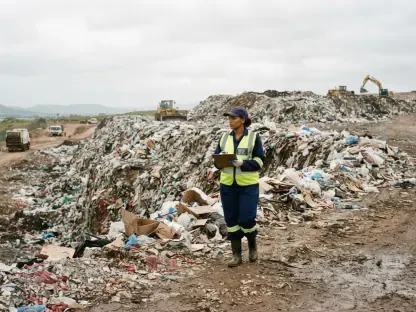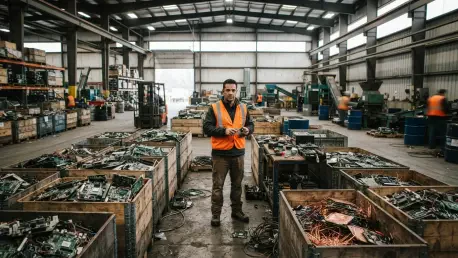

The United Nations’ Global E-waste Monitor reports that a staggering 77.7% of the 62 million metric tons of electronic waste generated in 2022 remains undocumented or discarded in landfills. This highlights the massive inefficiency in current waste management systems. As of 2026, the metals industry no longer views this as merely an environmental liability but as a sophisticated logistical challenge that holds the key to the next generation of raw material procurement. The transition from traditional land-based mining to urban mining is accelerating as technological leaders recognize that the highest-grade deposits of gold, copper, and palladium are no longer found exclusively in the ground, but in the pockets and junk drawers of global consumers. This realization is triggering a massive capital reallocation toward processing infrastructure designed to recover these valuable elements, ensuring that the critical minerals necessary for the renewable energy transition remain within a functional circular loop.
Infrastructure Investment Strategies
Global Capacity Expansion
Major metals firms are currently committing billions of dollars to build and upgrade facilities capable of processing complex recycled materials on an unprecedented scale. In North America, the development of specialized secondary smelters, such as the Aurubis project in Georgia, represents a pivotal effort to domesticate the recovery of precious and base metals. This facility, which is scaling up operations between 2026 and 2028, is designed to handle roughly 180,000 metric tons of complex recycling materials annually. This shift marks a fundamental change in how the industry prioritizes secondary sourcing, moving away from total reliance on raw ore imports and toward a more resilient, domestic supply chain. By establishing these massive hubs, companies are effectively future-proofing their operations against the inherent volatility of geopolitical tensions and the inevitable depletion of high-quality primary mineral deposits across the globe.
Regional Technological Advancements
In Europe and Asia, the current investment landscape is defined by high-tech upgrades and specialized processing plants that push the boundaries of metallurgical science. Facilities like Atlantic Copper’s “CirCular” in Spain and Umicore’s Hoboken complex in Belgium are focusing their efforts on recovering an increasingly diverse spectrum of minerals, including cobalt, gold, platinum, and palladium. These plants are not just basic smelting operations; they are advanced chemical laboratories capable of isolating trace elements from discarded circuit boards and lithium-ion batteries. Simultaneously, Japanese firms are expanding their existing smelter capacities by nearly a third to maintain their dominant position in the global recycling network. This ensures that they remain competitive as new Western facilities come online throughout 2026 and beyond. This technological arms race is essential for capturing the value within high-grade electronic waste before it is lost.
Economic and Strategic Drivers
Challenges in Traditional Smelting
The pivot toward e-scrap is largely fueled by the deteriorating profitability of traditional copper smelting, which has historically relied on mined concentrates. Treatment charges paid by mining companies to smelters have plummeted to historic lows in 2026, sometimes even reaching negative territory, which makes the processing of raw ore a losing proposition for many global operators. When smelting raw ore becomes a net loss, companies must look for alternative feedstocks that carry higher intrinsic value. Because electronic scrap often contains concentrations of precious metals that are dozens of times higher than what is found in raw ore, it offers a much more attractive profit margin. This strategic shift acts as a vital financial hedge against the volatile and currently depressed mining markets. By integrating more secondary material into their furnace feeds, smelters can maintain operational continuity even when traditional mining economics are unfavorable.
Vertical Integration Trends
A significant trend in the current market is the move toward vertical integration, where metals companies actively acquire upstream collection and preprocessing businesses to secure their supply. Rather than waiting for material to reach the smelter gate, giants like Korea Zinc and Mitsubishi Materials are taking control of the source. By owning the collection networks and the initial shredding facilities, these firms can ensure a steady supply of high-quality feedstock while managing the sampling and assaying process more accurately. This strategy effectively moves the center of competition from the smelter level to the point of initial waste collection and asset disposition. Controlling the source allows these companies to insulate themselves from potential feedstock shortages as global demand for recycled content grows. This integration also provides better transparency for end-users who demand to know the exact origin and carbon footprint of the metals they purchase.
Regional Market Dynamics
North American and European Landscapes
The e-scrap market remains highly regionalized due to varying infrastructure and regulatory frameworks that dictate how material moves across borders. While the United States possesses a world-class collection and IT asset disposition industry, it still lacks sufficient domestic smelting capacity for the most complex electronic materials. This leaves many American recyclers dependent on foreign outlets or Canadian facilities to finalize the recovery process. In contrast, Europe benefits from a much more integrated and mature network of refiners. However, new and stricter waste-shipment regulations are beginning to complicate the cross-border movement of materials within the continent, increasingly favoring local processing over export. These regulatory shifts are forcing companies to rethink their logistics, often leading to investments in localized processing hubs that can navigate the complexities of European environmental law while maintaining high recovery efficiency.
Asian Market Leadership
Asia, particularly Japan and South Korea, leads the world in integrating sophisticated collection systems with advanced smelting technology. These nations have established a seamless pipeline that moves electronic waste from the consumer to the refinery with minimal loss of value. However, these markets face their own set of challenges, including planned facility maintenance schedules throughout 2026 and 2027 that could create temporary bottlenecks in processing capacity. Meanwhile, China’s strict prohibitions on solid waste imports continue to reshape global trade flows, forcing lower-grade e-scrap fractions to find alternative markets outside of Chinese borders. This has created a vacuum that other Southeast Asian nations are attempting to fill, though they often lack the advanced environmental controls found in Japan or Korea. The result is a dynamic and shifting trade map where material flows are increasingly dictated by both technology and policy.
Future Market Projections
Monitoring Industry Utilization
As the industry approaches 2027, the primary focus for stakeholders will be on whether the massive expansion in physical capacity will trigger a genuine scramble for feedstock. Success for these multi-billion-dollar investments will be measured by whether new facilities, like those in the American South or the European coast, can actually reach their intended operational capacities. If these plants struggle to find enough high-quality material to feed their furnaces, the return on investment for major metals firms could be delayed. The ability of these large-scale plants to integrate with existing, often fragmented, collection networks will determine the ultimate efficiency of the new infrastructure. Observers will be watching for signs of increased competition, such as higher premiums paid for scrap or more aggressive acquisition strategies, as the industry tries to bridge the gap between installed capacity and available secondary material.
Impacts on the Recycling Ecosystem
The final indicator of a maturing market was the evolution of commercial terms offered to independent recyclers who provide the lifeblood of these facilities. In the past, smelters often held the upper hand in negotiations, but as capacity increased, the power dynamic began to shift toward those who controlled the waste stream. It became clear that refiners had to offer better incentives, such as lower refining charges or higher percentage payables for precious metals like palladium, to secure volume. Moving forward, the industry must focus on creating more transparent pricing models and investing in decentralized collection technologies to capture the millions of tons still ending up in landfills. This transition required a complete rethink of the supply chain, transforming waste management from a disposal-cost center into a resource-recovery profit center. The successful integration of these systems ultimately secured a more sustainable future for the entire global metals trade.