
Enterprise customers are increasingly seeking mission-critical reliability for agentic operations, forcing service providers to rethink their roles in the artificial intelligence value chain. In the current landscape of 2026, the demand for “Connected Intelligence” has surpassed the simple need for raw bandwidth, as businesses deploy autonomous systems that require real-time decision-making capabilities. Communication Service Providers (CSPs) are no longer content with being the “bit pipes” of the digital economy; instead, they are evolving into essential platform operators that bundle high-speed 5G connectivity with localized compute power. This strategic shift is driven by the realization that centralized cloud models cannot support the sub-10-millisecond latency required for modern AI inferencing. By leveraging their distributed physical infrastructure, CSPs are uniquely positioned to own the network edge, providing a level of performance and security that hyperscale giants cannot match. This transition represents a significant commercial opportunity for providers to move up the value chain and capture a larger share of the enterprise AI market by offering guaranteed outcomes rather than just data packets.
Strategic Technical Infrastructure
Overcoming Physical Latency Barriers
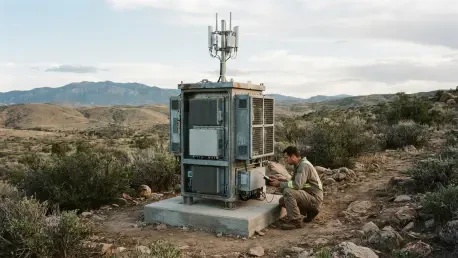
The fundamental challenge facing high-performance AI applications is the unyielding physics of data transmission, specifically the time it takes for signals to travel to distant data centers. Even with the most advanced fiber optics, the round-trip latency to a centralized hyperscale hub often exceeds the threshold required for applications like computer vision, remote healthcare, and emergency response systems. To address this “speed of light” bottleneck, CSPs are integrating Graphics Processing Units directly into their edge nodes and base stations. This proximity ensures that AI inferencing occurs near the data source, allowing for real-time responsiveness that centralized clouds simply cannot achieve. By dedicating a specific 5G network slice to these workloads, providers can offer a protected environment that maintains high throughput and low jitter, even during periods of heavy network congestion. This infrastructure allows mission-critical services to function with the reliability of a local wired connection, providing the necessary stability for autonomous drones and robotic systems that depend on instantaneous data processing to navigate and operate safely.
Orchestrating the Autonomous Network
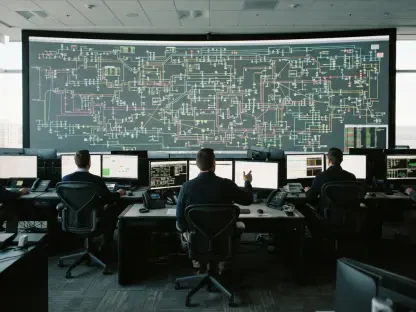
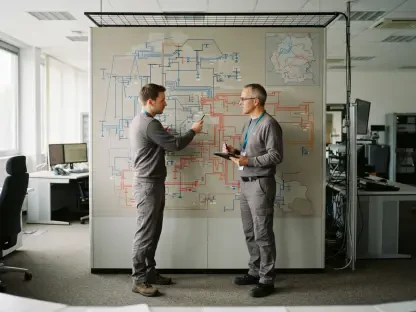
Managing the complexity of 5G AI slices requires an automated orchestration layer that can bridge the gap between commercial promises and technical reality. Initiatives like the TM Forum Moonshot Catalyst project have demonstrated how CSPs can utilize the TMF921 Intent Management Open API to automate the deployment and assurance of these specialized services. A core component of this process is the “feasibility probe,” which uses AI agents to verify that the network can actually meet a requested Service Level Agreement before a contract is signed. These agents analyze real-time traffic forecasts, maintenance schedules, and localized compute capacity to ensure that resources are available to support the customer’s specific AI workload. This proactive approach prevents over-provisioning and builds enterprise trust, as the network effectively “checks its own pulse” before committing to high-stakes operations. By automating the path from intent to activation, service providers can deliver mission-critical reliability at scale, ensuring that every edge-compute resource is utilized efficiently while maintaining the strict performance guarantees required for modern agentic operations.
Commercialization and Operations
Revenue via Specialized Platforms
The practical application of 5G AI slicing is best illustrated by high-value use cases in the sports and industrial sectors, where low latency is a prerequisite for the user experience. At major events like a Formula 1 Grand Prix, VIP spectators use AI-powered augmented reality glasses to access real-time telemetry and multi-camera overlays that are synchronized perfectly with the live action. Delivering this immersive experience requires massive bandwidth and sub-millisecond processing at the edge, a combination that traditional cloud infrastructure cannot provide. This model serves as a blueprint for B2B growth, as CSPs can package these capabilities into managed platforms for various industries, from smart manufacturing to remote education. Instead of selling data by the gigabyte, providers are now marketing specific business outcomes, such as reduced downtime on a production line or enhanced safety for remote workers. This shift allows CSPs to capture higher margins by moving from a utility-based pricing model to a value-based approach, where the network and compute resources are sold as an integrated solution that directly solves complex enterprise challenges.
Future-Proofing Financial Frameworks
Forward-thinking providers realized that technical superiority was only half the battle; they also prioritized the modernization of Business Support Systems to handle the nuances of AI-driven monetization. Successful organizations moved away from legacy billing platforms that tracked simple consumption, opting instead for agile systems capable of metering GPU cycles, AI tokens, and API calls in real time. They implemented automated revenue-sharing models that allowed for seamless collaboration with hardware vendors and software developers within the AI ecosystem. These leaders also integrated automated assurance layers that triggered event-driven fixes or proactive adjustments, ensuring that Service Level Agreements remained intact without manual oversight. To build on this foundation, service providers focused on scaling these edge-native environments across a wider array of vertical markets while refining their intent-driven orchestration models. By treating the commercial back office as a strategic asset rather than an afterthought, they transformed the inherent physics of the network into a sustainable competitive advantage. This strategic evolution ensured that they remained indispensable partners in the enterprise AI revolution long after the initial rollout of 5G.