
Nighttime aerial views of the illuminated skyline demonstrate the practical results of a methodical phased approach to building decentralized utility systems in West Africa. This coastal development, rising from reclaimed land, serves as a stark contrast to the traditional energy challenges faced by the surrounding Lagos metropolis. By establishing a completely autonomous power infrastructure, the city has managed to bypass the frequent outages and technical instabilities inherent in the national grid. This independence is not merely a convenience but a fundamental pillar of the city’s economic strategy, designed to attract global commerce and provide a high-quality residential experience. The recent expansion, which pushed the total generation capacity to 56.7 megawatts, represents a significant leap forward in this ongoing mission. This self-contained ecosystem operates on a scale that provides a reliable blueprint for future urban environments across the continent, proving that localized energy security is achievable through strategic investment and advanced engineering.
Advanced Technical Systems and Engine Integration
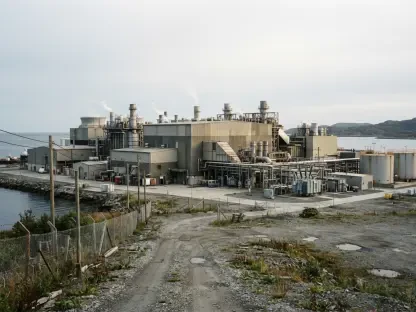
The technical core of the recent expansion relies on six Hyundai Heavy Industries HiMSEN 20H35GV gas engine generator sets, which are specifically engineered for high-output decentralized power environments. These industrial-grade machines are renowned for their thermal efficiency and reliability under heavy loads, providing a steady 56.7MW output that fuels the city’s residential towers and commercial headquarters. By integrating these units into a centralized power hub, the city’s engineers have created a resilient heartbeat for the entire district. The facility incorporates high-end Danfoss control equipment and modern electrical switchgear, allowing for precise management of energy flow and automated monitoring of system performance. This level of technological sophistication ensures that the power supply can fluctuate with demand while maintaining a constant frequency. Such a setup is crucial for protecting sensitive electronics and heavy machinery found in modern office blocks, thereby cementing the city’s reputation as a stable environment for international businesses that cannot afford even seconds of downtime.
The current energy landscape is the result of a deliberate, incremental strategy that began with the commissioning of a 10MVA plant in 2019. In those early stages, the system utilized six MTU Rolls-Royce engines that relied on compressed natural gas delivered to the site via specialized trucks. As the city’s internal infrastructure matured, the management successfully transitioned to a direct pipeline gas supply, significantly enhancing the sustainability and cost-effectiveness of the entire operation. This transition from trucked fuel to a permanent gas connection represents a major shift toward long-term stability and energy sovereignty. Currently, the generation complex combines these legacy units with the newly installed Hyundai sets to create a versatile energy mix capable of scaling alongside the city’s development. This phased approach has allowed the project to avoid the pitfalls of over-building early on while ensuring that utility growth always stays ahead of actual demand, providing a framework of lessons learned for other large-scale infrastructure projects in the region.
Comprehensive Distribution and Grid Autonomy
Beyond generation, the integrity of the energy supply depends on a comprehensive distribution network that is entirely isolated from external failures. The city features over 48 kilometers of sophisticated underground cabling, a design choice that prevents the visual clutter and environmental vulnerabilities typically associated with overhead lines in coastal areas. This underground system is supported by a dedicated 33kV distribution network and a series of modern substations that minimize power loss during transmission. By operating as a “closed-loop” system, the city remains completely insulated from the systemic collapses and grid frequency issues that frequently plague the broader regional utility services. This level of autonomy is particularly vital for major commercial landmarks such as the Orca Mall and the Rugby School Lagos, which require guaranteed uptime to maintain their operational standards. The infrastructure is built to survive the harsh maritime environment, utilizing corrosion-resistant materials and redundant routing to ensure that even a localized cable fault does not result in a district-wide blackout.
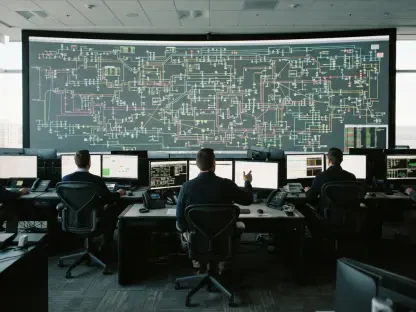
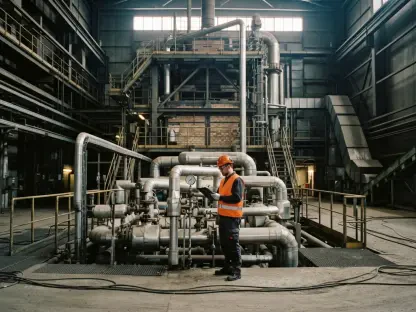
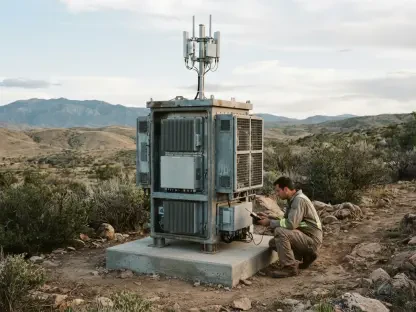
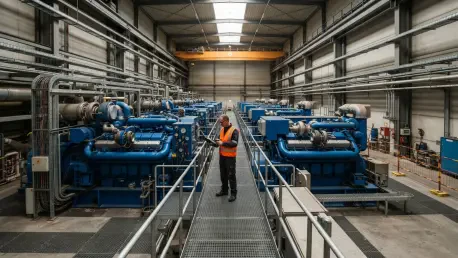
Operational efficiency is maintained through a complex array of industrial cooling systems and automated monitoring stations that handle the extreme heat generated during peak output periods. The power facility utilizes massive blue industrial gas engines paired with rows of rooftop cooling units, all connected by an intricate web of heavy-duty piping designed for maximum safety. This technological sophistication allows the management team to treat electricity as a constant utility rather than an intermittent luxury, which is a significant departure from the standard urban experience in the region. Real-time data analytics help operators predict load spikes and adjust engine cycles accordingly, ensuring that fuel consumption is optimized and wear on machinery is minimized. By prioritizing this high level of automation, the city reduces the risk of human error and ensures a seamless experience for the end-user. The result is a high-density urban environment where residents and businesses can function with the certainty that their essential power needs will be met without interruption, regardless of external economic or technical pressures.
Socio-Economic Impact and Future Expansion
The success of this independent power model has sparked a broader conversation about the future of urban utility management and the viability of private energy projects. While the development highlights a significant infrastructure divide compared to the surrounding areas, it also serves as a functional proof of concept for localized energy solutions. By demonstrating that gas-fired independent power projects can effectively bypass traditional grid limitations, the city has provided a roadmap for other economic zones to achieve similar levels of security. This has reignited discussions regarding the decentralization of energy laws, suggesting that private investment and management may be the most efficient path toward solving chronic utility shortages. The project proves that when technical expertise is combined with sufficient capital and clear regulatory pathways, it is possible to build resilient systems that support economic growth even in challenging environments. As a result, the city has become a hub for engineering talent and a primary case study for energy investors looking to replicate this success in other emerging markets.
Looking toward the horizon, the current 56.7MW capacity is viewed as only a foundational step in a much larger vision to scale the grid to 500MW as occupancy continues to rise. This growth is integrated into a holistic suite of urban services, including independent water treatment facilities and the massive coastal protection system known as the Great Wall of Lagos. The long-term strategy focused on ensuring that every new residential tower and commercial block arrived with pre-allocated power capacity, preventing the utility strain often seen in rapidly growing cities. By securing a robust gas supply chain and investing in scalable engine technology, the development demonstrated a path forward for African urban centers seeking to modernize. The management successfully navigated the complexities of private utility governance, proving that independent grids could be both technically stable and commercially viable over the long term. This achievement offered a practical model for future city planners to prioritize foundational infrastructure as a precursor to economic development, ensuring that the lights remained on as a new era of urban living took hold across the continent.