
Regulators expressed significant skepticism over whether the general public should shoulder the financial burden of new infrastructure designed primarily to power a rapid expansion of regional data centers. This sentiment served as the catalyst for the North Carolina Utilities Commission to recently block a major proposal from Duke Energy Progress. The project, which involved the installation of a 255-MW natural gas-fueled combustion turbine at the Smith Energy Complex in Richmond County, was positioned by the utility as a critical component for meeting the state’s rising energy needs. However, the regulatory body found that the nearly $584 million investment lacked sufficient justification under current economic conditions. By rejecting this specific expansion, the commission underscored a pivotal shift in how state authorities evaluate massive capital expenditures, prioritizing immediate consumer protection over the long-term, speculative growth strategies often favored by large power companies during this era of rapid change.
Analyzing the Financial Implications of the Proposed Turbine
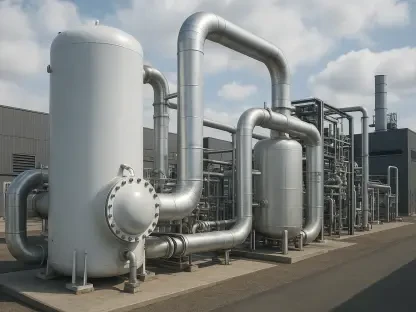
The proposed facility at the Smith Energy Complex was designed to feature an F-class simple cycle combustion turbine capable of burning hydrogen, reflecting a trend toward future-proofing fossil fuel assets for the coming decade. Despite its advanced technical capabilities, the estimated price tag of over half a billion dollars raised immediate red flags among commission staff, who labeled the projected costs as both staggering and unusually expensive for a project of this scale. This scrutiny is part of a much larger conversation regarding Duke Energy’s broader financial strategy, which involves a $103-billion capital spending plan—the most ambitious of its kind for any regulated utility currently operating in the United States. Regulators became increasingly wary of the sheer magnitude of this investment cycle, questioning whether such a rapid accumulation of debt and infrastructure was truly sustainable for the ratepayer base or if it primarily served corporate interests over public ones.
Economic Challenges: The Smith Energy Complex Expansion
Financial scrutiny in this case was not merely about the total cost but also about the allocation of financial risk between the utility and its customers. The commission emphasized that approving such a substantial expenditure required a clear demonstration that the turbine represented the least-cost option for maintaining grid reliability. Without definitive proof that this gas turbine was the most economical choice available, the state’s regulatory body felt compelled to safeguard residents from potential rate hikes associated with unnecessary or premature construction. This decision reflects a broader national trend where utility commissions are no longer taking utility-provided cost estimates at face value. Instead, they are demanding more rigorous transparency and competitive analysis to ensure that every dollar spent contributes directly to the stability and affordability of the local energy market. This cautious approach ensures that the transition to modern energy systems does not unfairly disadvantage the average consumer.
Risk Allocation: Ratepayers Versus Shareholder Interests
Beyond the immediate construction costs, the commission raised concerns regarding the long-term operational viability of a new natural gas asset. As the energy landscape shifts toward renewable resources and more stringent carbon regulations, there is a legitimate risk that a massive fossil-fuel plant built today could become a stranded asset long before its intended lifespan concludes. Regulators were hesitant to lock the public into decades of debt for a technology that may face increasing regulatory hurdles and carbon taxes in the near future. This forward-thinking perspective forced the utility to consider whether alternative solutions, such as battery storage or demand-side management, could provide a more flexible and less risky path forward. By denying the proposal, the state effectively demanded a more diversified approach to resource planning that accounts for both environmental impact and financial sustainability. This push for modernization ensures that energy infrastructure remains resilient in a volatile global market.
Addressing the Shift in Regional Energy Demand
A primary driver behind Duke Energy’s proposal was the projected surge in energy demand, largely attributed to the proliferation of high-capacity data centers across the region. While these facilities bring significant investment, they also place an immense strain on the existing electrical grid, requiring utilities to source additional power rapidly. The North Carolina Utilities Commission, however, questioned the reliability of these load growth forecasts, noting that industrial expansion can be volatile and unpredictable. Regulators were particularly concerned that the public might end up paying for a massive power plant that primarily serves a handful of multinational tech corporations rather than the broader community. The lack of concrete evidence regarding how these industrial customers would contribute to the infrastructure costs made it difficult for the commission to find the project in the public interest. This tension highlights the difficulty of integrating massive industrial loads without compromising economic fairness.
Data Center Management: Balancing Demand and Public Interest
Central to the debate was the utility’s adherence to the White House Ratepayer Protection Pledge, a voluntary commitment designed to ensure that tech companies pay their fair share for the energy infrastructure they require. During the proceedings, the commission found that Duke Energy failed to provide a clear roadmap for how it would honor this pledge in the context of the Smith Energy Complex expansion. There was a notable absence of data distinguishing between the capacity needed for general public service and the capacity specifically intended for new data center operations. Consequently, the regulatory body determined that the proposal did not meet the necessary statutory standards for approval. This ruling serves as a significant precedent, signaling that future utility projects tied to industrial growth will face much higher hurdles regarding cost transparency and equitable distribution. Regulators are now demanding that the financial benefits of industrial growth be balanced against the potential risks of overbuilding.
Resource Planning: Procedural Integrity and Carbon Goals
Instead of granting immediate approval, the commission directed that the proposal be reassessed as part of the 2025 Consolidated Carbon Plan and Integrated Resource Plan. This holistic approach ensures that any new generation capacity aligns with the state’s long-term environmental goals and carbon reduction targets. Duke Energy argued that delaying the project until the finalization of this plan in late 2026 would lead to increased construction costs and potential reliability gaps. Nevertheless, the regulators maintained that the risk of building expensive, permanent fossil-fuel infrastructure based on incomplete data outweighed the risks of a slight delay. This focus on procedural integrity ensures that the state’s energy transition remains grounded in evidence-based decision-making rather than reactive expansion. By synchronizing the turbine proposal with broader resource planning, the commission aimed to create a more resilient and strategically sound energy portfolio while maintaining strict oversight of utility spending.
Strategic Directions for Equitable Energy Expansion
The North Carolina Utilities Commission’s decision to reject the gas turbine at the Smith Energy Complex established a new standard for regulatory vigilance in the face of rapid industrial expansion. By prioritizing ratepayer protection and data reliability over aggressive utility growth, the state successfully avoided a massive financial commitment that lacked a clear public benefit. Duke Energy remained focused on reviewing the order to determine its next steps, while stakeholders across the region began exploring more diversified strategies for meeting energy demand. Moving forward, the emphasis shifted toward developing more granular methods for cost allocation, ensuring that large-scale industrial consumers took greater responsibility for the infrastructure they necessitated. This outcome encouraged a more collaborative approach to energy planning, where transparency and equity became the primary metrics for project approval. Ultimately, the ruling proved that rigorous oversight could effectively balance the competing needs of grid reliability.