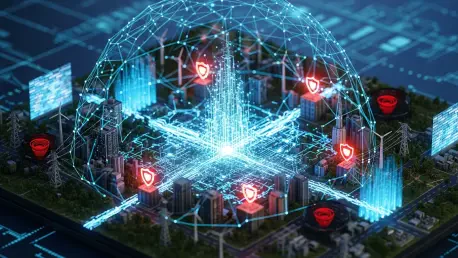

The rapid decarbonization of the global economy has transformed the electrical grid from a simple sequence of copper wires into a hyper-connected digital ecosystem that demands millisecond-level precision. This shift is primarily driven by the urgent transition away from fossil fuels and the explosive growth of energy-intensive sectors like artificial intelligence data centers and widespread electric vehicle infrastructure. In this new paradigm, the century-old model of centralized power plants sending electricity one-way to passive consumers is being discarded in favor of a smart grid. This modern iteration functions as a complex, two-way dialogue between millions of decentralized energy sources—such as residential solar arrays, industrial battery storage, and wind farms—and the utilities that manage them. While this digital evolution allows for unprecedented efficiency and the integration of volatile renewables, it simultaneously creates a massive paradox. The very connectivity that makes the grid green and efficient also exposes the most critical infrastructure of modern civilization to digital threats that did not exist in the era of analog switches. Consequently, the protection of these networks has evolved from a niche technical concern into a cornerstone of national security and a primary destination for institutional capital. As society becomes increasingly dependent on a stable digital power network, ensuring the integrity of every data packet is now just as important as the generation of the electricity itself, making cybersecurity a dominant multi-decade investment theme.
Critical Vulnerabilities: Identifying the Primary Risks in Modern Power Networks
One of the most immediate points of failure in this digital energy landscape resides at the absolute edge of the network, specifically within the Advanced Metering Infrastructure. These smart meters act as the critical handshake between the utility provider and the end-user, collecting granular data to optimize energy distribution and manage demand response programs. However, because these devices are physically accessible and number in the millions, they represent a vast, decentralized attack surface that remains difficult for traditional security teams to monitor continuously. A sophisticated actor who gains access to a single endpoint can potentially exploit software vulnerabilities to pivot into the broader utility network, moving laterally to reach sensitive control systems or industrial management consoles. This vulnerability is exacerbated by the fact that many legacy components were never designed with modern encryption standards or secure boot protocols in mind. The physical accessibility of meters on residential and commercial buildings makes them uniquely susceptible to hardware tampering, which can then serve as a beachhead for launching large-scale service interruptions. As the number of connected devices continues to scale at an exponential rate, the difficulty of maintaining a secure perimeter around millions of individual access points remains one of the most pressing hurdles for grid operators and their technology partners.
Beyond the physical entry points at the edge, the digital logic that governs the grid is susceptible to a particularly insidious form of interference known as False Data Injection. In a smart grid environment, automated control systems rely on a constant stream of sensor data to make real-time adjustments to voltage levels and frequency balance to prevent catastrophic failures. If an attacker manages to spoof this data, they can trick the system into perceiving a crisis that does not exist, such as a sudden phantom surge or a critical drop in supply that requires immediate load shedding. The grid’s automated responses, intended to protect expensive equipment, might then trigger unnecessary blackouts or isolate healthy segments of the network, leading to cascading failures across multiple regions. Furthermore, such manipulations can cause actual physical destruction; for instance, by forcing large-scale transformers or battery storage units to operate outside of their safe parameters, an attacker could cause permanent damage to hardware that takes months or even years to replace. This intersection of digital commands and physical consequences represents the most dangerous frontier of modern infrastructure risk, where a few lines of malicious code can result in the smoking ruins of essential utility hardware. Protecting against these cyber-physical attacks requires a deep fusion of cybersecurity and electrical engineering.
The risks extending from a digitized grid are not confined to physical blackouts but also encompass the integrity of the sophisticated energy markets that facilitate modern power trading and resource allocation. These markets operate on complex algorithms that determine pricing based on real-time demand, weather forecasts, and the availability of various renewable energy sources across the country. If a hostile entity or a financially motivated group gains unauthorized access to these market-clearing systems, they can manipulate price formation through subtle data falsification or the artificial inflation of demand signals. This type of economic sabotage could potentially bleed billions of dollars from a national economy or cause energy prices to spike to unsustainable levels for consumers, all without a single light bulb flickering in the streets. Regulators are increasingly concerned that the financial incentives for such manipulation are becoming as potent as the political incentives for geopolitical disruption. Because energy is now traded as a digital commodity in high-frequency environments, the security of the financial data and the algorithms that process it has become as vital as the physical security of the transmission lines. Maintaining the absolute trust of market participants is essential for the continued investment in new energy projects, making data integrity a top-tier priority for the financial sector.
Strategic Defensive Frameworks: Emerging Solutions and Investment Opportunities
As the complexity of the power network continues to grow, the role of artificial intelligence has emerged as both a vital defense mechanism and a potential source of systemic failure. Machine learning models are currently indispensable for managing the load from millions of new electric vehicle chargers and predicting the intermittent output of wind and solar farms with high accuracy. However, these models are themselves vulnerable to adversarial attacks, where subtle, mathematically calculated adjustments to input data can lead the artificial intelligence to make catastrophic operational errors. To mitigate this risk, developers are shifting their focus toward explainable AI, which allows human operators to understand the reasoning behind an algorithm’s decision-making process in real time. This transparency is crucial for distinguishing between a genuine grid emergency caused by weather and a sophisticated digital deception designed to cause a shutdown. Significant investment is now flowing into firms that specialize in robustifying these models, ensuring that the automated brains of the grid can withstand attempts to confuse or mislead them. The goal is to create a truly self-healing network that can identify anomalies in its own logic and revert to safe operational modes before any physical damage occurs, representing a significant leap in infrastructure resilience.
To fortify the grid against both internal and external threats, the industry is widely adopting a Zero-Trust architecture, which fundamentally alters how network permissions and device communications are handled. This security model operates under the constant assumption that no user, device, or application should be trusted by default, regardless of whether they are located inside or outside the utility’s traditional perimeter. Every single connection request and data packet must be continuously authenticated and authorized before access is granted to sensitive grid controls or customer information. Complementing this approach is the use of Digital Twins, which are high-fidelity virtual replicas of the physical power grid that update in real time based on sensor feedback. These twins allow engineers to simulate various attack scenarios and stress-test defensive protocols in a risk-free digital sandbox before they are implemented in the real world. By observing how a virtual grid reacts to a simulated malware outbreak or a coordinated sensor attack, operators can develop more resilient hardware configurations and faster incident response times. This proactive stance is essential for staying ahead of threat actors who are constantly refining their techniques to find gaps in the network. The integration of Zero-Trust protocols and Digital Twin modeling now represents the gold standard for modern utility management.
The realization that a secure grid is the only foundation for a functional modern society catalyzed a significant pivot in global investment strategies toward long-term infrastructure resilience. Stakeholders recognized that the transition to a carbon-neutral economy was impossible without a digital infrastructure that was as resilient to cyber warfare as it was to extreme weather events. This understanding prompted a massive influx of capital into companies that developed secure-by-design hardware, ensuring that every turbine, inverter, and smart sensor possessed built-in cryptographic protections at the point of manufacture. Financial institutions and government agencies shifted their focus toward projects that integrated advanced cyber-defense as a core feature rather than an expensive secondary addition. As the electrification of transportation and heavy industry accelerated, the power grid effectively became the single most important point of failure for the entire global economy. Consequently, the development of sophisticated defensive tools and the training of a specialized workforce of cyber-physical security experts became the most critical tasks for the energy sector. These actions ensured that the flow of electricity remained uninterrupted, providing the stability necessary for continued technological growth and societal progress in an increasingly digitized world. These steps proved essential in safeguarding the future of global energy independence and economic stability.