
High-density battery designs are creating new engineering hurdles, particularly regarding the extreme weight limits of road transportation and thermal management requirements. As the global energy landscape undergoes a profound transformation, the Lithium-ion Battery Energy Storage System (BESS) sector has emerged as a cornerstone of modern power infrastructure, with projections suggesting the market will soar to a $135 billion valuation by 2037. This explosive growth represents more than just a financial milestone; it reflects a fundamental shift in how nations manage the volatility of renewable energy. Between 2023 and 2025, annual capacity additions in gigawatt-hours more than tripled, signaling that stationary storage is no longer a secondary consideration but a primary pillar of global energy policy. Electricity grids worldwide are now grappling with the inherent intermittency of wind and solar power, making large-scale battery systems essential for maintaining stability. While the lithium-ion market was once defined almost exclusively by the rapid rise of electric vehicles, the current era is seeing a significant realignment of battery demand as the BESS sector asserts its dominance. In 2023, electric vehicle batteries accounted for 84% of total demand, but by 2025, that share softened to 78% as stationary applications nearly doubled their market presence.
Regional Leadership and Market Diversification
Strategic Dominance: Policy and Production in Major Hubs
China continues to hold its position as the undisputed leader in the global energy storage landscape, currently accounting for approximately 58% of all deployments as of early 2026. This dominance is not merely a result of scale but is the outcome of a deeply integrated supply chain and aggressive state mandates that prioritize domestic manufacturing and rapid installation. The Chinese market benefits from a robust ecosystem where battery cell production, chemical processing, and system assembly occur in close proximity, significantly reducing logistics costs and lead times. By mandating renewable energy projects to include a specific percentage of storage capacity, the Chinese government has created a guaranteed domestic market that allows manufacturers to achieve massive economies of scale. This centralized approach has made it difficult for international competitors to match the pricing of Chinese-made BESS units, forcing other nations to adopt more protective industrial strategies to safeguard their own energy independence and manufacturing sectors.
In response to this global competition, the United States has intensified its efforts to foster a localized battery supply chain through significant legislative measures. The implementation of the One Big Beautiful Bill Act (OBBA) and the Section 45X Manufacturing Tax Credits has fundamentally changed the economic calculus for battery production on American soil. These policies are designed to reduce reliance on foreign-made components, particularly lithium iron phosphate (LFP) cells, by providing lucrative incentives for every kilowatt-hour produced domestically. However, these initiatives also introduce a layer of complexity for developers who must navigate stringent domestic content requirements to qualify for maximum subsidies. Tariffs on imported cells further complicate the landscape, creating a push-pull dynamic where the desire for lower-cost imports clashes with the strategic necessity of a sovereign supply chain. As the U.S. aims for its second-largest market share of 18%, the success of these protectionist policies will depend on how quickly domestic manufacturers can scale up to meet the soaring demand from utility-scale storage projects.
Emerging Hubs: Global Expansion Beyond the Giants
The diversification of the global storage market is becoming increasingly evident as new regional players climb the ranks of capacity deployments. Saudi Arabia and Chile have emerged as top-tier participants, driven by their unique geographical advantages and aggressive state-backed energy transition goals. In Saudi Arabia, the push to diversify the economy away from fossil fuels has led to massive solar-plus-storage tenders that require gigawatt-scale battery systems to manage the high solar yields typical of the region. Similarly, Chile has leveraged its immense solar potential in the Atacama Desert to become a leader in the South American market. For these nations, BESS is not just a grid stability tool but an essential component of their national economic strategies, allowing them to maximize the value of their natural resources and attract international investment in green hydrogen and other energy-intensive industries.
Europe and Australia are also witnessing a surge in storage activity, though their growth is characterized by sophisticated regulatory frameworks rather than just raw capacity mandates. In Australia, the rapid retirement of coal-fired power plants has created an urgent need for “big batteries” to provide frequency control and ancillary services to a grid that is becoming increasingly decentralized. Germany, the United Kingdom, and Italy have also seen significant momentum, each driven by high levels of renewable penetration and a shift toward merchant-based revenue models. These markets are moving toward a more varied geographic distribution where local energy requirements and regulatory incentives dictate the pace of deployment. As these regions continue to integrate higher volumes of variable wind and solar energy, the requirement for long-duration energy storage becomes more acute, prompting a shift from short-term frequency response to deeper energy shifting applications that can support the grid for several hours or even days.
Financial Stability and Advanced Revenue Frameworks
Securing Investment: The Transition to Bankable Models
One of the most critical evolutions in the storage industry is the transition from speculative projects to “bankable” energy assets that can secure long-term financing. Historically, the BESS sector struggled with revenue uncertainty, as many projects relied on volatile merchant power prices and arbitrage opportunities that were difficult to predict over a ten-year horizon. However, government policies are now evolving to provide the price certainty that institutional investors require. Australia’s Capacity Investment Scheme (CIS) is a prime example of this trend, offering a floor and ceiling revenue mechanism that protects developers from extreme market lows while allowing for some upside. This shift toward structured procurement models has unlocked billions of dollars in capital, as lenders are now more willing to provide project finance for assets that have guaranteed income streams through capacity payments or long-term tolling agreements with utilities.
In the United Kingdom, the introduction of the Cap-and-Floor framework specifically targeting long-duration energy storage (LDES) has set a new standard for how governments can de-risk emerging technologies. By providing a financial safety net, this mechanism encourages the deployment of larger systems that can provide sustained power during periods of low wind and solar generation. These types of bankable frameworks move the industry away from a reliance on the “wild west” of frequency response markets, which have become increasingly saturated in many developed regions. Instead, the focus has shifted toward capacity markets where batteries are paid to be available during peak demand periods, effectively acting as virtual peaker plants. This institutionalization of the BESS asset class is essential for achieving the $135 billion market valuation, as it allows for the entry of more conservative pension funds and insurance companies that prioritize steady, predictable returns over high-risk merchant trading.
Operational Excellence: Value Stacking and System Intelligence
The modern operational strategy for energy storage revolves around the concept of “revenue stacking,” where a single asset participates in multiple market segments simultaneously to maximize its internal rate of return. A BESS unit might perform frequency regulation in the morning, engage in price arbitrage during the afternoon peak, and provide capacity reserves overnight. This multi-functional approach requires a high degree of operational sophistication, as the degradation of the battery must be carefully balanced against the potential revenue from each cycle. As electricity markets become more complex and negative pricing events become more common due to excess renewable generation, the ability to rapidly switch between different service modes has become the primary differentiator between profitable projects and those that struggle to break even.
To manage this complexity, the industry has turned toward AI-driven Energy Management Systems (EMS) and sophisticated software platforms that can optimize bidding strategies in real-time. These systems utilize machine learning algorithms to predict weather patterns, grid demand, and price fluctuations, allowing operators to make data-driven decisions about when to charge and discharge. Furthermore, the rise of Virtual Power Plants (VPPs) has allowed for the aggregation of smaller commercial and residential storage units into a single, cohesive resource that can participate in wholesale markets alongside utility-scale assets. This democratization of the grid not only provides additional revenue for homeowners and businesses but also adds a layer of resilience to the local distribution network. As the technology matures, the success of a storage project is increasingly defined by the quality of its software and its ability to navigate the intricacies of modern energy trading.
Technological Innovation and Future Deployment Strategies
System Engineering: High-Capacity Containers and Safety Standards
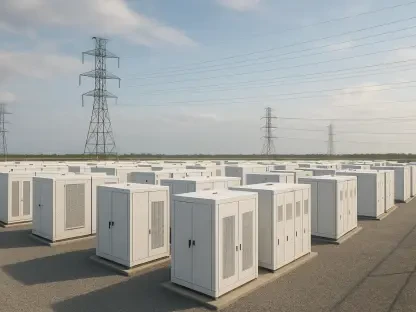
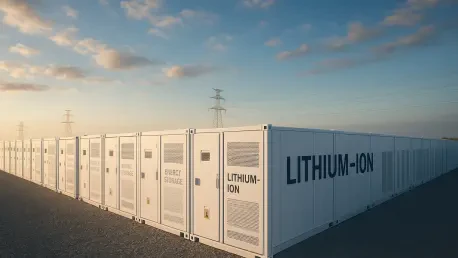
The drive for greater energy density has led to a significant shift in system design, with the industry moving toward containerized units that can hold more than 6.5 MWh of capacity in a standard footprint. These high-capacity systems are made possible by the adoption of larger battery cells and more compact internal layouts that minimize the space used for wiring and structural components. While these designs offer clear advantages in terms of reduced site footprint and lower installation costs, they also present significant engineering challenges related to weight and logistics. Transporting these massive units requires specialized equipment and careful route planning to comply with road weight regulations, which are often not designed for such concentrated loads. Consequently, manufacturers have had to innovate in the structural integrity of the containers themselves, using advanced materials to reduce weight without compromising safety or durability.
Safety remains the paramount concern for regulators and insurers as energy densities continue to climb. The risk of thermal runaway, where a single cell failure can lead to a cascading fire, has prompted the development of advanced thermal management systems. The industry is rapidly transitioning from traditional air cooling to liquid cooling and even immersion cooling technologies, which provide more uniform temperature control and can more effectively dissipate heat during high-power operations. These liquid-cooled systems not only enhance safety by reducing the risk of fire but also improve the overall efficiency and cycle life of the battery by keeping the cells within their optimal operating temperature range. Additionally, the integration of sophisticated fire suppression systems and real-time monitoring sensors has become standard for utility-scale projects, providing multiple layers of protection that help to lower insurance premiums and increase public confidence in large-scale battery deployments.
Strategic Outlook: Overcoming Infrastructure and Supply Bottlenecks
Looking back at the progress made throughout the year, stakeholders realized that the path toward a fully decentralized grid required more than just cheap battery cells; it demanded a fundamental overhaul of infrastructure and policy. The industry successfully moved toward addressing the massive grid connection queues that had previously stifled growth in markets like the United States and the United Kingdom. Developers and system operators prioritized the implementation of “fast-track” connection processes for storage projects that provided essential grid services, recognizing that batteries are a solution to grid congestion rather than just another source of load. By streamlining these administrative hurdles, the sector ensured that the surge in manufacturing capacity was matched by a corresponding increase in physical grid integration, preventing a bottleneck that would have otherwise stalled the global transition.
In terms of supply chain resilience, the industry established that long-term pricing agreements and diversified sourcing were the only effective ways to combat the volatility of raw material costs. When lithium carbonate prices experienced a spike in early 2026 due to changes in export rebates and front-loading of inventory, the most successful companies were those that had secured their supply through direct investments in mining or strategic partnerships. This period taught the market that “zero-degradation” systems and high-cycle-life technologies were not just technical achievements but vital economic tools that improved the long-term bankability of assets. By focusing on durability and advanced fire protection materials, the sector mitigated the risks that previously deterred conservative investors. Ultimately, the industry moved toward a more mature phase where technical excellence, financial innovation, and proactive grid management combined to solidify the role of energy storage as the backbone of the twenty-first-century power grid.