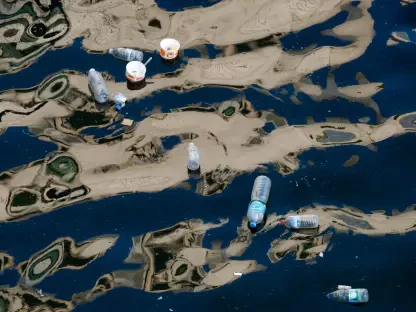

Improperly discharging oil into the sea, creeks, or ports within Dubai carries a D###,000 penalty to safeguard the region’s delicate aquatic ecosystems. This specific regulation forms just one segment of a much broader, highly sophisticated legal framework that the United Arab Emirates has established to protect its natural resources and public health. In the first half of 2026, the nation witnessed a significant environmental crackdown through a collaborative effort involving the Dubai Police, the Dubai Municipality, and the Dubai Environment and Climate Change Authority. This initiative was not merely about issuing tickets but served as a decisive demonstration of the region’s commitment to sustainability and strict accountability. By integrating federal mandates with emirate-specific laws, the UAE has created a tiered system where financial consequences are directly proportional to environmental risk. Recent enforcement data reveals a landscape where fines range from a modest Dh500 for minor littering to a staggering D#0 million for severe violations.
National Environmental Protection Standards
Federal Framework: Management of Serious Offenses
At the highest tier of the environmental strategy, federal laws set the benchmark for the most egregious offenses against nature. Federal Law No. 24 of 1999 remains a cornerstone of this defense, specifically targeting high-stakes violations that involve the unauthorized transport, burial, or storage of nuclear substances. These activities are not treated as minor administrative lapses but as top-tier criminal matters that threaten national security and ecological integrity. Under this legislation, entities found guilty of such negligence face fines that reach up to D#0 million. This severe financial deterrent ensures that the handling of radioactive materials remains under the strictest possible supervision. By classifying these incidents as criminal rather than routine waste issues, the federal government signals to global industrial players that environmental safety is a non-negotiable priority. The law serves to prevent long-term damage that could potentially take generations to reverse in the region.
Integrated Waste: Corporate Liability and Accountability
Complementing these high-level protections is Federal Law No. 12 of 2018, which focuses on Integrated Waste Management for private corporations and organizational entities. This regulation specifically targets illegal disposal practices that undermine public hygiene and aesthetics, such as littering, burning, or burying waste in unauthorized zones like public roads and waterways. Corporations found in violation of these standards can be penalized with fines of up to D# million. A vital component of this federal law is the explicit requirement for the offending party to assume the full financial burden of repairing any environmental damage caused by their actions. This ensures that the costs associated with remediation do not fall upon the taxpayer but are instead absorbed by the responsible entity. By reinforcing corporate accountability, the law encourages businesses to invest in sustainable waste processing technologies. This shift reflects a national goal to move away from reactive cleaning to preventative management.
Localized Regulations: Dubai’s Environmental Governance
Urban Waste: Industrial and Hazardous Materials
While federal mandates establish a nationwide baseline, Dubai operates its own robust legislative pillar known as Dubai Law No. 18 of 2024. This legislation grants the Dubai Municipality extensive authority to oversee all waste-related activities within the emirate’s borders. One of the most significant aspects of this law is its tiered fine system, which allows for a general maximum penalty of Dh500,000 for various waste management violations. To prevent habitual negligence, the law includes a specific provision for recidivism; if a violation is repeated within a single year, the fine amount can be doubled, provided it remains within the prescribed half-million-dirham cap. This creates a persistent incentive for companies to maintain compliance throughout their operations rather than treating fines as a simple cost of doing business. The municipality utilizes advanced monitoring technology to ensure that waste disposal sites are used correctly and that all industrial processes align with the latest ecological standards.
Local Deterrents: Fines for Specialized Waste
In tandem with the 2024 law, Executive Council Resolution No. 58 of 2017 provides a detailed schedule of penalties that differentiate between hazardous and general waste. Disposing of hazardous materials at an unauthorized site is met with a Dh50,000 fine, reflecting the immediate danger such substances pose to soil and groundwater. Bringing hazardous waste into Dubai without a valid permit results in a D##0,000 penalty, while the contamination of a designated hazardous-waste facility triggers a Dh5,000 fine. General waste disposal is equally scrutinized, with fines of D#0,000 for operating waste management activities without a license or importing landfill waste from neighboring regions. Even individual behavior is governed by these rules, as open burning or dumping general waste carries a D#,000 fine, while minor littering in public parks is penalized at Dh500. This multi-layered approach ensures that everyone, from industrial giants to residents, is held accountable for the local environment.
Specialized Runoff Control and Administrative Enforcement
Liquid Waste: Safeguarding Public Health
Specific public health protections are further detailed under Executive Council Resolution No. 14 of 2015, which focuses on the management of liquid waste and industrial runoff. The illegal disposal of wastewater into the city’s drainage systems or natural environments carries a severe D#00,000 fine due to the risk of infrastructure damage and marine pollution. Industrial entities must be particularly cautious, as dumping concrete or ready-mix materials from transit vehicles in unauthorized areas leads to a Dh50,000 penalty. Leakage from vacuum tankers or buildings onto public roads is also strictly monitored, with a D#0,000 fine applied to discourage poor maintenance of transport equipment. These regulations are critical for protecting the city’s desalination plants and marine habitats, which are vital to the region’s water security. By targeting liquid waste specifically, authorities address the hidden threats that can compromise the urban ecosystem without being immediately visible to the public.
Strategic Enforcement: Restoration and Compliance Measures
Enforcement of these environmental laws extended beyond financial penalties to include significant administrative consequences that halted non-compliant operations. UAE authorities exercised the power to suspend or permanently revoke the licenses of offending companies, closed facilities that failed inspections, and impounded vehicles used in illegal dumping activities. In cases where transport violations were particularly severe, drivers faced deportation, while buildings that flouted wastewater regulations had their utility services, such as electricity and water, disconnected. The ‘polluter pays’ principle was strictly enforced; when a violator failed to restore an affected area, the Dubai Municipality performed the work and charged the offender the full cost plus a 25 percent administrative fee. Strategic solutions identified for the future relied on the integration of automated environmental auditing systems and real-time sensors to ensure that the progress made during 2026 remained permanent.