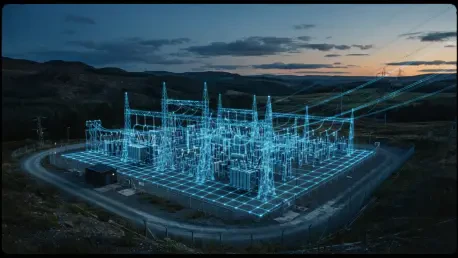

Dynamic trust scores can be assigned to hardware components, triggering immediate micro-segmentation if a sensor begins to display anomalous communication patterns or latency issues. This proactive mechanism represents a fundamental shift in how the modern electrical grid manages its security posture within an increasingly digitized environment. The transition from a traditional, mechanical infrastructure to a complex cyber-physical system has been accelerated by the widespread adoption of the Industrial Internet of Things (IIoT), high-speed communication protocols, and cloud-based analytics. While these technological advancements have drastically improved the efficiency of power distribution and the responsiveness of utility providers, they have simultaneously expanded the attack surface. Malicious actors now have a wider variety of entry points to disrupt critical infrastructure, with one of the most insidious threats being the load redistribution (LR) attack. This specific form of False Data Injection (FDI) is designed to be exceptionally stealthy by manipulating data at individual buses while keeping the total reported system demand constant. Because the aggregate numbers appear normal, traditional bad-data detection algorithms often fail to trigger an alarm, allowing attackers to cause transmission congestion or force incorrect dispatch decisions that lead to massive economic losses or physical instability without the operators ever realizing the system is under a coordinated assault.
Adaptive Anomaly Detection and Risk Indexing
The initial layer of this advanced defensive framework relies on a sliding-window statistical model that operates as a real-time anomaly detector. Unlike legacy security systems that compare incoming data against a rigid historical baseline, this AI-driven approach recalculates the mean and standard deviation of measurements at every individual time step using the most recent data window. This flexibility is crucial because power grids are inherently dynamic environments where load levels naturally fluctuate based on the time of day, weather conditions, and seasonal changes. A static threshold in such a setting would inevitably lead to an unacceptable frequency of false positives during peak hours or, conversely, allow subtle malicious injections to slip through during periods of low activity. By allowing the detection parameters to drift alongside normal diurnal variations, the system maintains a high degree of sensitivity to the sharp, attack-consistent deviations that characterize load redistribution efforts. This ensures that the grid’s defensive posture remains sharp and responsive to actual threats while accommodating the predictable variability of energy consumption across the network.
Once the anomaly detector flags a specific measurement as suspicious, the system transitions into a quantitative evaluation phase using the Probabilistic Cyber-Risk Index (PCR-Index). This multi-dimensional metric moves beyond simple binary alerts by calculating the actual danger posed by a potential compromise based on three distinct factors. First, it analyzes the probability of an attack by blending historical threat intelligence with the real-time likelihood scores generated by the AI. Second, it calculates a vulnerability coefficient that assesses how exposed a particular measurement unit is based on its network topography and existing encryption levels. Finally, it determines the operational impact factor, which quantifies the potential economic damage and technical disruption that would occur if that specific node were successfully manipulated. This data-driven prioritization allows grid operators to visualize the most critical risks on a heat map of the infrastructure, ensuring that limited human and technical resources are directed toward the most significant threats rather than being spread thin across thousands of benign alerts.
Strategic Measurement Selection and Resource Allocation
Protecting every single sensor and communication line in a sprawling, multi-state power grid is both economically unfeasible and computationally prohibitive. To solve this dilemma, the proposed framework utilizes a machine-learning classifier, specifically gradient-boosted decision trees, to identify a highly optimized subset of critical measurements that must be secured to maintain the integrity of the state estimation process. This AI model is trained on massive datasets representing various network configurations and loading conditions, allowing it to learn the complex relationships between specific buses and the overall stability of the grid. By focusing on these high-leverage data points—such as those essential for economic dispatch or those with high connectivity significance—the system creates a targeted protection strategy. This selective approach ensures that even if an attacker manages to compromise peripheral sensors, the core mathematical models used by operators to manage the grid remain accurate and reliable, effectively neutralizing the strategic objective of the load redistribution attack.
The allocation of security resources, such as advanced encryption or redundant metering hardware, is further refined through the application of zero-sum game theory. This mathematical model frames the interaction between the grid defender and the cyber-attacker as a strategic competition where each side attempts to maximize its own benefit at the expense of the other. The defender aims to minimize potential economic losses by protecting the most influential nodes, while the attacker seeks to maximize disruption by targeting the most vulnerable yet impactful components. By calculating the Nash equilibrium, the framework identifies a mixed strategy that provides a probabilistic guide for where to deploy security measures at any given moment. This prevents the defense from becoming predictable, as the system can dynamically shift its focus based on the evolving threat landscape. The resulting resource distribution is not just a reaction to current events but a calculated move that anticipates the most likely paths an intelligent adversary might take to compromise the system’s operational continuity.
Zero Trust Architecture and Hardware Security
Building on the digital defense layers, the framework incorporates a Zero Trust Architecture (ZTA) that fundamentally changes the relationship between the network and its hardware components. In a traditional setup, devices inside the perimeter are often granted broad trust, but the ZTA model operates on the principle that no device—whether it is a Phasor Measurement Unit (PMU) or an Intelligent Electronic Device (IED)—should be trusted by default. This requires every hardware asset to undergo frequent, automated re-authentication using short-lived digital certificates and cryptographically secure identities. Adhering to the international IEC 62443 standards for industrial automation, this approach ensures that a single compromised device cannot be used as a gateway to move laterally through the network. By enforcing strict identity management and continuous verification at the hardware level, the grid gains a resilient foundation where the physical reality of the equipment is constantly reconciled with its digital representation, making it much harder for attackers to inject fabricated data into the stream.
Complementing the authentication protocols is a behavioral monitoring system that assigns and updates dynamic trust scores for every active device on the grid. This trust score is not a static value assigned at the time of installation; rather, it fluctuates in real-time based on the device’s adherence to expected communication patterns. If a sensor begins to exhibit unusual latency or transmits data that deviates from the predictions of the sliding-window AI models, its trust score is immediately downgraded. This drop in trust triggers an automated micro-segmentation response, effectively isolating the suspicious component from the rest of the network without requiring manual intervention from a human operator. This immediate containment prevents a local failure or a targeted sensor hijack from escalating into a wider load redistribution attack that could threaten the stability of the entire region. By merging behavioral AI with rigid access controls, the framework creates a self-healing environment where the digital and physical layers of the infrastructure are perpetually synchronized against external manipulation.
Validation through Performance and Future Prospects
The validation of this integrated AI-driven framework involved rigorous testing against standard IEEE 14-bus, 30-bus, and 57-bus power systems, which are the industry benchmarks for evaluating grid security and performance. Through extensive Monte Carlo simulations, the researchers demonstrated that the system achieved a 97 percent detection accuracy, a significant improvement over the 86 percent accuracy typically found in conventional rule-based security systems. More impressively, the proactive nature of the probabilistic risk assessment and strategic resource allocation reduced potential economic losses by 61 percent. In contrast, static defense mechanisms only managed to mitigate approximately 27 percent of the financial impact under similar attack scenarios. These results established that an autonomous, interconnected defense pipeline is far more capable of handling the nuances of stealthy cyberattacks than fragmented security modules, marking a definitive shift toward a more resilient and self-aware utility management paradigm that can withstand sophisticated digital warfare.
Looking ahead, the development of these protective systems moved toward even more realistic modeling to bridge the gap between simulation and the chaotic environment of a live power plant. While the initial study utilized a DC power-flow approximation for computational simplicity, subsequent research efforts focused on integrating full alternating current (AC) state estimation, which accounts for non-linear variables like voltage magnitudes and phase angles. Engineers also began incorporating Graph Neural Networks (GNNs) to gain a deeper understanding of the topographical relationships between transmission lines, which is vital for predicting how a failure in one area might cascade through the network. Furthermore, the integration of hardware-in-the-loop testing allowed the AI framework to interact with actual physical controllers and communication equipment in laboratory settings. These ongoing advancements, combined with the adaptation to volatile renewable energy sources, are essential for ensuring that the smart grid remains the stable backbone of modern society in an age of persistent and evolving cyber threats.