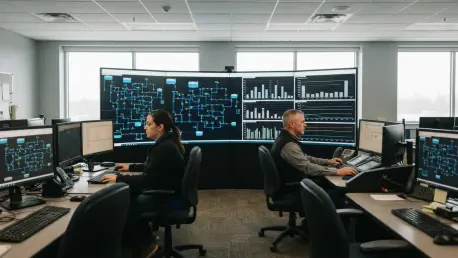

Anglian Water is investing in a dynamic pipeline of technological opportunities to move away from traditional IT procurement and toward specialized, high-impact digital resilience. The utility sector is currently navigating a period where public trust is at an all-time low due to environmental concerns, necessitating a radical departure from outdated infrastructure management. By partnering with the Milton Keynes-based IT consultancy Aiimi, Anglian Water has established a specialized framework known as the AI Accelerator. This initiative is designed to identify and scale artificial intelligence applications that address the unique operational hurdles found within the water industry. Rather than relying on generic software that often lacks the nuance required for complex environmental monitoring, this project has cataloged fifty distinct use cases. These range from optimizing internal workflows to deploying predictive analytics that protect local ecosystems from wastewater contamination. This transition marks a pivotal moment in how essential services leverage data to meet modern ecological standards.
Developing Custom Intelligence: The Shift to Business-Owned Solutions
The collaboration prioritized custom-built, business-owned solutions over standard software packages to meet the stringent technical and regulatory demands of the industry. Aiimi has long specialized in modernizing legacy systems and unlocking latent value within corporate datasets, particularly for major entities like Yorkshire Water and the industry regulator, Ofwat. This deep domain expertise allowed the partnership to move beyond performative automation and focus on tools designed with direct input from front-line personnel. By involving the employees who manage daily operations, the AI Accelerator ensured that the resulting technology addressed actual friction points rather than theoretical problems. This approach is essential for achieving the ambitious targets set for the current AMP8 regulatory period, which spans from 2026 to 2030. Unlocking the potential of historical data allows the company to transition from a reactive posture to a proactive strategy that anticipates failures before they occur in the field.
Among the most impactful developments within this initiative are the Situational Awareness Solution and the Historical Mitigating Actions tool. The former serves as an intelligent dashboard for control room staff, synthesizing massive streams of real-time data into actionable insights. In practice, this tool has already saved personnel roughly two hours per shift by streamlining handovers and routine monitoring. Meanwhile, the Historical Mitigating Actions tool functions as a sophisticated assistant during live pollution incidents. By scanning hundreds of thousands of historical records in seconds, it identifies root causes and suggests lessons learned that were previously buried in archives. During its initial trial phase, this specific AI implementation was credited with reducing a potential environmental crisis to zero impact by surfacing expert knowledge instantly. These tools represent a shift toward microservices that can be utilized across various departments to improve overall compliance scores and regional safety.
Navigating Regulatory Scrutiny: A Response to Environmental Challenges
This technological push arrived at a critical juncture for the British water industry, which faced unprecedented scrutiny over raw sewage discharges and environmental performance. Public frustration regarding rising bills and shareholder dividends has fueled a demand for more aggressive regulation and transparency. For Anglian Water, which recorded twelve serious pollution incidents last year, the AI Accelerator is a strategic necessity rather than a luxury. The company has received “Requires Improvement” ratings from environmental regulators for several consecutive years, making the adoption of real-time monitoring tools essential for its operational survival. By integrating machine learning to learn from past failures and prevent future leaks, the utility provider aimed to restore its reputation among customers and stakeholders alike. The focus is no longer just on maintaining physical pipes but on managing the complex biological and chemical data that defines the health of the entire region’s waterways.
The integration of these digital tools reflected a wider trend among utility providers who adopted digital-first strategies to prove their commitment to ecological stewardship. By moving away from static IT procurement, Anglian Water established a dynamic pipeline that allowed for continuous software evolution and digital resilience. This model ensured that the company could adapt to shifting weather patterns and sudden infrastructure stresses without waiting for lengthy procurement cycles to conclude. Instead of purchasing a single software solution that might become obsolete within months, the organization invested in a data ecosystem that grows more intelligent with every incident it analyzes. Such festivals of innovation and technological trials have become a primary method for utilities to demonstrate their proactive nature to the regulator. This capability provides a pathway for legacy companies to transform into highly efficient, data-driven entities capable of responsible resource management.
The leadership at both companies viewed the AI Accelerator as a repeatable operating model for turning technological opportunities into scalable industrial solutions. This initiative proved that when data is treated as a strategic asset, it becomes possible to balance commercial efficiency with a profound commitment to environmental sustainability. To maintain this momentum, utility providers should now focus on integrating these disparate AI microservices into a unified digital twin of the water network. Such a system would allow for stress-testing infrastructure against extreme weather scenarios before they happen. Moving forward, the industry must also prioritize the creation of open data architectures that facilitate transparency with the public. As regulatory pressures continue to mount through 2030, the adoption of customized, business-owned AI will transition from an innovative advantage to a fundamental requirement for the responsible management of natural resources.