
The sprawling urban landscape of Addis Ababa is currently confronting a structural water deficit so profound that local authorities believe only a massive $2.2 billion financial intervention can prevent a total systemic collapse of the city’s utility network. While the Ethiopian capital has long struggled with intermittent supply, the Addis Ababa Water and Sewerage Authority (AAWSA) recently disclosed that the primary hurdle is no longer just a lack of naturally occurring water, but rather a catastrophic shortfall in the capital investment required to modernize aging infrastructure. To bridge the gap between a growing population and a stagnant supply system, officials have proposed a dual-track strategy focused on the Sibilu and Aleltu projects. These initiatives are designed to serve as the cornerstone of a new era in urban resource management, aiming to turn chronic shortages into a historical footnote for millions of residents who currently view reliable running water as a luxury.
Quantifying the Massive Production Deficit
The demographic surge within the city limits has dramatically outpaced the expansion of essential utility services, resulting in a persistent daily deficit of approximately 400,000 cubic meters that leaves entire neighborhoods dry for days. While the total daily demand for the metropolitan area has soared to 1.3 million cubic meters, the current production capacity remains stuck at a mere 910,000 cubic meters, creating a mathematical impossibility for universal coverage. This gap is further complicated by the fact that the city must serve a “floating population” of commuters and visitors who increase the strain on existing reservoirs without being accounted for in basic residential statistics. As a result, the pressure on the current infrastructure has reached a breaking point where the mechanical limits of the pumps and treatment plants are constantly tested by the relentless need for more water to sustain the city’s status as a regional economic powerhouse.
The allocation of this limited supply introduces another layer of complexity, as a significant portion of the available water is funneled toward critical international hubs and diplomatic missions that define the city’s global role. Approximately 40% of the total water produced is prioritized for institutions such as the African Union headquarters, various foreign embassies, and the massive operations of Ethiopian Airlines at Bole International Airport. While these entities are vital for the national economy and international relations, their prioritization leaves only about 60% of the daily output for the residential population of millions. This imbalance forces the implementation of a rigid and often unpredictable rationing system that leaves families struggling to manage their daily lives with minimal reserves. Consequently, the disparity between institutional reliability and residential scarcity remains a central point of contention in the ongoing debate over how the city should manage its resources.
Technological Shifts in Distribution Management
In a determined effort to modernize the management of this scarce resource, the water authority has recently shifted from archaic manual operations to a sophisticated digital control system designed to minimize human error. Until very recently, over 1,800 distribution valves across the city were operated by hand, a process that frequently led to neighborhoods being accidentally cut off because of forgotten valves or poor communication among field staff. By deploying a specialized mobile application that allows for remote monitoring and precise control of the network, engineers can now ensure that the rationing schedule is followed with much higher accuracy than was previously possible. This digital transition represents a fundamental change in how the city views its utility management, moving away from a reactive “crisis mode” toward a data-driven approach that prioritizes precision in every liter of water moved through the sprawling network of pipes and neighborhood storage tanks.
Despite these technological advancements, the physical reality of limited storage capacity and fluctuating system pressures continues to dictate the lived experience of residents across the capital. Even when the digital system perfectly executes a rationed release, the lack of local neighborhood reservoirs means that water must be consumed or stored immediately as it flows through the lines. This creates a situation where nearly 90% of the rationed supply is delivered during early morning hours, yet many residents find themselves awake in the middle of the night to collect water from low-pressure taps. The transition to what officials call a “proportionate” distribution philosophy acknowledges these physical limitations by focusing on meeting basic survival needs across all sectors rather than promising a full supply that the system cannot currently deliver. This pragmatic shift reflects a sobering recognition that technology can improve efficiency, but it cannot create new water out of thin air or replace physical pipes.
Mitigating Systemic Non-Revenue Water Losses
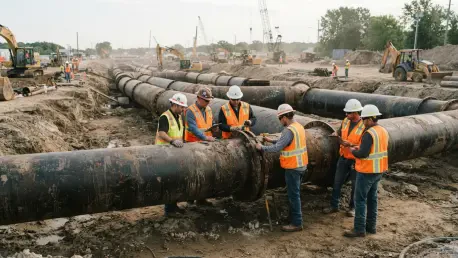
A staggering hurdle in the current strategy is the loss of 36% of all produced water through a combination of physical leaks and illegal connections, a phenomenon technically known as “Non-Revenue Water.” This massive loss accounts for roughly 328,000 cubic meters every single day, which is an amount significantly higher than the combined output of several major water projects completed in the last decade. The primary culprit is a decaying network of galvanized steel pipes, many of which have reached the end of their functional lifespan and are riddled with small fissures that drain the system’s pressure. These technical assessments, supported by international agencies like the Japan International Cooperation Agency, suggest that simply increasing production will not solve the crisis if more than a third of the new supply is destined to disappear into the ground. Therefore, the $2.2 billion strategy must include a massive and expensive pipeline replacement program to secure existing gains and prevent further waste.
Beyond the physical decay of the infrastructure, the issue of unmetered or illegal connections adds a layer of economic complexity to the city’s water management challenges. These losses do not just represent wasted water; they represent a significant drain on the financial health of the water authority, depriving it of the revenue needed for maintenance and further expansion. When nearly 330,000 cubic meters of treated water go unpaid for every day, the utility is trapped in a cycle of underfunding that makes it difficult to address the very leaks causing the problem. Combatting this requires a dual approach of rigorous physical inspections and a transition to smart metering technologies that can detect anomalies in real time. Without addressing these systemic losses, the massive investments planned for the Sibilu and Aleltu dams will effectively be diluted, as the modernized production facilities will continue to feed into a sieve-like distribution network that undermines every effort at future sustainability.
Environmental Consequences of Groundwater Dependency
The city has pivoted aggressively toward groundwater extraction to keep up with an annual population growth rate of nearly 4%, with wells now providing roughly 63% of the total piped supply. This shift was initially seen as a quick and cost-effective way to bypass the lengthy timelines required for dam construction, but it has led to a dramatic and alarming depletion of local aquifers. In the major Akaki wellfield, technical surveys of 166 pumping wells revealed that 85% of them have seen their water levels drop significantly compared to their original measurements. Some areas, such as the Legedadi wellfield, have experienced an average decline of over 51 meters in water depth over the last nine years, with extreme cases showing drops of more than 110 meters. This rapid exhaustion of underground reserves suggests that the city is currently “mining” its water rather than using it sustainably, creating a looming ecological crisis that could eventually lead to permanent damage.
The proliferation of unregulated private wells has further exacerbated this environmental strain, as businesses and affluent residents attempt to bypass the municipal rationing system by tapping directly into the earth. This lack of centralized regulation over groundwater extraction means that the total volume of water being removed from the aquifers is likely far higher than the official figures suggest. As the water table continues to recede, the energy required to pump water from greater depths increases, driving up operational costs and making the groundwater strategy increasingly inefficient from both an economic and environmental standpoint. This reality has forced a strategic pivot back toward surface water projects like the Sibilu and Aleltu reservoirs, which are now viewed as essential for allowing the overstressed aquifers to recharge. Balancing the immediate thirst of a growing metropolis with the health of the environment has become the most difficult tightrope walk for the city’s planners.
Moving Beyond the History of Reactive Planning
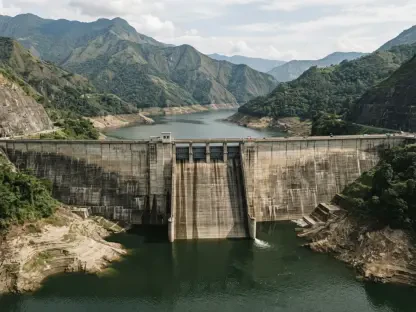
The current water crisis in the capital was historically rooted in a pattern of infrastructure development that consistently lagged behind the city’s rapid urban evolution since the late 19th century. For decades, planners treated water as a secondary concern, focusing on immediate growth while ignoring the long-term utility requirements of a modernizing society. This reactive approach meant that major investments were only considered when shortages became critical, leading to the current $2.2 billion funding gap. To break this cycle, the city started prioritizing the Sibilu and Aleltu projects as strategic pillars that could finally align production capacity with the realities of a metropolis home to over five million people. By moving away from marginal resource management, officials aimed to establish a robust foundation for future expansion. This shift required not only massive capital but also a fundamental change in the administrative culture surrounding resource governance and public service.
Looking ahead, the successful resolution of this crisis required the implementation of a comprehensive urban water management plan that integrated production, conservation, and physical restoration. Policy experts emphasized that securing the $2.2 billion was only the first step; the city also needed to enforce stricter building codes that mandated rainwater harvesting and gray-water recycling for new commercial developments. Furthermore, the authorities realized that the massive pipeline replacement program had to be synchronized with road and drainage upgrades to minimize disruption and maximize cost-efficiency. By adopting these integrated solutions, the city took decisive steps to ensure that water security became a driver of economic growth rather than a bottleneck. The transition from managing scarcity to governing abundance proved to be the ultimate test for the city’s leadership, setting a precedent for other growing African capitals facing similar urban infrastructure challenges in the modern era.