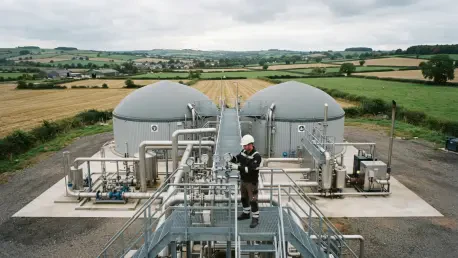

To ensure operational reliability, the current GOBARdhan program utilizes a milestone-based disbursement strategy where half of the capital assistance is only released after three months of consistent performance. This rigorous fiscal approach represents the maturation of India’s renewable energy ambitions, specifically targeting the compressed biogas sector as a cornerstone of the national energy security strategy. For a nation balancing aggressive industrial expansion with significant decarbonization commitments, the shift toward waste-to-energy is no longer merely an environmental preference but a strategic necessity. By formalizing the extraction of value from agricultural residues, cattle dung, and municipal organic waste, the current framework seeks to replace a meaningful portion of imported natural gas with domestically produced green fuel. This evolution signals a transition from the experimental and localized biogas projects of previous decades toward a unified, industrial-scale ecosystem capable of supporting transportation and city gas distribution networks. The integration of technology and policy ensures that the renewable gas sector contributes effectively to the circular economy, creating a resilient bridge between rural resource management and urban energy demands.
Evolutionary Roots and Early Challenges in Biogas
The current industrial landscape for biogas in India owes its foundational structure to the efforts launched under the Sustainable Alternative Towards Affordable Transportation (SATAT) initiative. When first introduced in 2018, this program functioned as a critical market signaling tool designed to convince private investors that a domestic market for renewable gas was achievable. It established a vital link between waste producers and oil marketing companies, creating a guaranteed buyback mechanism that provided early security to project developers. However, these initial years served as a steep learning curve for both the government and the private sector, revealing systemic vulnerabilities that required a more sophisticated regulatory response. The original procurement-led model often focused too heavily on the end product while underestimating the logistical hurdles of feedstock collection and the technical complexities of scaling up decentralized production facilities. Consequently, the sector experienced a phase of cautious growth where many projects struggled to move beyond the planning stages due to a lack of integrated supply chain support and volatile market linkages.
One of the primary bottlenecks that characterized the early phase was the pricing volatility inherent in a system where biogas was pegged to the fluctuating international prices of compressed natural gas. Because the operational costs of producing biogas are tied to local factors such as labor, biomass transport, and agricultural cycles, the disconnect between production expenses and global gas benchmarks often squeezed the profit margins of small-scale entrepreneurs. Furthermore, the fragmented nature of agricultural waste meant that developers frequently encountered “feedstock insecurity,” where a lack of centralized aggregation systems led to seasonal shortages and underutilized plant capacity. The regulatory environment during this period was similarly complex, as developers had to navigate a labyrinth of departmental permissions without a centralized processing window. These hurdles collectively highlighted the need for a comprehensive policy overhaul that would look beyond simple procurement and instead focus on building a robust, self-sustaining industrial ecosystem that could weather global market shifts while capitalizing on local rural resources.
Structural Innovations Within the GOBARdhan Framework
The emergence of the GOBARdhan policy framework marks a deliberate departure from an earlier focus on mere market creation toward a much broader philosophy of ecosystem building. This transition is backed by a monumental financial commitment of approximately $2.8 billion over a ten-year horizon, reflecting the government’s recognition that a significant capital infusion is necessary to bridge the gap between waste generation and fuel delivery. By treating the entire value chain as a single, integrated unit, the policy addresses past failures by funding not only core plant machinery but also the auxiliary infrastructure required for feedstock processing and byproduct management. This holistic strategy is designed to increase domestic production tenfold, moving from isolated pilot plants to a nationwide network of energy refineries. The emphasis has shifted toward de-risking the developer’s journey, ensuring that the transition from a waste management project to a commercially viable energy enterprise is supported by reliable fiscal and administrative scaffolding.
This new framework also introduces a high degree of transparency and accountability through the centralized GOBARdhan portal, which serves as a digital clearinghouse for project tracking and incentive distribution. By digitizing the application and monitoring processes, the government has significantly reduced the administrative friction that previously delayed project commissioning. Moreover, the integration of various ministries under a single policy umbrella ensures that agricultural interests, petroleum requirements, and environmental standards are harmonized rather than working at cross-purposes. This structural alignment is essential for creating the stability required to attract institutional investors and international climate finance. Instead of relying on ad hoc subsidies, the current approach emphasizes a predictable regulatory environment where developers can plan long-term investments with confidence. The policy acts as a catalyst for industrialization, transforming rural landscapes into hubs of renewable energy production that contribute directly to the national goal of reducing carbon intensity across the economy.
Market Security and Price Stabilization Mechanisms
A pivotal achievement of the current policy is the introduction of the Compressed Biogas Blending Obligation (CBO), which fundamentally alters the demand dynamics for renewable gas. By mandating that city gas distribution networks include a specific percentage of green gas in their supply mix, the government has created a non-negotiable and dependable route to market for producers. This obligation effectively removes the “market risk” for developers, as it guarantees that every kilogram of gas produced will find a buyer within the established local network. To facilitate this, major national entities like GAIL have taken on the role of synchronization operators, managing the logistical integration of decentralized biogas plants into the larger natural gas grid. This systematic approach ensures that renewable gas is not just an alternative fuel used in isolated vehicles, but a mainstream component of the national energy mix. The mapping of biogas plants to specific geographic areas further simplifies the supply chain, creating a circular loop where local waste powers local infrastructure.
Equally transformative is the implementation of an administered pricing mechanism that provides the financial predictability previously missing from the sector. By fixing the price of renewable gas at approximately Rs 100 per kilogram for a decade-long period, the policy decouples domestic biogas production from the unpredictable surges and dips of the global fossil fuel market. This price certainty is the bedrock of project bankability, allowing developers to present clear and reliable financial models to lenders. It addresses the fundamental imbalance where high production costs were once pitted against volatile retail prices, ensuring that a plant’s revenue remains stable regardless of geopolitical events affecting international energy indices. With a guaranteed price floor, developers can focus on operational efficiency and technology upgrades rather than worrying about sudden shifts in the commercial viability of their output. This stabilization has already led to a significant uptick in the flow of institutional credit toward biogas projects, as banks now view them as low-risk utilities rather than speculative energy ventures.
Financial Incentives and Performance-Linked Assistance
The GOBARdhan scheme provides a sophisticated, tiered capital assistance model that prioritizes the actual delivery of gas over the mere construction of facilities. While traditional subsidy models often failed due to “ghost projects” or abandoned infrastructure, the current system uses a milestone-based disbursement strategy to enforce accountability. Developers can access significant financial support—up to Rs 30 crore per project—but the funds are released in phases tied to specific operational achievements. The final and largest portion of the assistance is withheld until the plant demonstrates consistent, high-capacity performance over a three-month period. This ensures that only technically sound and well-managed projects receive full government support, effectively filtering out inefficient players and protecting public funds. This focus on “round-the-clock” operational reliability has forced developers to pay closer attention to the quality of their engineering and the robustness of their feedstock supply chains, leading to a higher standard of industrial execution across the sector.
In addition to direct capital for plant machinery, the policy recognizes the high cost of the auxiliary infrastructure often necessary for a plant to be truly functional. Financial support now extends to the equipment needed for aggregating agricultural residues, such as balers and specialized transport vehicles, which were previously a major capital burden for individual entrepreneurs. There is also a dedicated focus on the processing of organic manure, a vital byproduct of the biogas process. By providing assistance for the drying and packaging of fermented organic manure, the government is helping developers monetize a second revenue stream. This approach transforms a single-product facility into a multi-product biorefinery, where the financial health of the plant is supported by both gas sales and the agricultural fertilizer market. By diversifying the income potential of these plants through targeted capital support, the policy has made the biogas sector significantly more resilient to shifts in any single commodity market.
Solving the Logistical Puzzle Through Infrastructure
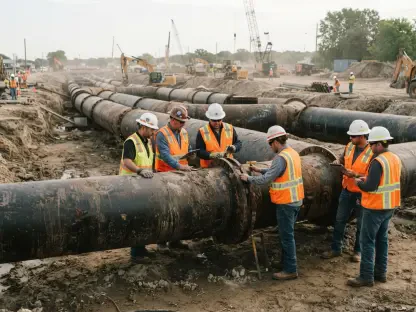
For years, the high cost and logistical complexity of transporting gas from rural production sites to urban consumption centers acted as a major deterrent to large-scale biogas adoption. The current policy addresses this head-on by funding the development of “last-mile” pipeline connectivity, which integrates decentralized plants directly into the national gas grid. By providing up to 80 percent of the capital expenditure for cluster pipelines, the government has made it feasible for multiple plants in a single agricultural region to pool their output and inject it into a central trunk line. This transition away from “cascades”—expensive, truck-mounted cylinders—to direct pipeline injection drastically reduces operational costs and minimizes the carbon footprint of the distribution process itself. The ability to utilize existing national grid infrastructure means that renewable gas can now reach industrial consumers and residential kitchens with the same efficiency as imported LNG, effectively democratizing access to green energy across wider regions.
The strategic integration with the national gas grid also solves the problem of local demand saturation. In the past, a biogas plant located in a remote rural area might have produced more gas than the local transportation fleet could consume, leading to wasted production or expensive long-distance trucking. With the new emphasis on grid connectivity, that excess gas can be transported across state lines to meet demand in industrial hubs or metropolitan areas. This creates a more balanced national energy market where rural production can satisfy urban energy deficits. Furthermore, the policy encourages the development of localized “biogas hubs” where specialized infrastructure for gas purification and compression can be shared among several smaller production units. This shared infrastructure model lowers the entry barrier for small-scale entrepreneurs who may not have the capital to build a full-scale refinery on their own. By treating infrastructure as a public good rather than a private burden, the GOBARdhan policy has effectively cleared the logistical path for a massive surge in domestic biogas production.
Empowering Local Stakeholders and Rural Economies
One of the most profound impacts of the GOBARdhan framework is its ability to decentralize wealth creation by involving small enterprises and rural communities in the energy value chain. To support entrepreneurs who might lack the substantial collateral required for traditional bank loans, the policy has established a robust credit guarantee mechanism. This system covers up to 85 percent of the loan amount, significantly lowering the risk for institutional lenders and opening doors for a new wave of local investors, particularly those from women-led enterprises and agricultural cooperatives. By providing this financial safety net, the government has ensured that the “missing middle” of the economy can participate in the green energy transition, preventing the sector from being dominated exclusively by large industrial conglomerates. This democratization of the energy sector is crucial for ensuring that the economic benefits of biogas production remain within the communities that provide the raw feedstock.
The economic ripple effects of these projects extend deep into the agricultural heartlands, turning what was once considered a waste disposal problem into a consistent source of revenue for farmers. By creating a formal, industrial-scale market for manure and crop residues, the policy has provided rural households with a hedge against the volatility of traditional crop prices. Beyond the direct sale of waste, farmers also benefit from the return of high-quality organic manure produced during the anaerobic digestion process. The focus on Fermented Organic Manure (FOM) and its liquid counterpart (LFOM) represents a vital link in the circular economy, as these byproducts help restore soil health and reduce the heavy reliance on expensive chemical fertilizers. This holistic approach ensures that the nutrients extracted from the soil during the farming process are returned to it, creating a sustainable agricultural cycle that supports long-term food security while simultaneously powering the nation’s transportation sector.
Technical Rigor and Quality Compliance Standards
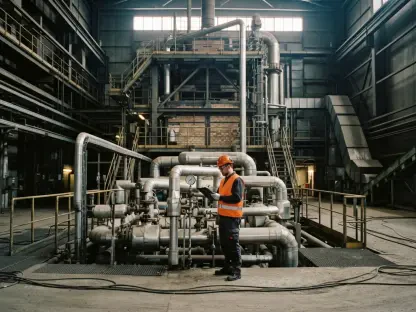
As the biogas industry transitions into a mainstream energy pillar, the emphasis on technical excellence and standardized quality has become a non-negotiable requirement for operational success. The Ministry of Petroleum and Natural Gas has instituted strict guidelines mandating the installation of advanced monitoring systems, such as online gas chromatographs, at all production sites. These tools provide real-time data on gas purity and methane content, ensuring that the fuel entering the national grid or the city distribution network meets the same rigorous standards as conventional natural gas. This focus on technical rigor protects the integrity of the gas infrastructure and ensures that end users—whether industrial plants or individual car owners—receive a reliable, high-performance product. For developers, the choice of a technology partner is now a strategic business decision that directly impacts their ability to qualify for government incentives and maintain long-term commercial contracts.
The shift toward higher technical standards has also spurred a wave of innovation within the domestic engineering and construction sectors. Specialized firms are now focusing on maximizing gas yields through advanced microbial consortia and more efficient digester designs that can handle a wider variety of feedstocks. By benchmarking performance against international standards, the Indian biogas sector is becoming increasingly competitive on the global stage, attracting interest from international technology providers looking to enter the local market. These advancements are essential for ensuring that biogas plants can operate consistently throughout the year, regardless of seasonal changes in feedstock quality or ambient temperature. The move toward industrial-grade automation and digital twin monitoring allows for predictive maintenance, reducing downtime and extending the operational lifespan of the facilities. In this high-stakes environment, technical precision has evolved from a regulatory hurdle into a primary driver of profitability and sustainability for the entire biogas ecosystem.
Strategic Pathways for Long-Term Industrial Growth
The evolution of India’s biogas strategy from a series of pilot projects to a comprehensive industrial framework provided the necessary momentum for achieving national energy independence. Stakeholders within the sector recognized that the transition required more than just financial subsidies; it demanded a fundamental shift in how waste was perceived and managed across the value chain. Developers who successfully navigated this landscape were those who moved beyond the traditional mindset of a simple waste-to-energy plant and instead adopted the model of a sophisticated biorefinery. By integrating advanced monitoring technologies and securing long-term feedstock contracts, these pioneers demonstrated that renewable gas could compete with fossil fuels on both reliability and cost. The policy environment established a predictable path where technical excellence was directly rewarded with financial stability, creating a self-reinforcing cycle of growth and innovation that transformed the rural economy.
Future success in the biogas industry depended on the ability of regional hubs to synchronize their production with the expanding national gas grid and the evolving needs of the transportation sector. Actionable insights from early adopters highlighted the importance of byproduct monetization, particularly the sale of high-grade organic fertilizers, as a critical buffer against operational fluctuations. Government agencies worked in tandem with private enterprises to streamline the regulatory pipeline, ensuring that the “single-window” clearance system became a functional reality rather than just a policy goal. This collaborative spirit fostered a resilient industrial ecosystem that not only reduced the nation’s carbon footprint but also fortified its energy security against global market shocks. As the sector matured, the focus remained on maintaining high technical standards and fostering localized entrepreneurship, ensuring that the benefits of the green transition were shared broadly across society. Ultimately, the GOBARdhan framework proved that with the right combination of policy certainty and technical rigor, a circular economy was not just an environmental ideal but a viable economic future.