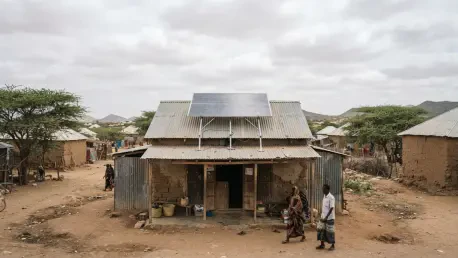

The widespread adoption of solar power in rural Somalia proves that there is significant latent demand for renewable energy once the barriers to hardware access are removed. This development represents a critical shift in how households in fragile and post-conflict environments manage chronic energy deficits without waiting for a functional national grid. By utilizing data from the 2022 Somali Integrated Household Budget Survey, researchers have recently analyzed the socioeconomic and geographic determinants of solar adoption across nearly seven thousand households. The resulting findings suggest that solar energy is no longer merely a luxury for the wealthy elite but has transformed into a strategic tool for survival used by the most underserved populations to bypass failed or nonexistent infrastructure. This phenomenon, known as energy leapfrogging, allows families to secure reliable power in a region where the centralized grid remains largely dysfunctional or prohibitively expensive for the average citizen. This transition highlights a broader trend where technological innovation provides a pathway for development in areas that have been historically neglected by state-led utility projects.
Analyzing the Dynamics: Innovation and Energy Transitions
To understand why certain households adopt solar technology while others remain reliant on traditional sources, researchers look toward the Diffusion of Innovation theory and the Energy Ladder Hypothesis. Solar photovoltaic systems are viewed as modern innovations that offer a clear relative advantage over expensive and unreliable private diesel-powered microgrids or traditional biomass. While the traditional energy ladder suggests a linear move from “dirty” fuels to a national grid as income increases, Somali households often skip these intermediate steps entirely. This creates a unique domestic energy transition where solar power is rapidly adopted for lighting and charging electronics, even as biomass is still utilized for cooking due to the high cost of electrical appliances and thermal energy. This practice, known as fuel stacking, demonstrates that energy transitions in post-conflict zones are rarely linear or total, but rather modular and adaptive to the immediate needs and financial constraints of the household.
The adoption of solar technology in this context is driven by the perceived reliability and long-term cost savings of the hardware compared to the recurring tariffs of private diesel providers. For many families, the initial capital investment in a solar panel is a hedge against the volatility of fuel prices and the instability of local power providers. Furthermore, the modular nature of solar equipment allows for incremental upgrades, enabling households to start with small lanterns and eventually move toward larger rooftop arrays as their financial situation improves. This bottom-up approach to electrification bypasses the need for large-scale political stability or massive infrastructure projects, placing the power of energy generation directly into the hands of the consumer. Consequently, the proliferation of these decentralized systems is reshaping the economic landscape of rural Somalia, providing the necessary energy for small businesses, educational activities, and improved safety through better lighting.
Research Methodology: The MARYAMA Framework
The study employed the MARYAMA framework to ensure high levels of data integrity and statistical accuracy within a complex post-conflict context. By focusing on thirteen key variables spanning geographic, sociodemographic, and infrastructural categories, the research team sought to identify the specific drivers of technology penetration. Because solar adoption was found to be a relatively rare event, occurring in only 9.7 percent of the sampled households, the researchers had to utilize specialized econometric modeling to account for the heavily skewed data. This methodological rigor was necessary to provide a credible foundation for policy recommendations in a region where data is often scarce or unreliable. The use of a nationally representative survey provided a comprehensive view of the diverse energy needs across different social strata and regional territories, offering insights that were previously unavailable to international donors and local policymakers.
After benchmarking several statistical models to handle the data distribution, the complementary log-log model was identified as the most effective tool for the analysis. This specific model is significantly better suited for binary outcomes where one result is much less frequent than the other, such as the low percentage of solar users in a broader population. This approach allowed the researchers to pinpoint subtle but significant predictors of adoption that standard models might have missed, such as the specific influence of housing tenure or the impact of regional security on supply chains. By applying such precise mathematical tools, the study moved beyond anecdotal evidence and provided a statistically sound map of how technology spreads in environments where traditional market signals are often obscured by conflict and economic instability.
Infrastructure and Geography: Determinants of Adoption
The most significant predictor of solar adoption in Somalia is the absolute absence of a conventional electrical grid. Households that lack access to centralized power are much more likely to invest in decentralized solar systems, effectively filling the vacuum left by the state and the private sector’s limited reach. In urban centers where private diesel grids are available, there is often less incentive to switch to solar despite the high costs per kilowatt-hour, as the upfront cost of solar panels remains a barrier. Consequently, rural and remote populations have become the primary innovators in the Somali solar market, driven by necessity rather than just environmental consciousness. This inverse relationship between grid proximity and solar investment underscores the role of decentralized technology as a vital bridge for communities that would otherwise be left in complete darkness for the foreseeable future.
Geography also plays a vital role in this transition, revealing a highly fragmented energy landscape across the country’s seventeen administrative regions. The study found a wide disparity in adoption rates, with regions like Middle Shabelle showing a high propensity for solar use, while others like Gedo and Sool lag significantly behind. These regional differences are likely caused by the varying maturity of local commercial markets, the presence of international aid initiatives, regional security levels, and the strength of supply chains for solar hardware originating from major ports. This geographic clustering suggests that the success of solar technology is not just about household income but also about the local availability of hardware and technical support. Strengthening these regional supply chains and encouraging the expansion of retail networks into underserved areas will be essential for maintaining the momentum of the current energy transition.
Economic Influences: The Remittance Paradox and Housing Barriers
The analysis of economic drivers revealed that households not receiving international remittances were actually more likely to adopt solar power. This counterintuitive finding suggests that remittance-receiving households, which are often located in urban areas, may prioritize immediate consumption or have existing access to diesel microgrids. For these families, the urgency to invest in independent energy systems is mitigated by their location and their ability to pay monthly utility bills. In contrast, for those without such steady external support, solar adoption represents a specific investment strategy to reduce long-term costs and secure a reliable energy source that does not require monthly cash outflows. This highlights that solar adoption is a strategic choice for those who lack other reliable energy alternatives, rather than a simple byproduct of increased disposable income or surplus wealth.
Housing tenure serves as another decisive factor in the transition to renewable energy, creating a significant barrier for mobile populations. Because solar PV systems are fixed assets requiring physical installation on rooftops or land, renters are significantly less likely to adopt the technology compared to homeowners. This “split-incentive” problem occurs because tenants are hesitant to invest in expensive hardware for a property they do not own, while landlords may not see a direct benefit from the energy savings if they are not paying the utility bills themselves. Residential stability and property ownership are therefore essential prerequisites for private clean energy investment in the current market. Addressing this issue through portable solar solutions or standardized leasing agreements could help extend the benefits of renewable energy to the millions of Somalis who do not own their homes or live in informal settlements.
Social Dynamics: The Role of Humanitarian Assistance
One of the more striking findings of the research is that Internally Displaced Persons (IDPs) have higher solar adoption rates than settled, nondisplaced households. This trend is largely driven by humanitarian aid, as international agencies frequently distribute small-scale solar lanterns or micro-kits in IDP camps to enhance safety and provide basic light for displaced families. This has created a scenario where some of the most vulnerable populations in the country have better access to clean, modern energy than many settled rural families who fall outside the reach of aid programs. While these micro-kits are a vital lifeline, they also represent a starting point for energy literacy and a potential gateway to larger systems. The presence of these technologies in IDP camps serves as a proof of concept for the effectiveness of decentralized solar in even the most challenging living conditions.
There is also a documented link between different types of energy modernization within the household, suggesting a synergy between clean cooking and clean lighting. Families that use modern cooking fuels, such as Liquefied Petroleum Gas (LPG) or improved cookstoves, were found to be more likely to invest in solar PV systems. This suggests a “clustering” of modern energy behaviors, where the transition away from traditional biomass for one need makes a household more psychologically and economically prepared to adopt clean technologies for other purposes. This holistic approach to energy health indicates that policies promoting one form of clean energy may have positive spillover effects on others. By targeting households that have already taken the first step toward modernization, practitioners can more effectively roll out comprehensive energy solutions that address both lighting and thermal needs simultaneously.
Strategic Directions: A Sustainable Energy Roadmap
The research ultimately painted a picture of Somalia as a pioneer in energy leapfrogging, where households took energy security into their own hands in the absence of a functional state. The study served as a vital empirical foundation for understanding how renewable energy could serve as a cornerstone for reconstruction and poverty reduction in fragile states. For policymakers and international donors, the findings suggested that the path to universal clean energy lay in supporting decentralized systems rather than waiting for a centralized grid that might take decades to materialize. Strategies focused on improving the quality and standardization of imported solar hardware to protect consumers from substandard products that often flooded the market. By ensuring that every dollar spent by a Somali household on solar technology resulted in a durable and efficient product, the government could foster greater trust in renewable solutions.
Expanding microfinance options emerged as a critical next step to lower the initial financial hurdles for low-income families. The findings showed that the high upfront cost of solar hardware remained the primary obstacle for those who were otherwise willing to transition. Financial institutions were encouraged to develop loan products specifically tailored for solar acquisition, using the energy savings themselves as a form of collateral. Additionally, addressing tenure-related barriers through legal reforms or the promotion of “plug-and-play” portable solar units ensured that renters and displaced populations were not left behind. By supporting these organic, household-led trends with smart regulations and targeted financial support, Somalia could continue to build a more resilient and sustainable energy future. The transition observed in recent years proved that even in the most difficult circumstances, technological innovation coupled with localized initiative could bridge the gap to a modern, electrified society.