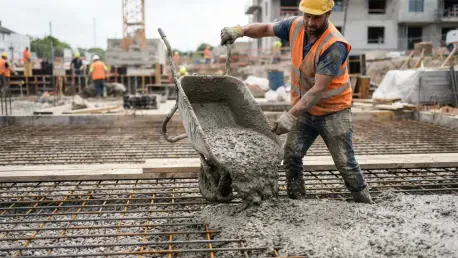

Experimental results indicate that the compressive strength of concrete generally decreases as the percentage of recycled material rises from zero to one hundred percent. This finding poses a significant challenge for the global construction sector as it faces the depletion of natural sand and gravel reserves alongside a staggering increase in demolition waste. While recycled aggregate concrete (RAC) offers a sustainable solution by repurposing debris, its mechanical properties are often inconsistent and difficult to forecast with traditional engineering formulas. However, the emergence of advanced computational models has changed this narrative. A landmark 2026 study by Gopal and Kumar has introduced a transformative approach that integrates laboratory testing with machine learning to predict concrete strength with unprecedented accuracy. This breakthrough enables engineers to account for complex variables in waste materials, paving the way for the reliable use of sustainable concrete in modern infrastructure projects.
Overcoming Material Variability
Material Limitations: Physical Defects in Recycled Stones
The primary technical hurdle in the utilization of recycled aggregates involves their unique physical composition, which differs significantly from that of pristine natural stones. During the mechanical crushing of old concrete structures, the resulting particles are rarely clean; instead, they remain covered in a layer of brittle, adhered mortar and are riddled with microcracks. These structural imperfections increase the overall porosity of the aggregate, leading to a much higher water absorption rate during the mixing process. When these “thirsty” particles are introduced into a new concrete mix, they tend to pull water away from the cement paste, which can disrupt the critical water-to-cement ratio and weaken the final internal matrix. Consequently, a mix that appears balanced on paper may fail to meet structural requirements in the field. Understanding these physical defects is the first step in creating a predictive model that can account for the inherent weaknesses found in demolition waste.
Nonlinear Interactions: The Complexity of Parent Concrete Strength
Beyond simple porosity, the quality of the “parent concrete”—the original material harvested from old buildings or bridges—serves as a primary determinant of the recycled aggregate’s performance. If the source material was originally of a lower grade or had suffered from significant environmental degradation, the resulting recycled stones will carry those residual flaws into the new construction. Factors such as the Los Angeles (LA) abrasion value, which measures resistance to wear, and the specific density of the recycled material interact in highly nonlinear ways that linear mathematical equations struggle to capture. Traditional mix design methods often rely on simplified assumptions that cannot account for the variability seen across different demolition sites. This lack of predictability has historically relegated recycled concrete to non-structural applications like road bases. To move RAC into high-load structural roles, a more sophisticated analytical tool is required to process these multifaceted data points.
Data Collection and Algorithmic Training
Experimental Framework: Creating a Robust Training Dataset
To develop a truly effective predictive tool, researchers established a comprehensive experimental baseline by testing twenty-five distinct concrete mixtures in a controlled laboratory environment. They systematically adjusted the replacement levels of recycled materials from zero to one hundred percent to observe the resulting impact on structural integrity. By monitoring variables such as cement content, water dosage, and the specific mechanical properties of the aggregates, the team created a foundational dataset. However, because twenty-five samples are insufficient to train a modern machine learning algorithm without the risk of overfitting, the researchers employed advanced data augmentation techniques. By introducing small, logically consistent variations into the input parameters, they expanded the dataset to over 1,100 synthetic samples. This larger pool allowed the AI to learn the nuanced patterns associated with concrete strength without being limited by the physical constraints of an exhaustive, multi-year laboratory program.
Algorithmic Precision: The Dominance of Support Vector Regression
The selection of the most effective machine learning algorithm was central to the success of the 2026 study. Researchers compared nine different supervised learning models to determine which could best interpret the complex relationships between the aggregate characteristics and the 28-day compressive strength. The results indicated that Support Vector Regression (SVR) was the superior choice, achieving a coefficient of determination of 0.998. This high level of precision demonstrates that SVR can handle the high-dimensional and non-linear nature of concrete data more effectively than simpler models. Other ensemble methods, such as Random Forest and XGBoost, also delivered strong performance, proving that tree-based architectures are well-suited for engineering variables. In contrast, traditional linear regression models performed significantly worse, reinforcing the idea that the internal chemistry and physics of recycled concrete are too complex to be reduced to basic linear proportions or simplified rules of thumb.
Transparency and Practical Use
Explainable Intelligence: Utilizing SHAP for Model Interpretation
A significant barrier to the adoption of artificial intelligence in structural engineering has been the perceived “black box” nature of these models, where the reasoning behind a prediction remains hidden. To address this concern, the research team utilized SHAP (SHapley Additive exPlanations) analysis, a technique that assigns an importance value to each variable used by the AI. This process provided the transparency necessary for professional engineers to trust the system’s outputs. The analysis revealed that the replacement percentage of recycled coarse aggregate and the water absorption rate were the most influential factors in the model’s strength calculations. By aligning the AI’s priorities with established physical principles of concrete technology, the researchers proved that the model was not merely identifying random correlations but was actually learning the underlying physics of the material. This interpretability is vital for gaining regulatory approval and ensuring that AI-assisted designs meet the safety standards of the industry.
Industry Implementation: Speeding up Construction Cycles
For concrete production plants and site engineers, this AI framework offers a powerful decision-support tool that can dramatically improve operational efficiency. Traditionally, the strength of a concrete batch is verified through destructive laboratory testing, which requires a 28-day curing period before the final results are known. If a batch fails to meet the required specifications, the project may face costly delays or require expensive demolition of the newly poured sections. By using the predictive model, engineers can now input the specific characteristics of their available recycled aggregates—such as their source strength and absorption values—and receive an immediate, high-accuracy estimate of the final 28-day strength. This rapid feedback loop allows for real-time adjustments to the mix design, such as fine-tuning the water-to-cement ratio or adding superplasticizers, to ensure that the concrete meets all structural requirements before it is even poured, thereby significantly reducing waste and costs.
Future Outlook and Constraints
Global Scalability: Adapting to Diverse Material Sources
While the current AI models have shown remarkable accuracy within the scope of the 2026 study, their application on a global scale requires careful consideration of regional material differences. Recycled aggregates from different parts of the world can vary significantly in their chemical composition, mineralogy, and the types of contaminants present from the original demolition sites. Therefore, a model trained on materials from one region may not be immediately applicable to another without localized calibration. Researchers emphasized that the AI system is designed to complement, rather than replace, the professional judgment of human engineers. Practitioners in different geographical areas should perform a limited number of local laboratory tests to “re-tune” the model for their specific aggregate sources. This collaborative approach between digital intelligence and physical validation ensures that the predictive accuracy remains high, regardless of the environmental or industrial context in which the recycled concrete is being utilized.
Sustainable Evolution: Future Directions in Concrete Engineering
The integration of machine learning into the study of recycled concrete provided a robust framework for transforming how the construction industry addressed waste. Researchers demonstrated that the inherent unpredictability of recycled aggregates was not an insurmountable barrier, but rather a data challenge that could be solved with advanced computational tools. By shifting the focus toward explainable AI models, the project established the trust needed for engineers to adopt sustainable materials in high-stakes infrastructure. To ensure long-term structural viability, the next phase of development focused on incorporating durability factors like chloride penetration and freeze-thaw resistance into the predictive models. These advancements allowed for the creation of global material databases that streamlined the validation of recycled batches across different continents. By prioritizing these actionable data points, the sector moved toward a standardized zero-waste building model. This shift proved that the combination of digital intelligence and physical testing was the most effective strategy for building a resilient future.