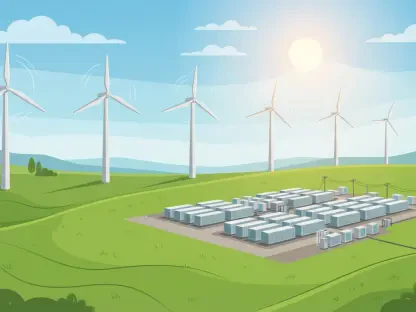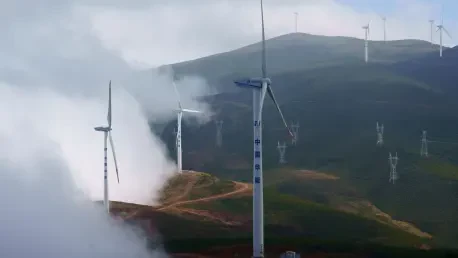

A recent decision by the Wyoming Industrial Siting Council to mandate a 2.5-mile setback from all occupied residences has forced Repsol Renewables to completely redesign the layout for its 650-megawatt wind project. This massive renewable energy endeavor, situated approximately 20 miles northwest of Cheyenne, represents a critical component of the regional strategy to modernize the power grid while utilizing the abundant wind resources of the Laramie Range. Spanning over 41,000 acres of both private holdings and state-managed lands, the project has become a focal point for the tension between aggressive industrial development and the preservation of local landscapes. While the developer remains committed to the project’s viability, the newly imposed restrictions create an unprecedented engineering challenge that necessitates a total overhaul of the planned infrastructure. The council’s ruling reflects an evolving regulatory landscape where environmental benefits must be weighed against the tangible impacts on neighboring residential properties.
State Regulatory Compliance: The 2.5-Mile Mandate
The Industrial Siting Council’s approval of the state permit was not a simple victory for Repsol Renewables; rather, it came with 26 rigorous conditions that must be met before a single turbine can be erected. While 18 of these conditions are standard for any large-scale wind facility in Wyoming, eight specific mandates were crafted to address the localized concerns of the Laramie Range area. The most significant of these is the 2.5-mile setback requirement, which stipulates that all wind turbines and associated above-ground structures must remain a considerable distance from any occupied home. This mandate originated from a specific dispute involving a neighboring ranch but was expanded by the council to cover the entire project perimeter to ensure consistent protection for all residents. This decision highlights a growing trend among state regulators to implement broader safety and aesthetic buffers, moving away from case-by-case agreements toward universal standards for large energy sites.
Adapting to such a significant geographical constraint has forced the developer to re-examine the technical feasibility of the current 41,220-acre project boundary. Anne Gregory, a senior manager for Repsol, has stated that while the setback mandate complicates the original vision, it does not render the 650-megawatt goal unachievable. Engineering teams are currently engaged in a precise spatial analysis to identify alternative locations for the planned 139 turbines, ensuring they maintain high efficiency while strictly adhering to the new distance rules. This strategic redesign is a complex process that involves balancing wind flow patterns with soil stability and logistical access, all while avoiding the now-restricted zones near residential clusters. The company has temporarily stepped back from county-level applications to focus entirely on this internal restructuring, demonstrating a cautious but persistent approach to navigating the regulatory hurdles that have emerged during this critical phase of the development.
Community Conflict: Landowner Rights and Energy Goals
The push for the 2.5-mile buffer was largely driven by a vocal group of local landowners and stakeholders who argued that the industrialization of the Laramie Range would fundamentally alter the character of their historic ranches. Residents expressed significant concerns regarding the visual impact of the massive turbine blades, the potential for noise pollution, and the long-term effects on property values in the rural landscape. These community members successfully lobbied state authorities to prioritize residential integrity over the immediate speed of energy development, asserting that the quality of life for long-term inhabitants should not be sacrificed for corporate infrastructure. The resulting setback mandate serves as a major victory for these local advocates, establishing a precedent that could influence future wind projects across the state. This dynamic underscores the necessity for energy companies to engage more deeply with community concerns early in the planning process to avoid costly late-stage redesigns.
Despite the clear direction from the Industrial Siting Council, there remains some ambiguity regarding which specific types of infrastructure are subject to the setback rules. Repsol is currently considering a request for formal legal clarification to determine if auxiliary equipment, such as buried transmission lines or small substation components, must also adhere to the 2.5-mile distance. Resolving these definitions is critical for the engineering team, as the exclusion of minor infrastructure could provide more flexibility in the final layout. Any such amendment to the state permit requires a formal legal process, including public notices and a review during the council’s quarterly meetings. This potential for administrative delay adds another layer of complexity to the project’s timeline, as the developer must ensure every technical detail is perfectly aligned with the state’s interpretation before returning to local authorities for final project approvals and construction permits.
Procedural Resurgence: The Path to Final Approval
Once the state-level site revisions are finalized, the project must navigate a complete reboot of the Laramie County permitting process. After a series of initial setbacks and the withdrawal of previous applications, the county planning department has made it clear that the developer must start from scratch. This entails submitting a brand-new conditional use permit application and a comprehensive commercial site plan that reflects the 2.5-mile setbacks. Justin Arnold, the county’s planning director, has emphasized that no reviews will take place until the revised plans are fully compliant with the state’s mandates. This means Repsol must once again go through the rigors of public hearings and commissioners’ votes, facing a community that remains highly attentive to the project’s impact. The requirement to present a completely fresh proposal ensures that the local government retains oversight and that the latest community protections are integrated into the legally binding development agreement.
The strategic adjustments implemented during this period provided a clearer roadmap for the project’s eventual integration into the Wyoming energy market. The developers aimed for a construction start in late 2027, with a phased approach designed to bring 400 megawatts online initially, followed by the remaining 250 megawatts to reach full capacity by 2029. Stakeholders observed that the transition toward these stringent setbacks established a new baseline for future wind energy developments, emphasizing that long-term operational success depended on early alignment with both state regulations and local community values. As the engineering teams finalized the relocated turbine positions, the project transformed from a contested proposal into a more refined model for balancing industrial growth with environmental stewardship. These final preparations ensured that the Laramie Range facility was positioned to contribute significantly to the regional power supply while respecting the geographic and social boundaries that defined the high plains of Wyoming.