
Arizona and Nevada officials have voiced significant dissatisfaction with federal proposals, arguing that the suggested 3.0 million acre-feet reduction places a disproportionate burden on their states. This tension underscores a broader existential threat as the Colorado River Basin, the vital artery for seven states and thirty tribal nations, reaches a state of unprecedented depletion that endangers both regional water security and the power grid. The crisis has transitioned from a looming environmental concern into an immediate economic disruption, forcing policy makers to confront a reality where demand consistently outpaces the physical supply of the river. As the basin experiences its driest period in over a millennium, the reliability of critical infrastructure like the Hoover and Glen Canyon dams is no longer guaranteed, creating a volatile landscape for the millions who depend on these systems for survival. Understanding the current hydrological data and the consequences of this drying system is essential for navigating the complex challenges ahead.
The Hydrological Decline of Major Reservoirs
Monitoring the Status: The Volatility of Lake Mead
The severity of the crisis is most visible in the receding shorelines of Lake Mead and Lake Powell, which together represent the backbone of the nation’s water storage infrastructure. Lake Mead is currently flirting with a critical “power cliff” at 1,040 feet above sea level, a threshold that signals imminent danger for regional energy stability. If the water surface drops just five more feet, the Hoover Dam will be forced to cut its hydroelectric output by a staggering 70 percent, a move that would destabilize the grid for millions of consumers in the desert Southwest. This decline is not a seasonal anomaly but part of a structural deficit that has persisted for decades, as the cumulative impact of rising temperatures and reduced snowpack in the Rocky Mountains continues to drain the reservoir faster than it can be replenished. The white “bathtub ring” around the lake serves as a stark visual reminder of the massive volume of water lost to the persistent drought and increasing human demand.
Assessing the Risks: The Vulnerability of Lake Powell
This hydrological decline is mirrored upstream at Lake Powell, which is currently holding less than a quarter of its total design capacity, threatening the operational viability of the Glen Canyon Dam. Since the turn of the millennium, water consumption across the basin has consistently exceeded the natural inflow, creating a massive deficit that the system can no longer absorb without drastic intervention. The stakes extend far beyond local water access, as these reservoirs serve as the primary engines for regional food security and energy production for various sectors. The Glen Canyon Dam provides essential electricity to five million people across six states and dozens of Indigenous tribes, while the Hoover Dam remains a cornerstone for major industrial markets in California and Nevada. Furthermore, the water released from Lake Mead is the lifeblood for millions of acres of farmland responsible for over half of the country’s winter produce, meaning a collapse in water levels could trigger a nationwide crisis.
Federal Intervention and State Disagreements
Evaluating the Management Plan: Federal Adaptive Strategies
In an effort to stabilize the crumbling system, the U.S. Bureau of Reclamation has introduced a federal management framework designed to govern operations through 2036. This plan utilizes an adaptive strategy that adjusts water releases based on environmental conditions and mandates significant usage reductions in the Lower Basin to prevent a total system collapse. While the proposal allows states more flexibility to store conserved water for future emergencies, it has been widely criticized by local leaders as a temporary fix that fails to address the underlying supply-demand mismatch. A major point of contention remains the federal government’s limited legal authority to mandate immediate cuts in Upper Basin states like Colorado and Wyoming, which places the primary burden of conservation on a few specific downstream regions. This jurisdictional gap creates a fragmented response to a basin-wide emergency, as different states operate under varying legal interpretations of their water rights.
Navigating the Friction: Economic Consequences for Basin States
The federal proposal has intensified long-standing friction between the states that rely on the Colorado River, leading to renewed threats of litigation and political stalemates. While Arizona and Nevada officials express alarm over the economic impacts of mandated reductions, California has maintained a more optimistic outlook, highlighting its historical ability to grow its economy while reducing water consumption. However, even California faces tough choices as the era of abundant water comes to a definitive end; farmers in the Imperial Valley may soon be forced to abandon water-intensive crops like alfalfa and almonds, which would drastically alter the agricultural landscape and regional supply chains. This shift could lead to higher grocery prices and potential food shortages across the country, as the ripple effects of water scarcity extend to urban centers far from the river banks. The lack of a unified vision among these stakeholders suggests that the path to a sustainable agreement will be fraught with legal battles.
Rectifying Historical Errors and Future Energy Needs
Adapting to Reality: Correcting the 1922 Colorado River Compact
The root of the current struggle lies in the 1922 Colorado River Compact, a foundational document that was drafted based on inflated estimates of the river’s annual flow. Historical data used a century ago suggested a much wetter environment than what has actually manifested over the last two decades, leading to a legal framework that over-allocated the river’s resources from the beginning. This fundamental mismatch between the legal rights to water and the actual physical volume available is the primary driving force behind modern legal battles and regional instability. As inflows continue to underperform even the most modest projections, the region must confront the uncomfortable fact that the river can no longer satisfy every historical claim or agricultural ambition. The persistent belief in a return to “normal” conditions has delayed necessary reforms, leaving the basin vulnerable to the compounding effects of climate change and rapid population growth in urban centers like Phoenix and Las Vegas.
Securing the Grid: Diversifying Regional Energy Sources
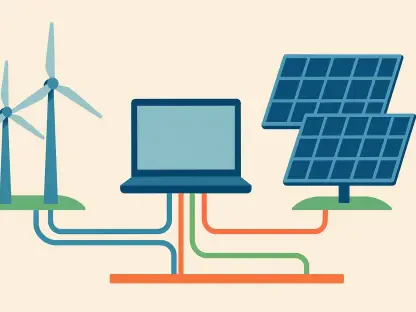
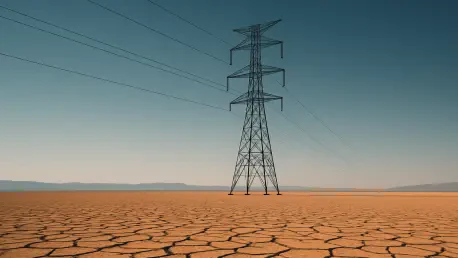
As hydroelectric generation becomes increasingly unreliable due to falling reservoir levels, the American West must prepare for a significant and costly transformation of its energy grid. The loss of cheap dam-generated power will likely force utilities to pivot toward more expensive alternatives, such as natural gas or imported electricity, driving up monthly costs for every residential and industrial consumer. To ensure long-term reliability in a region defined by extreme heat, the western states will need to accelerate investments in solar, wind, and large-scale battery storage technologies to replace the lost capacity from the Hoover and Glen Canyon dams. This transition is not merely an environmental preference but a technical necessity as the “spinning reserves” traditionally provided by hydroelectricity dwindle. Ultimately, the survival of the West depends on moving beyond temporary solutions toward a comprehensive agreement that accepts the reality of a permanently drier climate and a more diversified energy portfolio.
Building Long-term Resilience: Actionable Steps for the Future
The regional stakeholders recognized that stabilizing the Colorado River Basin required a paradigm shift away from traditional water management strategies and toward aggressive conservation and technological innovation. To address the looming deficit, many municipalities successfully implemented large-scale wastewater recycling programs and desalination projects to diversify their water portfolios and reduce their reliance on the river. Furthermore, the agricultural sector initiated a transition toward precision irrigation and drought-resistant crops, which significantly lowered the total water footprint of the region’s food production. On the energy front, states collaborated to build a more integrated regional transmission organization, allowing for the efficient sharing of renewable energy resources across state lines to compensate for the reduction in hydroelectric power. These actions proved that while the hydrological reality was harsh, proactive adaptation could mitigate the worst economic impacts. The move toward a more sustainable and realistic allocation of resources provided a blueprint.