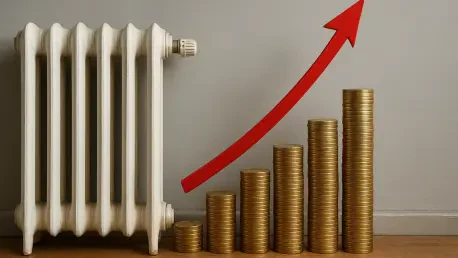

Running ceiling fans clockwise at low speeds pushes rising warm air back down to the living space to improve overall airflow optimization. This mechanical adjustment serves as a critical first step for households preparing for a winter in 2026 that is projected to be more expensive than any in recent memory. According to the latest reports from energy assistance organizations, the average residential heating bill is expected to rise by approximately 8.7 percent this season. For the typical American family, this translates to an expenditure of about $1,030, representing an increase of eighty dollars compared to the previous year. This financial shift is particularly concerning as it occurs at a rate more than double the national inflation index. After a summer defined by record-breaking cooling costs, many households are entering the colder months with virtually no flexibility in their monthly budgets. The cumulative effect of these rising utility rates has left vulnerable populations in a position where staying warm is becoming a significant economic challenge.
Rising Utility Rates: A Divergent Landscape of Fuel Costs
The upward trajectory of heating costs is driven by a broad trend among utility companies, with over 275 providers currently implementing or seeking approval for substantial rate hikes. Since the start of 2026, the cumulative impact on the consumer has been stark, with total heating expenses surging by nearly 24 percent over a four-year period. However, the severity of these price increases varies significantly depending on the specific type of fuel used by the household. Natural gas consumers are looking at a 5.8 percent rise, while those who rely on electricity for heating can expect a 9 percent increase in their monthly statements. The most dramatic shift is reserved for households in the Northeast that depend on heating oil, where costs have spiked by an estimated 31.3 percent. Propane users are also facing an 8.7 percent jump, further complicating the financial outlook for rural residents. These projections highlight a divergent energy landscape where the choice of heating technology determines the level of fiscal strain.
Environmental factors and policy interventions play a pivotal role in determining how these price surges manifest in the daily lives of citizens. Meteorologists have noted that the current El Niño cycle might provide a slight reprieve by ushering in a warmer-than-average winter for several regions, which could prevent even higher spikes in fuel consumption. Despite this natural mitigation, the underlying economic pressure remains a primary concern for social safety nets. Advocacy groups are currently calling for a significant increase in federal funding for programs like the Low Income Home Energy Assistance Program to support those who are most at risk. Without such intervention, the volatility of the energy market threatens to leave many families without the means to maintain safe indoor temperatures. The intersection of fluctuating weather patterns and rising utility rates creates a complex environment where long-term planning becomes essential. By focusing on systemic efficiency and social support, the impact of these surging costs can be managed more effectively throughout the country.
Strategic Efficiency: Proactive Measures for Sustainable Warmth
In response to these challenges, homeowners adopted several advanced maintenance protocols that successfully reduced their overall energy footprints. Households prioritized the recalibration of water heaters to exactly 120 degrees, a move that balanced hygiene with significant cost savings on secondary heating loads. Families also implemented a rigorous schedule for cleaning refrigerator coils and switching to cold-water laundry cycles, which collectively lowered the demand on the electrical grid during peak winter hours. Technicians emphasized the importance of professional furnace and heat pump inspections, ensuring that mechanical systems operated at peak efficiency before the coldest temperatures arrived. These proactive steps were supplemented by the installation of smart thermostats that adjusted indoor climates automatically based on occupancy patterns. By integrating these technical solutions, residents took direct control over their utility expenditures. This transition from passive consumption to active energy management represented a fundamental shift in how people navigated the economic realities of the season.
Community-wide initiatives also focused on structural improvements to the housing stock, utilizing thermal imaging tools to pinpoint and seal significant air leaks. Builders and renovation contractors promoted the use of high-performance insulation in attics and basements, which served as a permanent barrier against heat loss. Many residents embraced passive solar techniques, such as opening south-facing window treatments during daylight hours to capture natural warmth and closing them at sunset to retain that energy. These efforts were often supported by state-level rebate programs that incentivized the replacement of antiquated heating systems with modern, high-efficiency heat pumps. Engineers developed more robust training for local contractors to ensure that these new technologies were sized and installed correctly for maximum performance. This comprehensive approach to weatherization ensured that homes remained resilient against fluctuating market prices. Ultimately, these collective actions provided a roadmap for achieving long-term energy security while fostering a more sustainable and cost-effective living environment for the future.