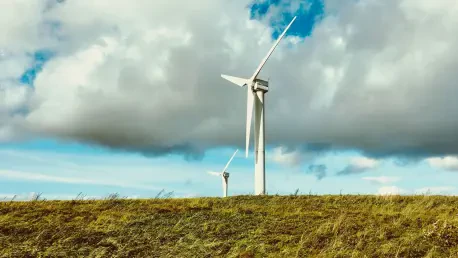

The financial viability of small-scale wind projects often depends on a complex interplay between local wind speeds, retail electricity rates, and federal investment tax credits. For many American households, especially in rural communities, electricity costs represent a disproportionately large share of monthly income, a phenomenon known as the energy burden. Recent findings from the National Laboratory of the Rockies highlight that distributed wind technology—turbines installed at the point of use—can serve as a precision tool to alleviate this financial strain. Unlike massive utility-scale wind farms that feed into the national grid, distributed systems generate power behind the meter to directly offset retail purchases. The research study titled “Spatial and Economic Prioritization for Distributed Wind” provides a detailed roadmap for identifying high-impact areas by evaluating nearly 150 million land parcels. By merging technical wind data with socioeconomic factors, the analysis identifies exactly where wind energy offers the most significant relief.
Analytical Foundations and Methodology
The study’s methodology is built upon a sophisticated integration of spatial analysis and financial modeling, providing a robust framework for assessing the viability of distributed wind. By utilizing high-resolution data from the National Laboratory of the Rockies, researchers are able to move beyond simple meteorological assessments to include the economic and structural factors that define project success. This approach acknowledges that the presence of wind is only one variable in a complex equation that includes local utility rates, property constraints, and available federal incentives. To accurately capture these dynamics, the study evaluates individual land parcels with a level of detail that allows for the identification of specific properties where wind energy can provide immediate financial relief. This analytical foundation ensures that subsequent findings and regional prioritizations are based on a realistic appraisal of both the technical potential and the economic necessity of distributed energy solutions in the current market.
High-Resolution Modeling: Precision at the Parcel Level
To move beyond broad regional averages, the research utilizes the Distributed Wind Energy Futures Study as its primary analytical engine. This high-resolution modeling framework allows for an unprecedented level of detail, evaluating specific land-use patterns and local siting constraints that would typically be overlooked in national assessments. By examining wind resources at hub heights ranging from 30 to 80 meters, the study pinpointed the physical feasibility of turbine installation on a property-by-property basis. This granular approach is essential because local factors, such as proximity to existing structures or protected natural areas, can significantly impact the actual generation potential of a small-scale system. Moreover, the model incorporates local electricity demand profiles to ensure that the suggested wind capacity aligns with the specific energy needs of the household. This level of precision ensures that deployment strategies are grounded in the physical reality of the American landscape.
Building on this geographical foundation, the researchers incorporated complex data layers regarding local electricity rates and utility rate structures. Because distributed wind systems are primarily designed to offset the purchase of power from the local utility, their value is inherently linked to the retail price of electricity. In regions where utility rates are exceptionally high, even a modest wind resource can become economically attractive due to the substantial savings generated by offsetting expensive grid power. The analysis effectively captures these localized economic signals, providing a clearer picture of where technology adoption is likely to succeed. This integration of utility data with technical wind potential represents a major step forward in renewable energy planning. It allows for a more nuanced understanding of the economic landscape, moving the conversation away from simple resource availability toward a comprehensive assessment of how localized power generation interacts with existing market conditions to benefit consumers.
Economic Filters: Defining Financial Viability
To translate physical potential into financial reality, the study applied rigorous economic filters designed to measure the true viability of distributed wind investments. Rather than simply identifying where the wind blows the hardest, the team focused on metrics such as Net Present Value and payback periods for individual property owners. A central component of this analysis is the concept of “threshold capital expenditure,” which defines the maximum price a system can cost while still delivering a positive return on investment. By establishing these financial boundaries, the researchers can identify the specific areas where current technology is already cost-competitive or where targeted incentives could bridge the remaining gap. This approach provides actionable data for investors and developers who need to know where distributed wind projects are most likely to yield long-term savings. Focusing on cost-viability ensures that the study’s recommendations are practical and ready for immediate implementation.
The study also introduced a suite of affordability metrics to bridge the gap between technical data and human hardship. By calculating the residential energy burden at the county level, the research team was able to identify communities where high electricity costs are most damaging to household stability. To ensure accuracy across all demographics, they utilized a “net energy return” measure that maintains data consistency even when household incomes are near zero. This specific focus on the electrical portion of energy expenditure is crucial because wind turbines generate electricity directly, making them a more effective intervention for families struggling with power bills than for those primarily burdened by heating fuel costs. This methodological innovation allows policymakers to prioritize investments in areas where the economic impact of renewable energy will be felt most acutely. It transforms distributed wind from a general sustainability goal into a targeted strategy for enhancing the financial resilience of vulnerable families.
Geographic and Socioeconomic Implications
Geographic and socioeconomic trends play a pivotal role in determining where distributed wind can most effectively address the energy burden faced by American households. The study reveals that energy poverty is not distributed evenly across the country, with specific regions and demographics facing significantly higher electricity costs relative to their income. By mapping these disparities alongside wind potential, the research identifies a clear spatial mismatch in some areas and a perfect alignment in others. Understanding these patterns is essential for developing equitable energy policies that ensure the benefits of renewable technology reach the communities that need them most. Socioeconomic factors, such as local poverty rates and employment structures, are deeply intertwined with energy vulnerability, creating pockets of high burden that require targeted intervention. This section explores how these geographic and social variables intersect, providing a strategic basis for prioritizing wind energy deployment in areas where it can offer the greatest social and economic impact.
Spatial Alignment: Correlating Wind Resources and Human Need
The findings reveal a striking geographic disparity in the residential energy burden across the United States, with the Southeast emerging as a region of critical need. States like Alabama, South Carolina, and Georgia show significantly higher levels of energy stress compared to many Western states, where the burden remains well below the national average. However, the researchers noted that state-level averages often obscure intense local volatility. It is common to find neighboring counties where one experiences extreme energy poverty while the other remains stable, highlighting the importance of a parcel-level perspective. This uneven distribution underscores the necessity of a targeted approach rather than a broad, one-size-fits-all policy. Understanding these geographic nuances is the first step toward developing effective interventions that address the root causes of energy inequality. The data suggests that localized wind power can play a vital role in these high-burden areas by providing a stable, predictable source of electricity that is independent of utility rate fluctuations.
A core contribution of this research is the development of the “AEP-to-demand ratio,” which normalizes wind generation potential against actual local consumption. This ratio allows the researchers to identify the “spatial alignment” where the wind resource is most capable of meeting a significant portion of a household’s electricity needs. In many cases, a moderate wind resource in a high-demand, high-burden area is more valuable than a superior wind resource in a location with low electricity costs and minimal demand. By correlating this demand-adjusted potential with established socioeconomic indicators, the study successfully identifies where deployment would do the most financial good. This alignment is particularly strong in several Midwestern and Southern states, where wind availability and energy poverty overlap. Focusing on these intersection points allows for the most efficient use of resources, ensuring that every dollar spent on distributed wind infrastructure delivers the maximum possible relief to households that are currently struggling to keep the lights on.
Strategic Implementation: Overcoming Institutional Barriers
The study categorizes states into distinct groups to help guide national and local energy policy. Group 1 states, which include North Carolina, Iowa, and Louisiana, exhibit a strong statistical overlap between high energy burdens and high wind potential, making them the highest priority for distributed wind initiatives. In contrast, Group 2 states like Wisconsin and Minnesota possess vast wind resources but generally lower levels of energy stress. In these regions, distributed wind may be better leveraged as a driver for general economic development or decarbonization rather than as an urgent poverty alleviation tool. Furthermore, the analysis identified a strong correlation between energy burden and agricultural employment. Rural farms often have the open space required for turbine siting, yet many agricultural workers face older, less efficient housing and limited access to utility assistance programs. This unique intersection of physical opportunity and economic need makes agricultural communities ideal candidates for expanded distributed energy infrastructure.
The research concluded that while the technical potential for distributed wind was vast, realizing these benefits required addressing significant institutional barriers. Policy frameworks had to be evolved to simplify utility interconnection requirements and reform restrictive local zoning laws that often prevented turbine installation in high-need areas. Financial accessibility remained a major hurdle, and the study suggested that targeted incentives, such as bonuses for low-income or tribal lands, were essential for making technology affordable for the most burdened households. The analysis demonstrated that a data-driven approach could successfully identify the most impactful locations for investment, transforming wind energy into a precision instrument for social equity. By focusing on the specific needs of local communities, the National Laboratory of the Rockies provided a clear pathway for reducing energy poverty. Ultimately, the findings showed that localized renewable energy could play a fundamental role in stabilizing household finances and ensuring a more equitable distribution of the benefits of the clean energy transition.