
The 14 Business Inclusion Groups within the organization co-designed over 200 cultural learning experiences for more than 2,000 global participants in 2025. This achievement was a central highlight of the recently published document, ‘Our Work Toward Better Futures,’ which serves as a transparent audit of environmental, social, and governance performance. By utilizing a 2019 baseline to measure progress, the global furniture leader has illustrated how corporate purpose can be translated into quantifiable operational shifts that benefit both the planet and the people who inhabit it. The data indicates that the organization is no longer just planning for a sustainable future but is actively executing a roadmap that integrates ecological health and social equity into the core of its business model. Following its strategic acquisition by HNI Corporation, the firm has leveraged new synergies to refine its impact analysis, ensuring that every design choice contributes to a more resilient world of work.
Environmental Stewardship and Carbon Reduction
Strategies for Reaching Net-Zero Emissions
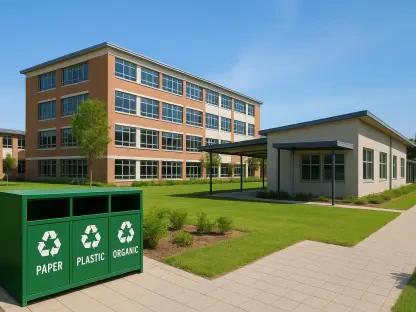
The primary driver of the environmental strategy is the aggressive pursuit of carbon neutrality, with a definitive target set for 2050. During the 2025 fiscal period, the company recorded a significant 33% reduction in Scope 1 and Scope 2 emissions compared to the 2019 baseline, reflecting a major improvement in direct operational efficiency and energy procurement. These gains were largely achieved through the modernization of manufacturing facilities and a transition to renewable energy sources across the global footprint. Additionally, the organization addressed the complexities of Scope 3 emissions—which encompass the broader supply chain and product lifecycle—achieving a 22% decrease in key categories such as business travel and operational waste. This progress is bolstered by the ‘Circular by Steelcase’ initiative, which reclaimed over 600 tons of material in 2025 by diverting 99% of decommissioned furniture from landfills. Such efforts demonstrate a shift toward a circular economy.
Supply Chain Collaboration and Accountability
Recognizing that the vast majority of carbon impact originates outside of direct operations, the firm has prioritized high-level collaboration with its global network of vendors. The 2025 analysis reveals that nearly two-thirds of the supply chain, as measured by emissions output, has now committed to carbon reduction targets validated by the Science Based Targets initiative. This alignment ensures that the company’s environmental goals are mirrored by its partners, creating a unified standard for sustainability across the entire production cycle. By requiring such accountability, the organization mitigates the risks associated with volatile energy markets and evolving environmental regulations. This strategy also encourages innovation among suppliers, as they are incentivized to develop low-carbon materials and more efficient logistics solutions. The focus remains on establishing a transparent value chain where every participant is held to the same rigorous standards of ecological stewardship.
Social Responsibility and Community Engagement
Strengthening Global and Local Communities
Social equity is fostered through the ‘Better Futures Community’ framework, which serves as a bridge between corporate resources and localized social needs. In 2025, the company activated over 324 community partnerships across 38 global locations, collaborating with hundreds of distinct organizations to address issues ranging from urban development to educational equity. A centerpiece of these efforts was the ‘Better Is Possible Design Challenge,’ a global workshop that encouraged employees, dealers, and customers to co-create solutions for building trust across cultural and social divides. This inclusive approach to problem-solving ensures that community engagement is not a passive activity but a proactive endeavor that leverages the firm’s design expertise. Furthermore, employee volunteerism has reached a critical milestone, with members logging more than 20,000 hours in a single year. This high level of participation has accelerated the organization’s progress toward its 100,000-hour goal.
Fostering Diversity and Inclusion
Internal corporate culture is managed with the same data-driven precision as environmental targets, specifically through the 14 Business Inclusion Groups that lead the firm’s diversity initiatives. These organizations are essential for maintaining a workplace where 11,300 global employees feel a sense of belonging and representation. By designing cultural learning experiences that reached thousands of participants in 2025, these groups helped foster a more inclusive environment that values diverse perspectives as a source of innovation. The report emphasizes that a diverse workforce is better equipped to understand the needs of a global customer base, providing a strategic advantage in the development of inclusive workspace solutions. Leadership representation and equitable hiring practices are also monitored closely to ensure that the company’s internal social health remains robust. This commitment to diversity and inclusion is framed as a fundamental requirement for long-term organizational health.
Corporate Integration and Future Outlook
Strategic Synergy and Long-Term Resilience
The integration of the company as a subsidiary of HNI Corporation has provided a new catalyst for achieving ambitious ESG targets through strategic synergy. By combining the resources and best practices of two industry leaders, the organization has been able to accelerate its impact initiatives and refine its long-term resilience strategies. Leadership from both companies has noted that the shared values regarding the wellbeing of people and the planet serve as a solid foundation for this collective action. This structural shift allows for greater investment in research and development, particularly in the areas of climate-conscious design and low-emission manufacturing technologies. The synergy also extends to social impact, where the combined volunteer power and community reach of both entities can address larger societal challenges more effectively. This transition is viewed as an opportunity to broaden the scope of what is possible, ensuring that the organization remains a leader in the global market.
Planning for Sustainable Growth
Looking forward from 2026, the focus of the organization remains on the transition from setting ambitious goals to delivering measurable and transparent results. The 2025 Impact Report confirms that business value is increasingly tied to the ability of a firm to navigate environmental and social complexities with agility. By demonstrating a reduction in carbon emissions and a high level of community engagement, the company positions itself as a resilient leader capable of thriving in a low-carbon economy. The data suggests that the demand for sustainable and inclusive products will continue to grow, making climate-conscious design a primary driver of market share in the furniture industry. To maintain this momentum, the organization plans to further integrate digital tracking tools into its circular economy programs, allowing for even greater precision in material reclamation. This proactive stance ensures that the firm is not only meeting current regulatory requirements but is also setting a new standard for responsibility.
Advancing the Blueprint for Sustainable Operations
Synthesizing Impact and Next Steps
The assessment of the 2025 initiatives established a clear precedent for how global organizations could successfully align their operational mandates with broader ecological and social requirements. By meeting several key volunteer and emission milestones nearly three years ahead of the original schedules, the firm demonstrated that a dedicated focus on impact could yield tangible improvements in corporate health. It was determined that the integration of circular design principles was the most effective method for reducing long-term waste and meeting the expectations of a climate-conscious global market. The past year provided essential insights into the necessity of supply chain accountability, confirming that a company’s environmental footprint is defined by its entire value chain rather than just its internal facilities. This historical analysis allowed leadership to identify specific areas where resource allocation could be optimized to ensure that the momentum of these green initiatives remained consistent.
Strategic Recommendations for Future Resilience
Moving forward from these findings, the organization identified several actionable pathways to further decentralize its social impact initiatives and enhance its technological oversight. It was recommended that local offices take a more prominent role in leading projects that addressed the unique cultural and economic conditions of their specific regions, ensuring that global goals remained locally relevant. Additionally, the need to integrate blockchain or similar advanced tracking systems for material lifecycles was highlighted as a critical next step for achieving the 2050 net-zero target. These insights served as a foundation for a more sophisticated approach to governance, where data-driven transparency became the primary tool for building trust with stakeholders. By viewing the 2025 results as a baseline for future innovation, the organization ensured that its strategic choices would remain focused on creating lasting value for the environment and the workforce.