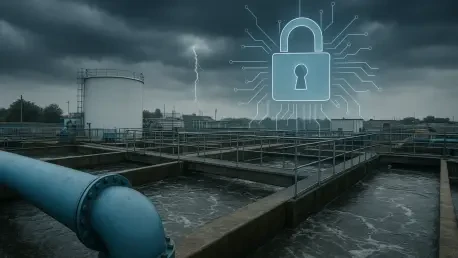

Equity concerns are rising as the financial burden of national security and cyber defense is increasingly passed down to individual households in the form of higher monthly water bills. The American water infrastructure is currently navigating a silent yet escalating crisis as public water and wastewater systems become prime targets for sophisticated cybercriminals. Historically, these utilities operated in relative isolation, but the modern transition to internet-connected operational technologies has fundamentally changed the security landscape. While the integration of smart sensors and remote monitoring has drastically improved efficiency, it has inadvertently created a vast digital attack surface that many local utilities are ill-equipped to defend. Recent incidents have proven that the threat to these essential services is no longer theoretical but a pressing reality. Across the country, dozens of utilities have faced intrusions that forced them to take systems offline or revert to manual operations to prevent the spread of malicious software.
Escalating Incidents and Physical Risks
Recent data from federal investigation bureaus highlights a sharp increase in malicious activity, with multiple cyberattacks hitting water systems across several states in very short timeframes. These incidents generally fall into three categories: ransomware attacks that extort money, data breaches that compromise customer information, and the most dangerous category—intrusions into operational technology. This physical control layer is what manages the actual treatment and distribution of water, making it the most critical point of failure for public safety. While many attacks to date have been contained before causing widespread illness, the potential for a catastrophic event remains a significant concern for federal authorities. The transition from legacy manual controls to automated digital frameworks has moved faster than the security protocols designed to protect them, leaving small-town systems particularly exposed to overseas threats seeking to disrupt regional stability.
Vulnerabilities: Identifying the Physical Impact
Coordinated attacks in the Midwest previously forced dozens of communities to disconnect their digital equipment entirely to prevent the spread of malicious code. In these scenarios, local workers had to perform strenuous manual labor to ensure water safety and chemistry levels, demonstrating how a sophisticated digital strike can effectively paralyze the modern capabilities of a municipality. The reliance on manual overrides serves as a temporary safeguard, but it is not a sustainable solution for a nation that requires constant, high-volume water distribution. Federal reports indicate that hackers have tested the limits of these systems by attempting to alter chemical levels or shut down pressure sensors remotely. This constant probing suggests that adversaries are looking for structural weaknesses that could be exploited on a much larger scale. The physical risks are no longer limited to pumps and pipes but extend to the very software that dictates how those components interact.
The Staggering Price of Digital Defense
Beyond the immediate risks to public health, the necessity of cyber resilience imposes a massive fiscal burden on local governments and utility providers. Maintaining “cyber hygiene” requires a continuous investment in specialized IT personnel, frequent vulnerability assessments, and the purchase of high-end security software. For a midsize utility, these compliance costs can reach six figures annually, while the largest systems in the country often spend millions of dollars every year just to keep their defenses current. These costs are frequently unexpected and unbudgeted, forcing municipalities to divert funds from other essential services or infrastructure repairs. The complexity of modern software means that a one-time purchase is never enough; rather, utilities must pay for ongoing subscriptions and updates to defend against ever-evolving malware. This financial drain is particularly acute for smaller districts that do not have the economies of scale to absorb sudden technological expenses.
Economic Consequences: Revenue and Credit Risks
The financial damage of a successful attack often extends far beyond the immediate cost of digital repairs. When major utilities are compromised, they are frequently forced to shut down billing systems to protect sensitive data, leading to massive disruptions in revenue collection. For instance, when large-scale utility providers faced breaches, the resulting pause in customer payments created significant cash-flow problems that lasted for months. The combination of IT recovery costs and lost revenue from penalties and late fees can reach tens of millions of dollars for a single city. Consequently, credit rating agencies now view cybersecurity as a primary risk factor when determining the financial health of a utility. A system that is perceived as vulnerable may see its credit rating downgraded, which in turn increases the cost of borrowing money for future infrastructure projects, creating a cycle of financial instability that is difficult for local governments to break.
Federal Oversight and Regulatory Shifts
In response to these mounting threats, federal agencies like the Environmental Protection Agency and the Cybersecurity and Infrastructure Security Agency are pushing for more stringent regulatory frameworks. There is an urgent call for utilities to move beyond voluntary guidelines and toward mandatory federal compliance. This shift aims to standardize how water systems protect their data and physical assets, ensuring that a vulnerability in one small town does not become a gateway for a larger regional disruption. Federal mandates require utilities to perform regular risk assessments and develop comprehensive incident response plans that can be audited by government officials. However, the move toward regulation has met with some resistance from local operators who argue that they lack the resources to meet these high standards. Despite the pushback, federal authorities maintain that the interconnected nature of modern infrastructure makes local security a matter of national importance.
Innovative State-Level Security Models
Some states have already taken the lead by establishing aggressive policy models to support local water systems through legislative action. New York, for example, implemented a multi-agency framework that requires both drinking water and wastewater systems to follow unified security protocols and incident response plans. This integrated approach ensures that all facilities, regardless of size, are held to the same defensive standards. Similarly, Maryland passed legislation requiring systems serving thousands of customers to conduct regular vulnerability assessments, often providing state funds to help smaller municipalities cover the costs of these mandatory security upgrades. By providing both the mandate and the means, these states are creating a blueprint for how the rest of the country might address the digital divide in infrastructure protection. These programs demonstrate that state-level intervention can bridge the gap between federal expectations and local financial capabilities.
Barriers to Implementation: The Financial Pincer
Despite high-level government initiatives, the actual burden of securing the water supply falls on local entities that are often stretched thin. Many municipalities are currently caught in a financial pincer movement; they must fund expensive cybersecurity mandates while simultaneously managing aging pipes, rising construction costs, and stricter environmental laws. This creates an untenable fiscal situation for small towns that lack the tax base to support a modern digital defense. For many local officials, the choice between fixing a leaking water main and upgrading a firewall is a difficult one, as both are essential for service continuity. The lack of a dedicated federal funding stream for water cybersecurity means that these systems must compete for limited general funds. Without significant external investment, the gap between the defensive capabilities of wealthy urban centers and rural communities will continue to expand, leaving the latter more vulnerable.
Workforce Shortages and Technical Constraints
A critical shortage of skilled cybersecurity professionals willing to work for municipal wages further complicates the situation for water utilities. As private sector tech firms offer significantly higher salaries, local governments struggle to recruit and retain the talent necessary to manage complex network security. This often forces utilities to rely on third-party contractors, which can be more expensive and less familiar with the specific operational technologies used in water treatment. Furthermore, the technical complexity of securing legacy water systems is immense, as many pumps and valves were never designed to be part of a digital network. Retrofitting these older components with secure communication modules requires specialized knowledge that is currently in short supply. As federal grants expire and state funding fluctuates, many local governments find themselves unable to maintain the sophisticated labor force required to fend off international hacking collectives.
Strategic Realignment: Building Future Resilience
To bridge the gap between security requirements and available local resources, new support mechanisms are being tested across the country. Public-private partnerships have emerged as a viable model, providing no-cost security resources and monitoring tools to utilities that would otherwise be unable to afford them. Additionally, traditional funding streams originally intended for physical infrastructure, such as State Revolving Funds, are being repurposed to cover software upgrades and workforce training. This flexibility allows utilities to address digital threats as part of their broader capital improvement plans. However, experts argue that these measures are still insufficient to meet the scale of the threat. The long-term safety of the nation’s water supply depends on a fundamental realignment of how security costs are shared between different levels of government. Treating cybersecurity as a core component of public health is the first step toward securing the funding needed.
A Comprehensive Path: Securing the Water Sector
The assessment of national infrastructure concluded that the long-term safety of the water supply depended on a fundamental realignment of how security costs were shared. As cybersecurity became a permanent and essential operational cost, it was integrated into the core fiscal planning of every utility to ensure sustainability. Experts established that without a dedicated funding stream, the technological gap between sophisticated international hackers and local water operators would continue to pose a risk to the most vital resources. Policy adjustments favored the implementation of state-led oversight programs that provided the technical expertise smaller municipalities lacked. By prioritizing digital resilience as a public utility standard, the sector moved toward a more robust defense against evolving threats. Future strategies emphasized the necessity of persistent monitoring and the continuous training of personnel to adapt to the changing cyber landscape, ensuring that clean water remained accessible.