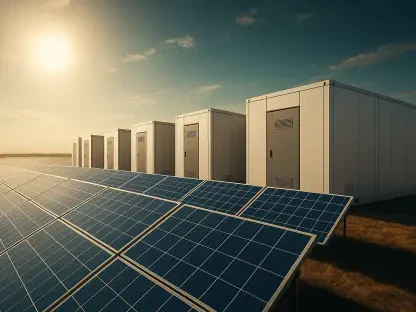

The strategic development of an eight-acre solar field near the Polk County jail is projected to offset twenty-five percent of the facility’s energy consumption while saving taxpayers millions. This initiative serves as a cornerstone for 1 Source Solar, an Ankeny-based firm that has successfully integrated sustainable technology into the traditional economic fabric of the Midwest. By championing a philosophy that spans from rooftops to row crops, the organization bridges the divide between urban commercial centers and the expansive rural landscapes that define the region. This transition is not merely an environmental gesture but a calculated move toward fiscal conservatism, where reducing long-term overhead becomes a priority for public and private sectors alike. As energy independence becomes a localized reality, the company demonstrates how vertically integrated operations—handling everything from design to final construction—can streamline complex transitions for a wide variety of stakeholders throughout the American heartland.
Driving Financial Growth: Commercial Solar Projects
One of the most notable examples of this economic impact is the massive solar installation at Homemakers Furniture in Urbandale. Covering over 250,000 square feet of rooftop space, this 1.33-megawatt system stands as one of the largest private arrays in Iowa. The project was meticulously designed to save the company over $125,000 annually, showcasing how traditional retail businesses can leverage modern technology to protect their bottom line while committing to long-term operational sustainability. For a business with roots stretching back decades, the shift to renewable power represents a forward-thinking strategy that balances heritage with innovation. The financial metrics of this installation are a testament to the viability of solar for large-scale retail, with a 30-year projected cash flow exceeding $4 million. This project highlights a growing trend where large regional employers view energy production as a core business function rather than a peripheral utility cost.
Beyond the retail sector, 1 Source Solar has implemented industrial-scale solutions for major employers such as Vermeer in Pella. Their Global Parts Distribution Center features a 2.735-megawatt system that utilizes 5,470 panels, producing a significant portion of the energy required for their expansive operations. These milestones illustrate that for the region’s largest industrial players, solar power has transitioned from an experimental concept to a fundamental component of strategic financial planning. By installing such vast arrays, these companies insulate themselves from the volatility of traditional energy markets and rising utility rates. The successful execution of these projects requires a high level of engineering precision and an understanding of the unique demands of industrial manufacturing. Consequently, the adoption of solar technology at this scale serves as a blueprint for other manufacturers looking to enhance their global competitiveness through localized power generation.
Strengthening the Heartland: Agriculture and Education
In the agricultural sector, the return on investment for solar technology is exceptionally fast, often paying for itself in less than four years. Projects for hog farms and grain operations, such as those in Waukee and Duncan, show that ground-mounted arrays can cover nearly all of a site’s energy needs. For instance, installations at grain bin and hog sites have reported payback periods as short as 3.3 years, with long-term savings estimated at nearly $200,000 over three decades. These figures highlight why the farming community has become a leading adopter of renewable technology; the systems offer a hedge against fluctuating energy prices and contribute directly to the profitability of the operation. By utilizing underused space around barns or row crops, farmers are effectively harvesting sunlight as a second crop. This dual use of land reinforces the resilience of family-owned operations, ensuring they remain profitable and capable of weathering economic shifts in the global food market.
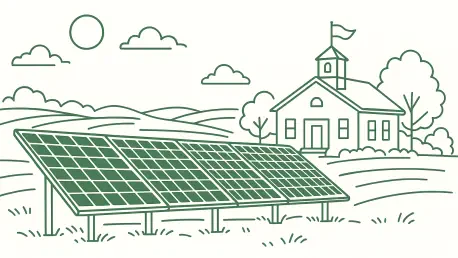
Educational institutions are also reaping the rewards of solar energy by redirecting utility savings toward their core missions. For instance, Vinton-Shellsburg High School utilizes a 440.4-kilowatt system to save approximately $5,000 per month. According to school officials, these funds are funneled directly into operating costs, including teacher salaries and educational supplies, effectively turning energy savings into academic investments. Similarly, community colleges have utilized power purchase agreements to install large-scale systems without the burden of high upfront capital costs. This creative financing structure allowed institutions like Northern Iowa Area Community College to implement a 2.55-megawatt system with the option to purchase the array later at a significant discount. Such arrangements demonstrate how public entities can modernize their infrastructure while remaining responsible stewards of taxpayer money, proving that green energy is accessible to everyone.
Strategic Implementation: Municipal Progress and Future Outlook
Municipalities are finding innovative ways to use solar power by transforming underutilized or brownfield land into productive energy assets. In Des Moines, a former six-acre landfill was converted into a 1-megawatt solar array that provides power to various municipal facilities, including animal control buildings and city greenhouses. This project turned an environmental liability into a productive source of revenue and energy, demonstrating the versatility of solar applications in urban settings. Partnerships with local government boards have led to similar developments, where projects are evaluated based on strict fiscal pragmatism rather than just environmental goals. By focusing on high-quality engineering and internal oversight, 1 Source Solar has completed over 1,500 projects, resulting in more than 30 megawatts of installed capacity. This massive portfolio has generated upwards of $10 million in cumulative savings for clients, solidifying the company’s reputation as a reliable partner.
The rapid expansion of renewable infrastructure across the Midwest established a clear precedent for decentralized energy production. Stakeholders who transitioned to solar technology found that the move provided a robust shield against inflationary utility costs while enhancing their overall property value. These successful implementations proved that the tipping point for solar had been reached, where the financial incentives finally aligned with environmental stewardship. Moving forward, businesses and public entities should prioritize the integration of battery storage to maximize the efficiency of their existing solar arrays. Evaluating regional incentives and exploring power purchase agreements remained essential steps for those looking to replicate these financial gains. By focusing on long-term maintenance and monitoring, early adopters ensured their systems operated at peak performance for decades. The overarching lesson was that localized power generation is no longer an alternative, but a necessary strategy for economic resilience.