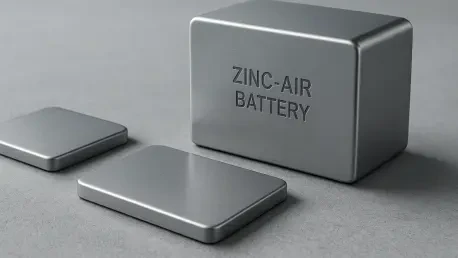

Innovative spatial modifications within the electrolyte have transformed the way charge is distributed, leading to a massive increase in the battery’s total power density. This breakthrough, spearheaded by researchers at the Barcelona Institute of Materials Science and their international partners, addresses a critical bottleneck in the quest for sustainable energy storage. While zinc-air batteries have long been favored for their high energy density and inherent safety, their slow power delivery has historically limited their use in high-demand applications. By integrating small, unconnected conductive elements directly into the liquid electrolyte, the team managed to bypass traditional resistance barriers. These metal islands, made of zinc or platinum, operate as wireless bipolar electrodes that do not require physical wiring to the circuit. This configuration fundamentally alters the internal environment, allowing for a seamless transition between energy storage and rapid discharge without risking short circuits. The study demonstrates that this simple structural change can enhance performance by up to 80% in 2026.
The Mechanics: Conductive Metal Islands
The technical brilliance of this approach lies in the strategic placement of wireless bipolar electrodes within the aqueous electrolyte. Unlike conventional designs where every conductive part must be wired to the terminals, these metal islands remain physically isolated from the main circuitry. During operation, the internal electric field polarizes these metallic fragments, effectively turning each one into a miniature electrode with its own positive and negative poles. This polarization creates secondary pathways for charge transfer, which significantly speeds up the transit of ions across the electrolyte. Because these islands are not connected to the external circuit, they do not create the direct electrical path required for a catastrophic short circuit. Instead, they act as intermediary stages that relay charge more efficiently than the liquid alone. This method effectively turns a passive medium into an active participant in the energy transfer process, bridging the physical gap between the anode and cathode components.
Quantifiable results from recent experiments reveal a drastic reduction in the internal hurdles that typically plague zinc-air systems. The research team observed that the inclusion of these metal islands slashed the ohmic internal resistance by approximately 64%, a figure that was previously thought unattainable without replacing the electrolyte entirely. Furthermore, the system demonstrated a 300 mV reduction in overpotential, which is the extra energy required to drive the chemical reactions during discharge. This efficiency boost allowed for a 50% increase in the limit current density, meaning the battery could provide more power at a faster rate without failing. By mitigating the sluggish oxygen reduction and evolution reactions that often bottleneck these systems, the design ensures that electrical energy flows with far less friction. These improvements were achieved using readily available materials, proving that the geometric arrangement of components is just as vital as the chemical nature of the components in high-performance battery design.
The Future: Scaling Sustainable Energy Storage Solutions
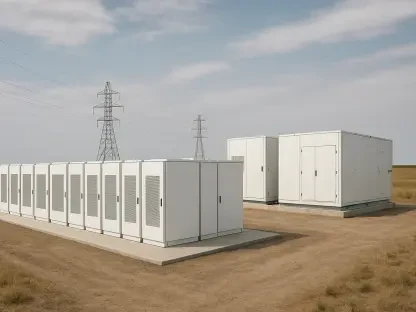
Transitioning to this modified architecture provides a compelling alternative to the lithium-ion batteries that currently dominate the market. While lithium is effective, it is also expensive, geographically concentrated, and presents significant recycling challenges and safety risks. In contrast, zinc is abundant, non-toxic, and incredibly cheap to source globally, making it an ideal candidate for large-scale energy storage. The inherent safety of zinc-air systems, which are non-explosive and operate with water-based electrolytes, makes them particularly attractive for residential and municipal grid storage. Historically, the trade-off for this safety and low cost was a lack of power, but the introduction of wireless bipolar electrodes effectively erases this disadvantage. This advancement means that renewable energy from solar and wind farms can now be stored and released with the high power density required to meet peak demand during the day or night as global energy needs continue to shift throughout 2026.
The successful demonstration of wireless bipolar electrodes in zinc-air systems provided a clear roadmap for the future of electrochemical energy storage. Engineering teams identified that this spatial optimization strategy was not limited to a single battery type but functioned as a universal enhancement tool. Researchers encouraged the immediate integration of these metal islands into commercial prototypes to validate their longevity under continuous cycling conditions. It was determined that manufacturers could implement these changes with minimal adjustments to existing production lines, as the modification required no new chemical syntheses. The focus shifted toward optimizing the size and distribution of the islands to maximize the power-to-weight ratio for various industrial applications. Industry stakeholders recognized the necessity of establishing standardized protocols for the assembly of these wireless systems to ensure consistency. This breakthrough solidified a sustainable path forward for the next generation of green infrastructure.