
Student involvement in the circular economy encourages the reclaiming of resources, ensuring that materials remain in use for the longest possible duration before disposal. The Lagos State Government is currently intensifying efforts to revolutionize environmental education by institutionalizing sustainable waste management within the academic framework. This initiative was underscored during the 2026 Environmental Bees Club Handlers’ Symposium, titled “Effective Waste Management Audit for Zero-Waste Schools.” The primary objective of this government-led drive is to transition school-based waste management from a superficial focus on cleanliness to a data-driven approach that prioritizes long-term ecological health. By focusing on waste characterization—determining the nature and quantity of materials—schools can move beyond the typical “out of sight, out of mind” mentality. This shift allows educational institutions to identify items that can be salvaged.
Transforming Waste into Valuable Classroom Resources
A major pillar of this transformation involves moving away from the traditional linear economy, which follows a rigid “take-make-dispose” pattern, in favor of a circular model. This concept encourages students to view discarded items as valuable assets rather than useless refuse. By teaching children to investigate why waste was generated and how its inherent value can be reclaimed, the government is fostering critical thinking and problem-solving skills that are essential for modern environmental stewardship. This pedagogical shift turns waste management into an active, hands-on learning experience where students engage in the classification, analysis, and innovative repurposing of materials. Such training ensures that students are not merely passive recipients of information but active participants in the state’s green transition. By internalizing these principles early on, the youth are better equipped to challenge the culture of waste in the city.
Evaluating the Success of the Environmental Bees Club
The Environmental Bees Club serves as the primary platform for driving this cultural change across the state’s diverse school districts. The curriculum has evolved significantly to match modern demands; while recent years focused on school gardening, the current phase emphasizes rigorous auditing and waste-to-wealth initiatives. The effectiveness of this grassroots mobilization was recently demonstrated through a collaborative project with international partners like UNICEF. During a high-profile plastic collection competition, over 200 Lagos schools successfully contributed more than one-third of the national plastic recycling target for Nigeria. This achievement highlights the tangible impact that student-led efforts can have on a macro scale. It also underscores the importance of competitive, community-driven initiatives in meeting sustainability goals. By scaling these club activities, the government provides a blueprint for how large-scale environmental reform can be achieved.
Precision through Waste Characterization and Auditing
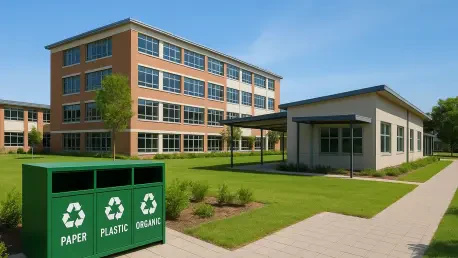
To achieve a true “Zero-Waste” status, schools are adopting technical auditing processes that provide a granular look at their daily operations. Specialist Ambassador Phillips Obuesi notes that there is a critical distinction between a general waste audit and the process of waste characterization. While a standard audit assesses the overall effectiveness of existing systems, characterization involves a meticulous analysis of the refuse itself to determine its composition. This level of precision enables school administrators to develop targeted recycling strategies that address specific waste streams, such as paper, plastic, or organic matter. Understanding the exact source of waste on a campus—whether it originates from the cafeteria, offices, or classrooms—allows for the implementation of more efficient collection routes and reduction programs. This data-driven strategy is essential for optimizing the recovery of resources and improving local operational efficiency.
Prioritizing Safety and Source Separation Protocols
Beyond resource recovery, the symposium emphasized the importance of safety protocols when dealing with various waste categories. Educational institutions must be equipped to handle not only common recyclables but also hazardous materials that may inadvertently enter the waste stream. School handlers are now receiving specialized training on how to identify, isolate, and professionally evacuate dangerous items to ensure that the learning environment remains safe for all students. This includes the proper separation of organic waste at the source to prevent contamination of dry goods. By integrating these technical skills into the school’s operational framework, the Lagos State Government ensures that sustainability does not come at the cost of health or safety. The focus on source separation also simplifies the processing stage for waste management partners, creating a more seamless transition from the school bin to the recycling facility for processing.
Fostering Environmental Ambassadors beyond the School Gates
The ultimate goal of these educational programs is to turn the school environment into a microcosm of a cleaner, more conscious society. The sustainable habits formed by students within their clubs are expected to ripple out into their homes and neighborhoods, influencing the broader community of Lagos. By equipping teachers with the expertise to lead these initiatives, the state is building a lasting infrastructure based on human knowledge rather than just industrial hardware. This approach recognizes that long-term environmental stability depends more on societal behavior than on the availability of landfills. As students bring home the lessons of resource recovery and waste reduction, they act as ambassadors for change within their families. This bottom-up approach to environmental policy ensures that the entire metropolitan area moves closer to a zero-waste reality. The integration of environmental awareness ensures that these values are passed down to future classes.
Measuring the Long-Term Impact of Zero-Waste Initiatives
The commitment to achieving zero-waste schools served as a foundational step toward a broader environmental strategy for the entire region. Educators and government officials collaborated to establish clear benchmarks for success, focusing on practical actions that schools could implement immediately. By prioritizing waste characterization, the Lagos State Government provided the necessary tools for institutions to measure their progress and adjust their strategies based on real-world data. This proactive stance helped the city address the complexities of urban waste through the power of education and the principles of circularity. Moving forward, the focus remained on expanding these programs to reach every academic institution in the state, ensuring that no student was left out of the green movement. The success of the symposium laid the groundwork for a future where sustainable resource management became the norm. These efforts showed that the path to a cleaner city started in the classroom.