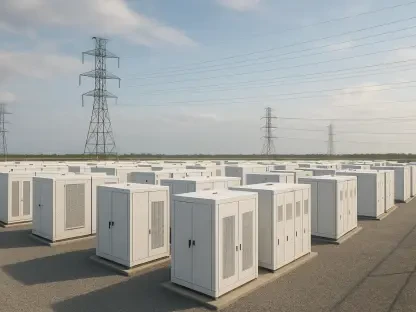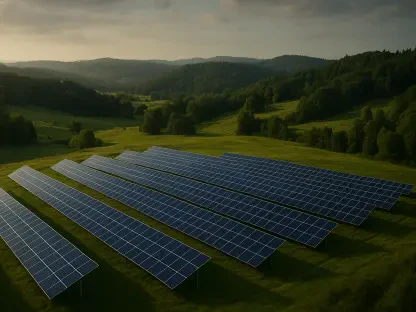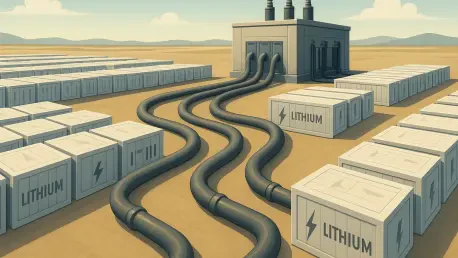

The rapid expansion of the global energy storage market has created a complex landscape where technical innovation frequently outpaces the development of comprehensive insurance protections. As of 2026, the energy sector is experiencing a massive shift toward co-located projects, where solar or wind farms are paired with large-scale battery energy storage systems to maximize grid efficiency. While these integrated facilities offer significant operational benefits, they also introduce substantial aggregation risks that underwriters and lenders are only beginning to quantify. A single site can now represent an insured exposure reaching hundreds of millions or even billions of dollars, creating a concentration of value that makes insurers increasingly cautious. The central challenge lies in the shared infrastructure that connects these assets to the grid. If a critical transformer or substation fails, the entire facility faces a shutdown, leading to astronomical financial losses that extend far beyond the cost of physical repairs to the individual battery units themselves.
Shared Infrastructure: The Problem of Concentrated Exposure
The integration of battery systems with renewable generation sources has fundamentally changed the risk profile of modern energy assets by introducing critical points of failure. When multiple battery modules and generation sources rely on a single high-voltage transformer to export power, any damage to that shared equipment triggers what the industry calls contingent business interruption. This means that even if the battery modules are completely undamaged, the inability to transmit power results in a total loss of revenue for every entity involved in the project. Insurers like Tokio Marine GX have observed that these scenarios often lead to claims that are significantly higher than the actual cost of physical property damage. The industry is currently struggling to price these systemic risks, as a single localized fire or mechanical failure can effectively paralyze a billion-dollar investment, necessitating a more nuanced approach to site design and infrastructure redundancy to protect project viability.
To mitigate these cascading financial losses, developers and engineers are now being pressured by underwriters to implement more rigorous physical spacing requirements and equipment isolation. Modern standards recommend that critical transformers be separated from battery clusters by specific distances or fire-resistant barriers to prevent a single event from impacting the entire facility. Despite these efforts, the insurance market remains volatile because the claims history for utility-scale battery systems is still in its early stages. Many lenders now require specialized policies that explicitly cover the revenue gaps caused by infrastructure downtime, yet finding such coverage at an affordable rate is becoming increasingly difficult. The focus is shifting from simply insuring assets to ensuring operational continuity through diversified grid connections, as the current model of relying on a single point of interconnection presents a level of financial vulnerability that the global insurance market is no longer willing to ignore.
Operational Reliability: Managing Early Life Cycle Failures
Recent data from the storage sector indicates that battery systems face their highest level of physical risk during the initial transition from construction to full-scale operation. Between 2026 and 2028, statistics show that more than half of all reported battery failures occur within the first twenty-four months of service, highlighting a period of extreme vulnerability for project owners. These early-stage incidents are frequently tied to manufacturing defects, improper installation, or the delicate calibration of battery management software. Thermal runaway—a process where a single cell failure triggers a chain reaction of overheating—remains the primary concern for insurers during this phase. While safety protocols have improved significantly, the volatility of lithium-ion chemistry requires constant monitoring and sophisticated suppression systems. Underwriters are now demanding real-time data access to battery health metrics to ensure that cooling systems and fire mitigation strategies are functioning as intended throughout the day.
The high frequency of early-life failures has prompted a shift in how insurers evaluate the technical maturity of various hardware suppliers and system integrators. Projects that utilize hardware from providers with limited operational history often face significantly higher premiums or restrictive coverage terms compared to those using established Tier 1 components. Furthermore, the complexity of modern energy storage systems means that a minor defect in the software architecture can lead to an electrical surge that damages thousands of cells simultaneously. To combat this, some insurance providers are beginning to offer performance warranties that work in tandem with traditional property insurance, providing a layer of protection against technical underperformance. This dual-layered approach is becoming a standard requirement for project finance, as it ensures that the debt obligations of the facility can be met even if the system experiences significant technical setbacks during its critical first few years of deployment on the grid.
Integrated Resilience: Bridging the Cybersecurity Gap
A significant disconnect has persisted between the physical protection of energy assets and the digital security of the networks that control them. Most standard property insurance policies for large-scale energy projects historically excluded losses resulting from cyberattacks, leaving a dangerous gap in the overall risk management strategy. As battery systems became more integrated with smart grid technology and remote monitoring platforms, the potential for a digital breach to cause physical damage increased. A hacker gaining control of the battery management system could theoretically trigger a thermal event by overriding safety limits, a scenario that would not be covered under traditional fire or machinery breakdown policies. This realization led to a nascent trend where lenders and project developers sought out specialized cyber insurance to complement their property coverage, ensuring that both physical and digital threats were addressed within a unified financial framework.
The industry moved toward a model that integrated physical damage protection with robust cybersecurity requirements to ensure the long-term viability of the green energy transition. Stakeholders realized that the transition to co-located sites outpaced the traditional frameworks used to protect them, necessitating a total overhaul of the underwriting process. Moving forward, the most successful projects focused on decoupling critical infrastructure to eliminate single points of failure while adopting hardware from transparent, verified supply chains. Owners who invested in redundant transformers and advanced fire suppression systems discovered that they secured more favorable terms from a market that had become wary of concentrated risk. By 2027, the focus shifted from simple risk transfer to active risk mitigation, where technical engineering and financial protection worked in harmony. This holistic approach provided a stable foundation for the continued expansion of renewable storage, allowing the industry to overcome the initial growing pains associated with its rapid technological evolution.