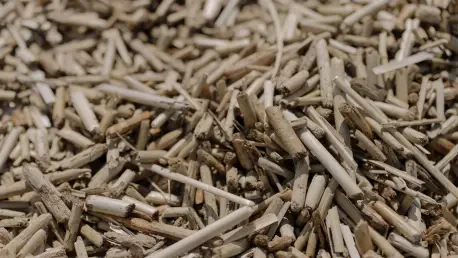

The Caesar Rodney Institute is urging state policymakers to reconsider wood-derived biomass as a cornerstone of a truly diversified energy portfolio. As Delaware grapples with the complexities of modernizing its power grid in 2026, the focus has shifted toward domestic generation to mitigate the risks of price volatility in regional markets. Governor Matt Meyer has championed an all-of-the-above energy framework, yet the Caesar Rodney Institute argues that a critical component remains conspicuously absent from the conversation. While heavy investments are being funneled into solar arrays and offshore wind projects, the state’s vast timber resources are being overlooked as a viable, carbon-neutral alternative. This proposal seeks to bridge the gap between environmental stewardship and energy independence by utilizing low-value wood products that currently have no market outlet. By integrating biomass, Delaware can create a more resilient energy system that relies on resources harvested right in its own backyard, thereby strengthening the local economy while securing a steady supply of baseload power for its growing population.
The Untapped Potential of Delaware’s Forestry Sector
Delaware’s landscape is defined by roughly 352,000 acres of forestland, a resource that covers one-quarter of the state’s total land area. Notably, 78% of these forests are in the hands of private landowners, who have historically managed them for timber production. However, the infrastructure supporting this industry has eroded significantly in recent years as local sawmills have closed their doors. This decline has left many owners without a profitable outlet for lower-value wood, such as diseased trees or species unsuitable for high-grade lumber. These materials, often referred to as trash wood, frequently accumulate on the forest floor, creating potential fire hazards or simply rotting away. The Caesar Rodney Institute suggests that this unused biomass represents a significant energy opportunity. Instead of viewing these wood products as waste, the state could treat them as a reliable fuel source that supports the forestry sector while providing a decentralized energy solution for local communities.
Recent data from forestry experts suggests that Delaware and the surrounding Delmarva region could sustainably harvest 125,000 green tons of woody biomass every year without compromising the long-term health of the forest ecosystem. This production potential is distributed across the entire state, with Sussex County leading at 50,000 tons, followed closely by Kent County at 47,000 tons and New Castle County at 28,000 tons. Such a geographic spread is ideal for developing a network of smaller, localized biomass facilities rather than a single massive plant. By placing generation sites closer to the fuel source, the state can drastically reduce transportation costs and the carbon footprint associated with hauling heavy timber. Furthermore, establishing this supply chain would revitalize rural economies by creating new jobs in logging, logistics, and plant operations. This decentralized approach aligns with the modern push for grid hardening, as distributed energy resources are less vulnerable to the types of large-scale failures.
Economic Incentives for Forest Conservation
One of the most pressing environmental challenges in Delaware is the rapid loss of natural space to urban sprawl and commercial development. Current estimates indicate that the state loses more than 1,000 acres of forestland annually, a trend that threatens biodiversity and natural carbon sequestration. This loss is primarily driven by the economic realities facing private landowners. When a forest is no longer profitable to manage due to the lack of timber markets, the pressure to sell the land for residential subdivisions becomes overwhelming. The introduction of a biomass energy market would change this dynamic by providing a consistent revenue stream for low-value wood products. This would allow landowners to cover the costs of property taxes and active management, making it financially feasible to keep their forests as forests. This strategy transforms trees from a liability into a working asset, ensuring that Delaware’s green canopy remains intact for future generations while addressing the electricity demands.
Beyond preventing land conversion, a robust biomass industry supports the ecological health of existing woodlands through active management practices. Healthy forests require periodic thinning to remove diseased, dead, or suppressed trees that compete with higher-quality timber for sunlight and nutrients. Currently, many landowners skip these vital steps because there is no market for the byproduct of such thinning operations. By creating a demand for this low-grade material, biomass energy encourages the working forest model, where the removal of undergrowth actually improves the growth rate and quality of the remaining trees. This process also significantly mitigates the risk of catastrophic wildfires, which are exacerbated by the buildup of dry organic material on the forest floor. The synergy between energy production and forest health is clear: a well-managed forest is more resilient to pests and diseases, captures carbon more effectively, and provides better habitat for local wildlife.
Implementing Modern Wood-Heating Models
The proposal from the Caesar Rodney Institute extends beyond electricity generation to include highly efficient thermal energy for public infrastructure. This initiative points to the Fuels for Schools program, a model that has proven successful in Northern states like Vermont and is now being considered for Delaware’s academic and governmental buildings. This approach involves replacing aging fossil fuel boilers with modern, automated wood-burning systems that use wood chips or pellets. Unlike the traditional wood stoves of the past, these industrial-grade systems operate with precision combustion technology and advanced filtration units that virtually eliminate visible smoke and particulate emissions. By implementing these systems in schools and state facilities, Delaware could demonstrate the viability of biomass on a manageable scale. These projects not only serve as a proof-of-concept for the technology but also provide immediate benefits to the surrounding communities by utilizing local resources.
Transitioning state-funded facilities to wood-based thermal energy offers a unique shield against the inherent volatility of global fossil fuel markets. While natural gas and heating oil prices are subject to international geopolitical tensions and supply chain disruptions, the price of local wood biomass remains remarkably stable. This predictability is a significant advantage for school districts and municipal governments operating on tight budgets, as it allows for more accurate long-term financial planning. Furthermore, by sourcing fuel from local landowners, these institutions are effectively investing taxpayer dollars back into the Delaware economy rather than sending those funds out of state to global energy conglomerates. The economic multiplier effect of such a shift is substantial, as it supports local loggers, haulers, and maintenance technicians. Additionally, these modern systems are designed for longevity and low maintenance, potentially reducing the total cost of ownership.
Overcoming Regulatory and Environmental Hurdles
Despite the clear economic and ecological benefits, the advancement of wood biomass in Delaware is currently stalled by outdated regulatory frameworks. The primary obstacle is the state’s Incinerator Law, which was originally enacted to curb the proliferation of large-scale municipal waste facilities. However, the law’s broad language includes any facility that burns organic matter, subjecting modern wood-heating systems to the same restrictive siting requirements as massive garbage-to-energy plants. These requirements include a mandatory three-mile buffer from residential areas, schools, and parks, a distance that is nearly impossible to maintain in Delaware’s more densely populated regions. The Caesar Rodney Institute argues that this legislative hurdle is an unintended consequence of poorly defined terminology and is calling on the General Assembly to amend the law. By distinguishing between clean-burning institutional biomass systems and large-scale waste incinerators, policymakers could clear the way.
The environmental debate surrounding biomass often centers on air quality and the long-term carbon cycle. Critics express concerns regarding fine particulate matter, specifically PM2.5, which can have adverse health effects if not properly controlled. In response, proponents point to the dramatic technological leaps made in commercial-grade filtration and electrostatic precipitators, which allow biomass plants to meet stringent air quality standards. Regarding carbon neutrality, the argument rests on the fundamental difference between fossil fuels and renewable wood. When coal or gas is burned, it releases carbon that has been sequestered for millions of years, whereas wood releases carbon that was recently absorbed and will be absorbed again by new growth. While some environmental groups argue that the carbon debt of harvesting takes time to repay, the Caesar Rodney Institute contends that a well-managed forestry market ensures a net increase in carbon sequestration by preventing land development.
Strategic Integration for Long-Term Energy Stability
The dialogue surrounding Delaware’s energy future evolved as the Caesar Rodney Institute successfully positioned wood biomass as a practical solution for a more resilient power grid. By highlighting the intersection of forestry management, rural economics, and renewable energy, the organization shifted the focus toward a resource that was previously hidden in plain sight. Moving forward, the most effective path involved a bipartisan effort to modernize the state’s siting regulations while establishing clear benchmarks for sustainable harvesting. It became apparent that if the state truly intended to achieve energy independence, it needed to embrace all available domestic resources, including those from its own woodlands. Strengthening the forestry sector through biomass markets provided a defensive wall against the loss of natural habitats, ensuring that Delaware’s environmental legacy was preserved through economic viability. Ultimately, the successful integration of wood energy depended on the willingness of leaders to look beyond solar.