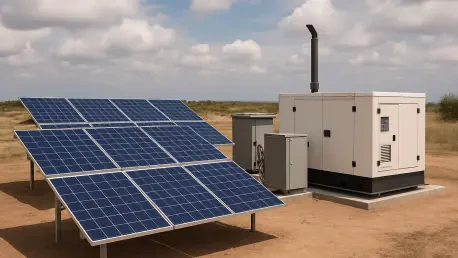

While the initial capital expenditure for hybrid systems is high, the 80 percent reduction in generation costs allows for a simple payback period of only 3.47 years. This financial reality is transformative for rural Nigeria, where the agricultural sector has long been hamstrung by a catastrophic post-harvest loss rate exceeding 40 percent. Perishable commodities like tomatoes and leafy vegetables often rot in the heat before they can reach urban markets because the national electrical grid remains virtually nonexistent in farming hubs like Abia State. In regions such as Itunta Village, the absence of a reliable cold chain is not merely a logistical oversight but a systemic failure that traps farmers in a cycle of poverty. Recent engineering breakthroughs have introduced decentralized hybrid energy architectures that combine solar photovoltaic arrays with diesel backup generators. These systems are specifically designed to meet the rigorous thermal demands of walk-in cold rooms, offering a localized solution that operates independently of the failing national infrastructure. By employing advanced thermodynamic modeling and stochastic simulations, researchers have demonstrated that these integrated systems can bridge the gap between energy scarcity and food security, creating a sustainable path for rural economic development in 2026.
Overcoming Engineering and Operational Challenges
Handling High Power Demands
The engineering requirements for a commercial-scale walk-in cold room are significantly more complex than those for standard residential lighting projects. Refrigeration compressors require high-torque motors that create a massive “inrush current” whenever they cycle on. This initial surge of electricity can be several times higher than the steady-state running power, often causing standard solar inverters to trip or fail if they are not correctly oversized. To address this, the specialized system in Itunta utilizes a 10-kVA inverter, providing a robust safety margin over the baseline 5-kVA requirement. This ensures that the system can handle the mechanical stress of cooling 2,000 kilograms of tomatoes without risking an electrical shutdown. Furthermore, the architecture employs a 48-volt direct-current bus configuration to minimize ohmic losses. By using a higher voltage for the DC distribution, the system reduces the current flowing through the wiring, which allows for smaller cable diameters and lowers the risk of heat-related failure at terminal connections. This careful attention to electrical physics is what distinguishes industrial-grade agricultural infrastructure from basic off-grid solutions, ensuring that the refrigeration cycle remains uninterrupted during the critical “thermal pull-down” phase when the product temperature is rapidly lowered.
Modeling Seasonal Weather Variations
One of the most significant hurdles in rural Nigerian electrification is the volatility of the local climate, which features distinct dry and rainy seasons. Static energy calculations frequently fail because they assume a consistent daily solar harvest, ignoring the reality of dense monsoon cloud cover. To mitigate this risk, researchers utilized a high-resolution 8760-hour stochastic simulation to model every hour of an entire operating year. The data revealed that while solar generation is abundant from November through March, it can drop by nearly 50 percent during the peak of the rainy season in July. Rather than overbuilding the solar array to meet these rare seasonal lows—which would result in wasted energy and inflated costs for most of the year—the system incorporates a “diesel bridge.” A 15-kVA soundproof generator is integrated via a motorized automatic transfer switch, serving as a tertiary backup that only engages when battery storage is insufficient. This hybrid approach ensures that the Loss of Load Probability remains near zero percent. By using fossil fuels sparingly to fill temporary gaps in renewable generation, the system maintains a continuous cold chain while keeping the total environmental footprint and fuel consumption far lower than traditional diesel-only refrigeration setups.
Maximizing Battery Life Cycles
In the tropical environment of Sub-Saharan Africa, ambient heat is the primary enemy of electrochemical energy storage. High temperatures accelerate the chemical degradation of battery plates, which can lead to premature system failure and expensive replacement costs. To combat this, the Itunta project implemented strict operational logic via a kinetic degradation model. The system is programmed with a firm 20 percent discharge limit, meaning the battery bank is never allowed to be depleted entirely. This strategy, combined with the use of 52 deep-cycle lead-acid batteries wired for 159 kWh of capacity, ensures that the storage unit remains healthy for a projected 9.2 years. This longevity is critical for the long-term financial viability of the facility, as it allows planners to budget for only one major battery replacement over a twenty-year operational lifespan. Additionally, the setup includes four parallel 100-ampere charge controllers. This redundancy means that if one controller fails, the others can continue to charge the bank, preventing a single point of failure from jeopardizing the stored produce. By prioritizing the health of the energy storage component, the design provides a reliable buffer that protects the agricultural investment from both mechanical failure and the inherent variability of solar energy.
Optimization and Economic Sustainability
Finding the Ideal System Configuration
Modern computer modeling has shifted the paradigm of how these hybrid systems are designed, moving away from “one-size-fits-all” templates toward Pareto-optimal configurations. Through thousands of iterative simulations, researchers discovered that the most cost-effective way to run a cold room in the Nigerian climate is to oversize the solar array while utilizing a relatively smaller battery bank. A configuration featuring a 30-kWp solar array allows the refrigeration compressor to be powered directly by the sun during daylight hours, even on moderately overcast days. This “direct-drive” strategy reduces the cycle count on the batteries, as they are primarily used only to maintain temperatures overnight rather than carrying the load throughout the entire day. By shifting the energy burden toward the panels—which have a lifespan of over 25 years and minimal maintenance requirements—the overall lifecycle cost of the system is significantly reduced. This optimization recognizes that the cost of solar modules has plummeted, while the cost of batteries remains high and their lifespan limited. Consequently, a solar-heavy architecture provides the highest degree of reliability for the lowest possible investment, ensuring that the facility can sustain itself without requiring constant external subsidies or technical interventions.
Comparing Long-Term Operational Costs
The economic landscape of Nigeria changed significantly following the 2026 removal of broad fuel subsidies, making diesel-only power generation financially unsustainable for small-scale agricultural cooperatives. While the upfront capital requirement for a hybrid solar system is roughly six times higher than that of a standalone diesel generator, the operational expenditure tells a different story. Diesel-only refrigeration currently costs upwards of $0.85 per kilowatt-hour due to fuel prices and maintenance needs, whereas the hybrid system delivers power at approximately $0.20 per kilowatt-hour. This 80 percent reduction in energy costs is what makes the cold chain viable for rural farmers who operate on thin margins. Over a twenty-year period, the hybrid system provides a massive hedge against inflation and fuel volatility, essentially “locking in” a low energy price for two decades. The research indicates that the fuel savings alone are sufficient to repay the entire initial investment in just over three years. For a village like Itunta, this means the facility becomes a profit-generating asset rather than a liability, allowing the community to reinvest their earnings into better seeds, irrigation, and expanded storage capacity, thereby creating a localized engine for economic growth.
1. How Does the System Handle Cloudy Days?
The resilience of the cold chain during periods of poor weather is maintained through a dual-layer backup strategy. First, the 159-kWh battery bank is sized to provide enough energy for the cooling unit to run for several hours even without active solar input. If the cloud cover persists and the battery voltage drops to a predetermined threshold, the 15-kVA diesel generator is automatically triggered to take over the load. This ensures that the internal temperature of the cold room never rises above the safe threshold of 4°C, which would otherwise lead to the rapid spoilage of tomatoes. The transition between power sources is managed by an automatic transfer switch that completes the handover in seconds, preventing any significant fluctuation in motor torque or temperature. This layered approach eliminates the risk inherent in pure solar systems, which are often at the mercy of local weather patterns. By combining the immediate response of batteries with the long-term reliability of a generator, the facility can guarantee 24/7 cooling regardless of the time of year or the density of the cloud cover, providing farmers with the peace of mind that their hard work will not be wasted.
2. Is This System Affordable for Small Villages?
While the initial $31,891 investment seems daunting for a single village, the model is designed for implementation through agricultural cooperatives and public-private partnerships. When the cost is spread across a group of 50 to 100 farmers who use the facility to store their collective harvest, the per-user investment becomes manageable. Furthermore, the 80 percent reduction in monthly fuel expenses compared to diesel generators means that the cooperative can charge lower storage fees while still remaining profitable. The financial analysis from the Itunta study suggests that the increased market value of the preserved produce—which can be sold during off-peak times for much higher prices—more than covers the loan repayments for the equipment. In 2026, the shift toward sustainable energy is also attracting significant interest from impact investors and international development agencies who are looking for scalable projects with high social returns. By proving the economic viability of the hybrid model, the project has created a blueprint that can be replicated in thousands of similar communities across the region, turning food preservation into a cornerstone of rural infrastructure rather than a luxury reserved for large industrial farms.
3. What Happens If a Component Breaks?
Maintenance and repair are critical considerations in remote rural areas where specialized technicians may not be readily available. The Itunta system addresses this through a modular design that includes multiple redundant components. For instance, the use of four parallel MPPT charge controllers ensures that the failure of one unit does not halt the charging of the entire battery bank; the remaining three units simply redistribute the load. Similarly, the system includes a manual bypass switch for the diesel generator, allowing it to be started and connected to the cold room manually in the event that the automatic transfer switch or the solar inverter fails. Most routine maintenance, such as cleaning the solar panels and checking battery water levels, can be performed by trained members of the local community after a brief orientation. This local empowerment is essential for the long-term survival of the project, as it prevents the facility from becoming a “white elephant” that falls into disrepair due to a lack of technical support. By combining robust engineering with a strategy for community-based maintenance, the hybrid cold chain system is built to survive the practical realities of the rural Nigerian landscape.
4. How Does This Ensure Future Food Security?
The successful deployment of the Itunta cold storage facility confirmed that hybrid solar-diesel systems are a robust solution for the developing world. By maintaining a highly reliable power supply with a loss-of-load probability of less than 0.5 percent, the system protected sensitive crops and significantly boosted the income of local farmers. This intervention directly addressed food scarcity by ensuring that the 40 percent of produce that once rotted in the fields instead made its way to the plates of consumers. The project results demonstrated that the marriage of renewable energy and smart engineering can effectively solve the logistical crises that have plagued the Nigerian agricultural sector for decades. Moving forward, the focus has shifted toward scaling this model by integrating smart grid technology that allows multiple cold rooms to share energy surpluses. This scalable blueprint for rural development provides a tangible path toward regional stability and economic independence. The investigation into the Itunta facility proved that the technology is ready, the economics are favorable, and the social impact is profound, setting a new standard for sustainable agricultural infrastructure throughout the African continent.