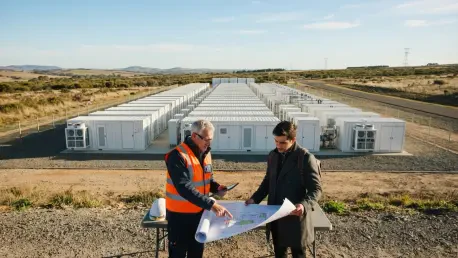

Regulatory uncertainty in Italy threatens to drive out smaller investors, leaving only large, diversified energy groups to dominate the battery storage market. This trend is emerging just as the nation attempts a fundamental reorganization of its power grid to accommodate a massive influx of renewable energy sources. The technical feasibility of high-capacity lithium-ion or flow batteries is no longer the primary hurdle; instead, the success of the Italian energy transition now rests almost entirely on the cost of capital. For developers, the financial landscape is a minefield of high risk premiums and volatile interest rates that dictate whether a project lives or dies before the first cell is ever installed. Recent data suggests that while the hardware is ready, the market architecture remains fragile, creating a scenario where only the most financially resilient players can survive. This creates a bottleneck that could slow down the national rollout of storage capacity, leaving the grid vulnerable to imbalances during peak demand or low renewable generation periods.
Economic Volatility: Interest Rates and Procurement Models
The feasibility of any utility-scale storage project is measured by the Weighted Average Cost of Capital, which reflects the return required to satisfy both debt providers and equity investors. In Italy, a sharp divide has emerged between two primary investment paths: the merchant model and the state-supported storage capacity procurement mechanism, known as MACSE. Currently, merchant projects—which sell electricity directly into the day-ahead and intraday markets—are struggling with an average cost of capital of approximately 12.1 percent. In contrast, projects that successfully secure a spot under the MACSE framework enjoy a significantly lower cost of around 8.8 percent. This disparity is not merely a statistical curiosity; it represents a fundamental valuation of risk. The procurement mechanism offers long-term visibility and revenue certainty that financial institutions demand, effectively providing a government-backed floor that makes these projects far more attractive to traditional lenders than their more volatile merchant counterparts.
Economic sensitivity to macro trends further complicates this financial landscape, as even minor shifts in global interest rates can derail the profitability of Italian battery ventures. Financial modeling indicates that if government bond yields were to rise by just two percentage points, the cost of capital for merchant projects would likely skyrocket to 14.6 percent, while MACSE projects would see a more manageable increase to roughly 11 percent. The real-world implications for a typical 100-million-euro investment are staggering. A merchant project operating under higher yields must generate roughly 2.5 million euros in additional annual revenue just to match the financial performance of a project backed by the procurement mechanism. Over a fifteen-year project life cycle, this totals an additional 38 million euros in required income—a gap that often proves insurmountable for developers who lack the scale to absorb such significant overhead. Consequently, the choice of procurement model has become a more critical factor than technical efficiency.
Risk Management: Revenue Stabilization and Mitigation Strategies
To navigate these high risk premiums, developers are increasingly relying on revenue-stabilization tools such as Power Purchase Agreements and tolling arrangements. Under a tolling agreement, a third-party operator pays a fixed fee to utilize the battery’s capacity, effectively insulating the project owner from the volatility of the spot market. While these contracts are essential for making projects bankable, they frequently suffer from a duration mismatch that complicates long-term financing. Most commercial loans for battery infrastructure are structured over a fifteen-year period, yet many tolling agreements or service contracts only cover the first five to ten years of operation. For the remaining years of the loan, banks typically apply a high-risk merchant rating to the projected cash flows. This gap reduces the overall leverage available to the project, forcing developers to contribute more equity upfront and significantly lowering the internal rate of return for investors who are already operating on thin margins.
The Italian capacity market provides a vital middle ground between total merchant exposure and the structured security of the MACSE framework by offering fifteen-year contracts to attract necessary investment. However, this market is not without its own set of challenges, particularly regarding the potential for post-signing revisions to the amount of capacity being paid for. This regulatory loophole introduces a layer of lingering uncertainty that forces many sophisticated investors to pair their capacity market contracts with additional hedging instruments or tolling agreements to satisfy lender requirements. These additional layers of protection are necessary to unlock the debt markets, but they also add significant complexity and legal costs to the project’s financial structure. As a result, the administrative burden of securing a project’s revenue can become a deterrent for smaller firms that do not have the specialized legal and financial departments required to navigate these intricate contractual arrangements.
Structural Barriers: Market Transparency and Information Scarcity
One of the most significant structural barriers currently hindering the growth of the Italian battery sector is a profound information gap regarding transaction details and financing benchmarks. In a study of major energy transactions worth over three billion euros occurring between 2024 and 2026, it was found that only a tiny fraction of these deals disclosed critical data such as debt-to-equity leverage or specific acquisition prices. This lack of public transparency forces lenders to operate without reliable industry benchmarks, leading them to apply a “safety margin” to any new loans. This margin functions as an artificial tax on the entire energy system, as it raises the cost of debt for every developer regardless of their project’s actual quality. Without a clear understanding of what constitutes a “market standard” for battery financing, financial institutions will continue to price in extra risk to protect themselves from the unknown, making it unnecessarily expensive for Italy to build the storage infrastructure required for its net-zero goals.
Beyond simply increasing the cost of doing business, these information hurdles and regulatory complexities contribute to a systemic risk that favors large, diversified energy corporations over mid-sized independent power producers. When only the largest players have the internal data and financial reserves to navigate an opaque market, the resulting concentration of power can stifle innovation and reduce competition in public auctions. A market dominated by a handful of massive entities is less likely to produce the competitive pricing needed to keep energy costs low for end consumers. Furthermore, a lack of diversity in the investor base makes the entire national energy strategy more vulnerable to the strategic shifts of a few key companies. Fostering a more transparent and accessible environment is therefore not just a matter of fairness, but a strategic necessity for the Italian state. Ensuring that mid-sized investors can compete on a level playing field will be essential for maintaining a healthy energy market.
Policy Stability: Funding Cycles and Future Recommendations
Achieving sustainable growth in the energy storage sector requires building a robust bridge between initial construction grants and long-term operational stability. Italy has successfully utilized funds from the National Recovery and Resilience Plan to support the establishment of micro-factories and cell production facilities, providing essential capital for the manufacturing phase of the supply chain. However, these one-time grants do not guarantee the financial health of a project over its twenty-year operational life. The challenge now lies in ensuring that the capital-intensive infrastructure built today remains viable once the initial subsidy phase has concluded. Policy support must therefore evolve to provide more than just upfront cash; it must offer the debt guarantees and long-term procurement mechanisms that allow projects to survive the lean years of market transition. Integrating instruments like the Battery Booster Facility can help carry projects through their early stages.
Strategic steps were taken to lower the risk premium by establishing fixed auction calendars and creating an anonymous data observatory for sharing financing benchmarks. These administrative improvements aimed to reduce the emergency pricing associated with regulatory uncertainty and provided the transparency needed to eliminate unnecessary safety margins on commercial debt. By focusing on regulatory consistency and freezing revisions to signed capacity contracts, the government simplified the path for mid-sized investors to enter the market. This approach proved to be a far more cost-effective strategy than direct public spending, as it leveraged private capital more efficiently. Moving forward, maintaining this commitment to market transparency will be essential for Italy to meet its net-zero targets and ensure grid stability in an increasingly renewable-dependent future. The transition demonstrated that managing the risk premium through clear, stable policy was the most effective tool for securing the nation’s energy future.