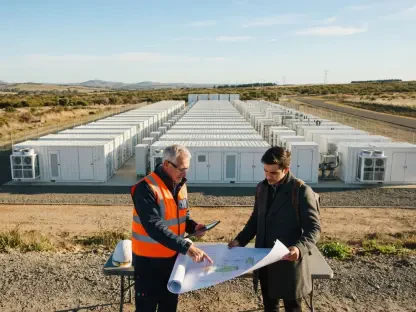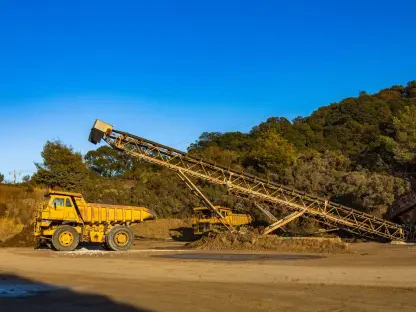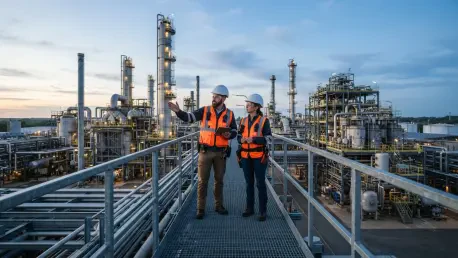

Fresno County stands at a strategic geographic crossroads where forest debris and agricultural waste can be converted into high-value renewable diesel. This location serves as the focal point for a transformative approach to California’s persistent environmental struggles, ranging from the catastrophic scale of seasonal wildfires to the logistical nightmare of agricultural byproduct management. Recent research spearheaded by the University of California Cooperative Extension, in partnership with the Sierra Resource Conservation District and the Agricultural Technology Innovation Partnership Foundation, has highlighted the immense potential of bioenergy innovation campuses. These facilities are designed as integrated industrial hubs that do more than just produce fuel; they act as a comprehensive management system for the state’s surplus organic matter. By creating a commercial-scale infrastructure capable of processing hazardous woody biomass, the state can finally transition from a reactive posture toward wildfires to a proactive strategy of land management. This initiative not only promises to reduce the fuel loads that lead to high-intensity blazes but also offers a path toward regional economic revitalization by turning waste into a valuable commodity. As the state seeks to meet its ambitious climate targets, these campuses provide a tangible framework for integrating forestry, agriculture, and energy production into a single circular economy that benefits both the environment and the local workforce.
The Technological Mechanism: Gasification and Carbon Recovery
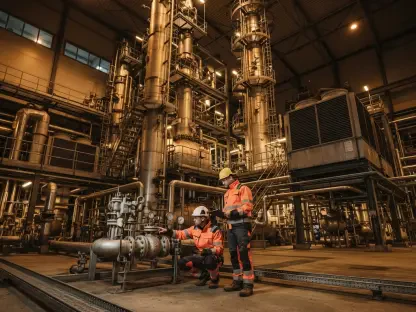
The central technological driver of these proposed innovation campuses is the process of gasification, a sophisticated thermochemical method that differs significantly from traditional biomass combustion. Unlike a standard incinerator that simply burns waste to generate heat, a gasifier operates in a low-oxygen environment, heating organic materials to extreme temperatures to break them down into their molecular components. This process yields syngas, a versatile mixture of gases that can be captured and refined into clean-burning renewable diesel or hydrogen fuel. Additionally, the process produces biochar, a solid, carbon-rich material that has gained significant attention for its ability to enhance soil health and sequester carbon when applied to agricultural lands. The researchers involved in the study noted that this technology has reached a high level of maturity, currently sitting at a Technology Readiness Level of 7 to 8 on a nine-point scale. This means the hardware is no longer just a laboratory concept but is ready for commercial deployment. By utilizing gasification, California can avoid the heavy emissions associated with open-pile burning of agricultural waste or the uncontrolled release of carbon during a forest fire.
Transitioning this technology from pilot programs to large-scale, profit-generating operations is the primary goal of current development efforts. The efficiency of gasification allows for the extraction of maximum energy value from materials that were previously considered liabilities, such as orchard trimmings and forest floor debris. Because the syngas can be tailored to produce specific fuel types, these campuses offer the flexibility needed to respond to shifting market demands for renewable fuels. Furthermore, the production of biochar offers a secondary revenue stream and an additional environmental benefit, as it helps farmers improve water retention in their soil—a critical advantage in a state frequently plagued by drought. The high readiness level of these systems suggests that the primary obstacles to implementation are no longer scientific, but rather logistical and financial. Establishing these hubs requires a coordinated effort to secure consistent feedstock supplies and to build out the necessary refinery infrastructure; once operational, they function as a carbon-negative or low-carbon engine for the regional economy. This technological foundation is essential for transforming the way California views its natural resources and waste streams.
Strategic Regional Implementation: The Fresno County Model
Fresno County has been identified as an ideal candidate for the first wave of bioenergy innovation campuses due to its unique position at the intersection of dense forest land and vast agricultural operations. Feasibility studies conducted at sites like the Rio Bravo Fresno Biomass Power Plant have explored how varying blends of feedstock affect both economic viability and environmental impact. Researchers tested four different scenarios, including mixtures of 100% forest residues, a 50/50 split between forest and agricultural waste, and blends incorporating municipal solid waste. The findings were conclusive: the scenario utilizing 100% forest residues provided the strongest financial returns for investors and the highest production volume of renewable diesel. This is particularly significant because forest residues represent the most hazardous fuel sources for wildfires. By providing a clear economic incentive to remove these materials from the Sierra Nevada foothills, the Fresno model creates a self-funding mechanism for forest thinning operations that would otherwise be cost-prohibitive for land managers.
The implications of the Fresno model extend far beyond the balance sheets of energy companies, as the environmental and public health benefits are profound. Removing massive quantities of woody biomass from the forest floor directly reduces the intensity and spread of future wildfires, which in turn protects the air quality of the entire Central Valley. For residents who have spent years dealing with the respiratory consequences of heavy seasonal smoke, these bioenergy campuses represent a significant improvement in quality of life. Furthermore, the renewable diesel produced through this process is estimated to have a carbon intensity 93% lower than that of conventional petroleum diesel. This massive reduction in lifecycle emissions supports the state’s broader goal of decarbonizing the transportation sector, particularly for heavy-duty farm equipment and long-haul trucking. By aligning the needs of forest management with the requirements of the energy market, Fresno County can demonstrate a repeatable strategy for environmental resilience that can be exported to other regions facing similar challenges.
Southern California Logistics: Hydrogen for the Inland Empire
While Fresno focuses on diesel, San Bernardino County offers a distinct opportunity to pioneer the production of hydrogen fuel, specifically targeted at decarbonizing the state’s massive freight corridor. San Bernardino sits at a critical logistical junction, serving as the gateway for goods moving from the Port of Los Angeles and the Port of Long Beach to the rest of the country. This region is home to a high density of distribution centers and is traversed by thousands of heavy-duty trucks every day, contributing to some of the highest concentrations of particulate matter and nitrogen oxides in the nation. By converting forest thinning residues from the nearby San Bernardino National Forest into hydrogen, a bioenergy campus in this region could provide a local, zero-emission fuel source for the trucking industry. This would not only reduce the state’s reliance on fossil fuels but would also provide an immediate boost to local air quality in communities that have historically been overburdened by industrial pollution.
The economic feasibility of the San Bernardino initiative is bolstered by the concept of “brownfield” development, which involves repurposing existing, idled industrial infrastructure. Researchers analyzed the potential of converting the Desert View power plant and similar facilities, finding that utilizing existing sites could reduce initial capital expenditures by approximately 40%. These idled plants often already possess the necessary electrical grid connections, water permits, and transportation access points required for high-volume energy production. Furthermore, these sites typically have an established history within the local regulatory environment, which can significantly shorten the time needed to secure new operational permits. By leveraging these existing assets, developers can bypass many of the financial risks associated with “greenfield” projects, making the transition to hydrogen production faster and more attractive to private equity. This approach creates a strategic advantage for San Bernardino, turning old industrial relics into the cutting-edge engines of a clean energy future.
Economic Challenges: Navigating Market and Regulatory Barriers
Despite the evident advantages of bioenergy innovation campuses, the path to full-scale commercialization is complicated by a range of regulatory and economic hurdles. California’s environmental standards are among the most stringent in the world, and while these regulations drive innovation, the associated permitting processes are often lengthy and unpredictable. For many investors, the uncertainty surrounding the timeline for project approval is a major deterrent. The “brownfield” strategy mentioned in the San Bernardino study is a direct response to this challenge, but broader policy reforms may be necessary to accelerate the deployment of these facilities. Additionally, the sheer logistics of moving bulky, low-density biomass from remote forest locations to a central processing hub can be prohibitively expensive. Without a stable and predictable market value for the final fuel products, it is difficult for land managers to justify the high costs of collecting and transporting hazardous fuels, even when the ecological benefits are clear.
Market volatility also remains a significant concern, particularly for the emerging hydrogen economy. Currently, the price of hydrogen remains significantly higher than that of traditional diesel, making it difficult for trucking fleets to justify the switch without substantial subsidies or long-term price guarantees. While the Low Carbon Fuel Standard provides a framework for incentivizing clean fuels, the gap between production costs and market reality must be closed to achieve widespread adoption. To address the issue of supply chain consistency, researchers have proposed the establishment of feedstock aggregation yards. These specialized facilities would act as intermediaries, collecting and processing material from various small-scale landowners and forest management agencies to ensure a steady, year-round flow of biomass to the energy campuses. By stabilizing the supply side of the equation, these aggregation yards could reduce the risk for energy producers and help create a more mature and reliable market for woody biomass.
The Research Findings: Establishing a Framework for Future Resilience
The comprehensive analysis conducted by the University of California Cooperative Extension and its partners established a clear roadmap for the deployment of bioenergy innovation campuses. The researchers concluded that the most effective way to reduce wildfire risk while maximizing economic return was to prioritize 100% forest residue as the primary feedstock. Their findings demonstrated that while municipal waste and agricultural residues had their places in the energy mix, the environmental urgency of forest management provided the most compelling case for immediate investment. The study also determined that repurposing idled power plants was the most cost-effective entry point for the industry, potentially saving developers millions in infrastructure costs. These findings provided a factual foundation for policymakers to advocate for the expansion of biomass-to-energy projects as a core component of the state’s climate strategy, proving that the technology was no longer the bottleneck.
Moving forward, the initiative focused on the integration of workforce development and community engagement as essential pillars of success. The researchers identified a critical need for specialized training programs, recommending partnerships with local community colleges to prepare workers for roles in chemical engineering, logistics, and facility management. These educational pathways were viewed as vital for ensuring that the economic benefits of the bioenergy sector remained within the local communities most affected by forest fires. Furthermore, the studies emphasized that the long-term success of these campuses would depend on the creation of long-term feedstock contracts that provided stability for both land managers and energy producers. By formalizing these relationships and streamlining the regulatory environment, California established the groundwork for a resilient bioenergy industry. The transition from theoretical research to practical application required a multisectoral approach, but the blueprint provided by the studies offered a viable path toward a safer, cleaner, and more prosperous future.