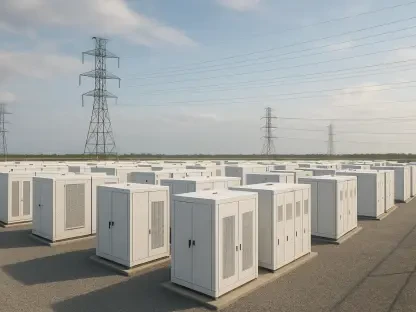

The integration of agentic AI into energy management allows human operators to shift from manual data entry to high-level strategic optimization. This technological shift is currently being spearheaded by Metris Energy, a London-based firm that recently secured a significant $5 million Seed funding round to scale its operations across the European continent. By securing support from major investors like PT1 Ventures and Octopus Ventures, the company has reached a total valuation support of $7.5 million, marking a decisive moment for the renewable energy sector. The primary focus of this capital infusion is the development of a proprietary data layer that functions as an intelligent system of record, transitioning the firm from a niche solar management tool into a comprehensive, multi-technology platform. This evolution is necessary as the global power grid becomes increasingly decentralized, requiring sophisticated digital frameworks to manage the growing complexity of distributed energy resources across various regional territories.
Overcoming the Fragmentation of Renewable Data
The renewable energy landscape has historically been plagued by a severe data problem where vital information remains trapped in disconnected silos. Asset managers often find themselves struggling with a disparate array of tools ranging from inverters and smart meters to legacy SCADA systems and internal spreadsheets. This fragmentation forces operational teams to perform grueling manual reconciliations that are prone to human error and significant delays. Despite the fact that the global energy market handles approximately $5 trillion in annual transactions, the industry remains surprisingly reliant on archaic methods that cannot keep pace with modern demands. As power producers attempt to manage multi-million dollar portfolios using manual data entry, they face a bottleneck that prevents them from tapping into the full revenue potential of their assets. This lack of standardization makes it nearly impossible to gain a real-time overview of performance across diverse geographical locations.
Beyond simple operational inefficiencies, the reliance on fragmented data sets limits the ability of energy firms to engage with emerging revenue streams. The modern power grid requires the management of flexibility services, curtailment protocols, and community energy programs, all of which demand high-fidelity, real-time data integration. Without a unified system, asset managers cannot react quickly enough to market signals or grid demands, resulting in missed opportunities for monetization and optimization. The current transition toward a decentralized energy model highlights the obsolescence of legacy software that was never intended to handle the volume and velocity of information generated by thousands of distributed nodes. Consequently, the industry has reached a tipping point where the ability to consolidate and clean raw data has become a fundamental competitive advantage. By bridging the gap between physical infrastructure and financial reporting, organizations can move toward a more profitable management strategy.
The Role of Agentic AI in Operational Excellence
To address these complexities, the development of a unified data layer has become the cornerstone of modern energy management. Metris has pioneered a platform that creates a continuously updated, high-fidelity profile for every physical asset in a portfolio, reconciling raw infrastructure data with volatile market signals. This approach provides the clean, standardized environment necessary for the reliable deployment of automation. Without this underlying foundation, any attempt to implement artificial intelligence would result in inconsistent outputs and untrustworthy insights. By establishing an intelligent system of record, the platform ensures that every stakeholder has access to a single source of truth, eliminating the discrepancies that often occur between different software stacks. This digital infrastructure allows for the seamless flow of information from the physical hardware to the boardroom, providing a level of visibility that was previously unattainable for large-scale energy producers.
Building on this robust data foundation, the launch of Metria AI represents a major leap toward the era of agentic AI in the energy sector. This natural-language interface allows asset management teams to execute complex operational tasks through simple conversational queries, replacing the need for manual navigation through convoluted software menus. Unlike traditional predictive tools, agentic AI is capable of taking autonomous actions across a portfolio, such as adjusting billing cycles or optimizing maintenance schedules based on real-time performance metrics. This shift allows software to act as a proactive partner rather than a passive repository of information. Because these agents operate on a foundation of accurate, reconciled data, they can make informed decisions that align with the strategic goals of the energy producer. This automation significantly reduces the administrative burden on human operators, allowing them to focus on high-level portfolio growth rather than routine data processing.
Strategic Optimization: The Path Forward
The shift in the energy sector was ultimately about redefining how value was extracted from renewable assets. Success was no longer measured solely by the total kilowatt capacity owned by a firm but by the sophistication of the digital infrastructure used to monitor and monetize that capacity. As the grid became more volatile, the ability to control assets in real-time became the primary differentiator between profitable portfolios and those struggling with operational overhead. The industry moved toward a model where automated billing, revenue management, and performance monitoring were integrated into a single environment. This evolution simplified the complex task of managing distributed resources, allowing firms to capture value from every unit of energy produced. Operators who embraced these systems were able to reduce their costs while improving the reliability of energy delivery, ensuring every asset performed at its peak potential.
Organizations that moved forward with the integration of unified data layers ensured their portfolios remained competitive in an increasingly automated market. The adoption of agentic AI and natural language interfaces offered a practical solution for scaling operations without a corresponding increase in manual headcount. It was highly recommended that asset managers audited their current data silos to identify exactly where manual reconciliation created the most friction. By transitioning to a unified system of record that harmonized physical and financial data, these firms unlocked new revenue streams through flexibility services and market-responsive operations. The digital infrastructure established during this transition provided a clear blueprint for a resilient and decentralized power grid. Those who invested in these foundational technologies were best positioned to lead the industry toward a sustainable energy future while creating flexible systems that adapted to evolving demands.