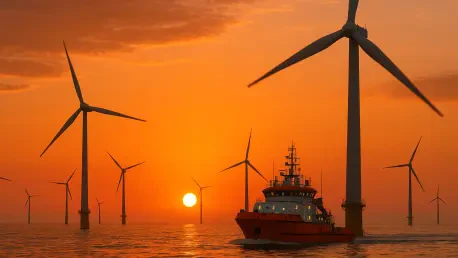

The realization of sustainable energy goals often relies on the longevity and resilience of early infrastructure projects that dared to challenge the dominance of fossil fuels. Standing as a silent testament to twenty years of industrial transformation, the Barrow Offshore Wind Farm has evolved from a speculative venture into a fundamental pillar of the British energy grid. What began in 2006 as a 90-megawatt project with just thirty turbines has blossomed into a primary catalyst for the nation’s decarbonization strategy. As the facility observes its second decade of commercial operation, the sheer scale of progress is evident in how offshore wind now provides nearly eighteen percent of total electricity across the United Kingdom. This project did more than just spin turbines; it provided the vital data and operational confidence required to scale up to the massive wind farms currently dotting the horizon. By proving that the harsh environment of the Irish Sea could be tamed, it opened the doors for billions of pounds in international investment.
Pioneering Achievements: The Evolution of Maritime Engineering
From Experimental Ventures to Infrastructure Staples
When the first turbines were installed seven kilometers off the coast of Walney Island, many analysts remained skeptical about the long-term reliability of offshore hardware in saline, high-wind conditions. However, the consistent performance of the Barrow facility silenced critics and served as a foundational proof-of-concept that helped the industry move past its infancy. The transition from these early 90-megawatt installations to current projects like Hornsea 2 illustrates a massive leap in technical capability and engineering ambition. Modern arrays now produce enough power to sustain entire metropolitan regions for decades, yet they all trace their mechanical lineage back to the lessons learned at Barrow. Engineers used this site to refine turbine maintenance schedules and underwater cabling techniques that are now industry standards. Consequently, what was once considered a high-risk experimental site is now viewed as a reliable asset that has already contributed to a portfolio producing 180 terawatt-hours of green energy.
Operational Insights as a Learning Laboratory
Beyond the raw generation of electricity, the site functioned as a critical research hub where technical innovation met real-world operational challenges. The facility allowed developers to test safety protocols and logistical frameworks in a controlled yet authentic marine environment, which eventually paved the way for larger, more complex deep-water installations. Managing a thirty-turbine array provided the necessary baseline for understanding how salt-water corrosion and mechanical wear impact longevity over a twenty-year lifespan. These insights were instrumental in reducing the levelized cost of energy, making offshore wind competitive with traditional gas-fired power plants. By treating the project as a living laboratory, operators were able to optimize the efficiency of every rotation, ensuring that the hardware remained productive well into its third decade. This legacy of continuous improvement is what allowed the UK to lead the world in offshore capacity, turning an initial gamble into a predictable and highly profitable sector for the entire national economy.
Socio-Economic Impact: Economic Vitality and Regional Growth
Cultivating a Global Center of Excellence
The presence of the wind farm has fundamentally altered the socio-economic fabric of Barrow-in-Furness, transforming the coastal town into a global center of excellence for renewable technology. Instead of relying on a transient workforce, the project prioritized the development of local talent, creating a stable ecosystem of high-skilled jobs that have persisted for two decades. This localization strategy ensured that the economic benefits remained within the community, fostering a sense of pride and ownership over the green transition. Experts from this region now participate in international knowledge exchanges, exporting their specialized operational practices to emerging markets across the globe. The ripple effect of this localized expertise is seen in the growth of secondary businesses, from marine logistics to advanced manufacturing, all of which support the wind industry. This evolution from a traditional industrial port to a modern energy hub proves that renewable projects can revitalize local economies while simultaneously addressing the urgent needs of the climate crisis.
Strategic Lessons and Future Industry Standards
The journey of the Barrow Offshore Wind Farm provided more than just a historical record of technical milestones; it offered a definitive solution for integrating intermittent renewables into a national grid. Leaders recognized that the facility’s success depended on its ability to offer a predictable supply of power while fostering strong ties with the local community. It was concluded that the long-term viability of the sector hinged on the professional development of its people as much as the durability of its turbines. Moving forward, the industry adopted these refined operational strategies to ensure that newer, larger arrays could meet the growing demands of an electrified economy. Policymakers utilized the data from this twenty-year operation to draft more effective environmental regulations and investment incentives that secured a low-carbon future. The site effectively demonstrated that coastal revitalization and national energy security were not mutually exclusive goals but rather two sides of the same strategic coin. Ultimately, the project left behind a legacy of confidence that reshaped the entire energy landscape.