
The intersection of public drinking water needs and private food production requirements has created a high-stakes legal environment for landowners in water-scarce regions. As the thirst of expanding urban centers grows, the hidden aquifers lying beneath privately owned agricultural land have become the front line of a modern administrative battle. This is not merely a technical disagreement over well depths or pumping rates, but a fundamental test of how a nation balances the immediate survival needs of a municipality against the long-term economic and food security requirements of its farming sector. For decades, reliance on groundwater was often managed through localized, informal understandings, but the increasing frequency of droughts and the rapid depletion of surface water sources have forced a more formal, and often more contentious, regulatory approach. This shift requires farmers to be more than just producers of food; they must now act as vigilant legal and environmental stewards of the resources that sustain their livelihoods. Recent legal developments have underscored that while the state acts as the ultimate custodian of all water resources, this authority does not grant local governments a blank check to bypass the procedural rights of landowners. The current landscape is defined by a rigorous requirement for transparency, scientific accuracy, and administrative fairness, ensuring that no single sector’s needs are met at the arbitrary expense of another, particularly when the sustainability of the underlying resource is at risk.
Lessons From the Cederberg Municipality Dispute
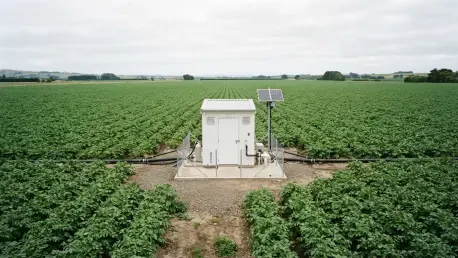
The conflict in Lambert’s Bay provides a clear case study of the risks faced by irrigation farmers when local authorities seek to tap into agricultural water supplies. Historically, the town relied on its own dedicated water sources, but as these became unreliable and increasingly saline, the municipality turned to the high-quality groundwater located beneath neighboring potato and vegetable farms. Initially, this extraction was managed through private agreements that involved fair compensation and specific limits. However, once these agreements expired, the municipality continued pumping without establishing new terms, eventually obtaining a twenty-year license from the Department of Water and Sanitation to extract approximately 568 million liters of water annually. The core of the dispute lay in a complete breakdown of the administrative process, as the landowners were neither properly informed of the license application nor given a meaningful opportunity to object. They only discovered the existence of the permit after the decision had already been finalized, leaving them with a looming threat to their irrigation capacity and no clear path for recourse outside of the judicial system.
In July 2026, the Western Cape High Court intervened to set aside this licensing decision, marking a significant victory for procedural fairness in environmental law. The court’s ruling was nuanced; while it recognized the town’s urgent need for drinking water, it suspended the order for eighteen months to allow for a new, lawful application process to take place. This judgment underscored a vital principle: the necessity of providing drinking water does not grant the government the right to bypass the procedural requirements of the National Water Act. By ruling in favor of the farmers, the court sent a clear message to all municipalities that administrative efficiency cannot come at the cost of transparency. The decision highlighted that the state must behave as a responsible trustee, ensuring that all stakeholders have a seat at the table when life-altering resource allocations are made. For the agricultural community, this served as a crucial reminder that the law provides a shield against arbitrary state action, provided that landowners are willing to engage in the necessary legal and technical challenges to protect their interests.
Water Ownership and the Right to Consultation
Under the National Water Act of 1998, water is legally classified as a national resource managed by the state in the public interest, rather than as the private property of the landowner. This legal status allows the government to authorize water use for the “greater good,” even if such an authorization inconveniences or financially impacts a private property owner. However, this power is not absolute and is balanced by constitutional requirements for administrative justice. The state is required to act as a fair arbiter between competing interests, weighing the social necessity of urban water supplies against the economic necessity of food production. This means that a municipality cannot simply claim a right to groundwater because of a public need; it must justify its requirements through a formal process that takes existing uses into account. The transition from private ownership of water to state trusteeship has created a complex web of rights that requires farmers to be constantly aware of how their “existing lawful use” is registered and protected within the national database.
A major takeaway from recent judicial reviews is the firm affirmation of the landowner’s right to consultation during any water licensing process. Section 24 of the National Water Act specifies that while groundwater can be used without an owner’s direct consent if there is a compelling reason, that consent must still be sought in good faith as a first step. If the owner refuses, the Department of Water and Sanitation must formally weigh their reasons and the potential impact on their livelihood before proceeding. The courts have rejected the idea that a farmer could be excluded from this consultation process simply because their own water use had not yet been formally verified or registered. The mere interest in the property and the potential for a new well to negatively impact existing infrastructure are sufficient grounds to require fair participation. This ensures that the voices of those who have invested millions in irrigation and crop development are not drowned out by municipal expansion plans, maintaining a level of accountability in how national resources are distributed.
Scientific Integrity: Protecting the Aquifer
A recurring and dangerous concern in modern water disputes is the discrepancy between what a town desires to pump and what an aquifer can sustainably provide. In the Lambert’s Bay case, the license granted allowed for tens of thousands of cubic meters more than the estimated sustainable yield of the local water source. Such administrative errors pose an existential threat to all users, as overpumping can lead to the permanent collapse of an aquifer, land subsidence, or irreversible saltwater intrusion. The court emphasized that farmers must be allowed to challenge the technical data provided by municipalities to ensure that new licenses do not lead to the total depletion of the water source. This requires a shift toward higher standards of scientific integrity, where independent groundwater specialists are brought in to verify municipal findings. Relying solely on government-issued data has proven to be a risky strategy for the agricultural sector, as administrative pressure to solve urban water crises can sometimes lead to overly optimistic or flawed environmental impact assessments.
To safeguard the long-term health of these vital resources, the legal system now places a greater emphasis on technical transparency and adherence to national standards like SANS 10299-4. These standards dictate how pumping tests should be conducted and how sustainable yields should be calculated, providing a benchmark that can be used in a court of law. Farmers are increasingly encouraged to develop their own comprehensive groundwater management plans that define maximum pumping volumes and “red-line” triggers where extraction must be reduced to protect the aquifer’s integrity. By establishing these scientific baselines early, the agricultural community can provide objective evidence of when a municipality’s actions cross the line from public utility to environmental negligence. The goal is to move away from anecdotal evidence of well failure and toward a data-driven approach that ensures the survival of the resource for future generations. Scientific accuracy is not just a technical requirement; it is a fundamental component of the legal defense of a farm’s water security.
Challenges: The Risk of the Worthless Water Right
One of the most complex and frustrating issues identified in the modern legal landscape is the gap between legal authorization and the practical availability of water. A farmer may hold a valid water-use license that grants them the right to a specific volume of water, but if a neighboring municipality’s well lowers the local water table or increases the mineral content of the supply, that license becomes effectively worthless. Section 31 of the National Water Act explicitly states that a license is not a guarantee of water quantity or quality. This creates a precarious situation where the legal “right” to water does not protect a farmer from the physical depletion of the source by a neighbor who is also acting lawfully. This reality places a heavy burden on the agricultural sector, which may have invested heavily in permanent crops like citrus or grapes based on an established supply that can vanish overnight if the water table drops below the reach of existing pumps.
Establishing that a specific user’s pumping caused a well to fail is a monumental scientific challenge that often requires years of data. Factors such as regional drought, natural recharge rates, and the presence of multiple other users in the same aquifer complicate the evidence needed for a successful legal claim. Currently, this remains a significant “gray area” in the law, as the National Water Act does not offer an automatic remedy for the secondary effects of a neighbor’s lawful pumping, even if that neighbor is a government entity. While the Act provides for compensation in limited circumstances—such as when a compulsory licensing process severely harms an economic operation—it does not easily address the slow, creeping degradation of an aquifer’s performance. This highlights the absolute necessity for farmers to maintain their own rigorous, long-term monitoring records. Without a detailed history of water levels and flow rates, proving causality in a dispute becomes almost impossible, leaving the landowner with a legal right that offers no physical sustenance.
Infrastructure and Land Rights: The Easement Factor
It is essential for landowners to maintain a clear distinction between the right to use water and the legal right to occupy or alter private land. A water-use permit issued by the state does not automatically grant a municipality the authority to enter a farm, build access roads, or lay extensive pipeline networks. These actions involve the use of private property and require a separate legal basis, which is typically established through a recorded easement. An easement is a formal agreement, often registered against the title deed of the property, that allows one party to use another’s land for a specific, defined purpose. Without such an agreement or a specific court order for eminent domain, any municipal activity on private farmland constitutes a legal trespass. This distinction provides farmers with an additional layer of protection and negotiation leverage when a town seeks to extract water from their property, ensuring that the physical impact on the land is managed through a formal contractual framework.
When a municipality requires an easement for a pipeline or a pump station, the landowner is entitled to compensation that accounts for much more than just the physical footprint of the new infrastructure. The law requires that the compensation reflect the actual loss and inconvenience caused to the entire farming operation. For example, a pipeline might bisect a prime cultivated field, disrupting automated irrigation systems, or a pump station might require a new road that interferes with the movement of livestock or heavy machinery. Compensation must also account for the potential loss of future development opportunities on that specific portion of the land. The National Water Act allows for the establishment of easements through mutual agreement or, failing that, through a court order, but in all cases, the farmer’s right to be compensated for the disruption of their business remains a core legal requirement. Proactive management of these easements is crucial to ensuring that municipal infrastructure does not permanently degrade the operational efficiency or the resale value of the farm.
Evolving Legislation: The Future of Resource Control
The legislative environment in South Africa is currently undergoing a significant shift toward centralized state control, marked by the implementation of the Expropriation Act of 2024 and the introduction of the National Water Amendment Bill of 2026. The Expropriation Act has introduced the controversial possibility of “zero compensation” in very specific instances, such as for abandoned land or property held purely for speculative purposes. While legal experts agree that this is unlikely to apply to productive, active farms, the mere existence of these provisions has shifted the power dynamics in negotiations between the government and private owners. It creates a higher level of uncertainty and requires farmers to be much more diligent in proving the ongoing productive use of every portion of their property. The Constitution still requires that compensation for any expropriation be “just and equitable,” but the definition of what is equitable is being tested in new and challenging ways by these legislative updates.
The National Water Amendment Bill of 2026 represents an even more direct challenge to established agricultural water use. This proposed legislation seeks to remove existing provisions that allow for financial compensation when a compulsory licensing process causes a serious economic loss to a farm. Furthermore, it would grant the Minister of Water and Sanitation broader powers to reallocate water across different sectors and even different provinces to improve “equity” and address historical imbalances. For the commercial agricultural sector, this poses a long-term risk: as the state seeks to resolve urban shortages and social inequities, the legal protections for established users are being systematically narrowed. This trend indicates that the era of secure, permanent water rights is being replaced by a system of temporary, reallocable permits. Success in this new environment will depend on a farmer’s ability to prove that their water use is not only economically vital but also socially and environmentally responsible, aligning their private interests with the broader goals of national policy.
Securing the Future: Actionable Steps for Resilience
To effectively navigate this changing landscape, the agricultural sector moved toward a strategy of technical transparency and proactive legal management. Farmers successfully mitigated risks by demanding full access to all municipal groundwater surveys, drilling results, and pumping tests before any agreements were finalized. By hiring independent groundwater specialists to audit these findings, they ensured that extraction limits were based on geological reality rather than political pressure. Furthermore, the implementation of written groundwater management plans became a standard practice. These documents established clear redline triggers, where municipal pumping was legally required to stop if water levels dropped below a certain threshold. This data-driven approach allowed the farming community to move beyond emotional arguments and present objective, scientific evidence in administrative hearings and courtrooms, securing more favorable terms in shared-use agreements.
In the final assessment, the legal challenges of 2026 demonstrated that water security was no longer a passive right but a result of constant administrative vigilance. The industry learned that protecting a farm’s most valuable hidden resource required a combination of rigorous on-site monitoring and formal legal protections. Landowners who installed flow meters and water-level loggers created an irrefutable record of their water usage, which proved essential during licensing disputes. Additionally, the formalization of all infrastructure access through notarized easements ensured that municipal contractors were held accountable for gate protocols, fire safety precautions, and land restoration. By utilizing alternative dispute resolution methods, such as technical assessments by independent experts, many farmers avoided the prohibitive costs of extended litigation while still protecting their operational integrity. Ultimately, the survival of irrigation-based farming was achieved by those who treated water management as a core business function, ensuring that the needs of the town and the needs of the farm were balanced through a shared commitment to the sustainability of the aquifer itself.