
The UK electricity grid is undergoing its most radical transformation since the postwar era as massive battery installations begin to replace the mechanical inertia once provided by spinning turbines, and this shift is not merely about storing excess wind or solar power but rewriting the fundamental physics of how a national power system maintains its frequency and stability in real time. As fossil-fuel plants continue to go offline, the integration of advanced grid-forming technology has become the primary defense against blackouts and voltage fluctuations that would otherwise plague a modern economy. The emergence of these high-capacity energy reservoirs represents a departure from traditional balancing mechanisms, offering a digital response to physical demands that were previously handled by coal and gas. This evolution signifies a broader commitment to long-term energy security, ensuring that the intermittent nature of renewables does not compromise the reliability of the domestic power supply for millions of homes while stabilizing long-term costs.
Grid-Forming Technology: Implementing Advanced Stability Solutions
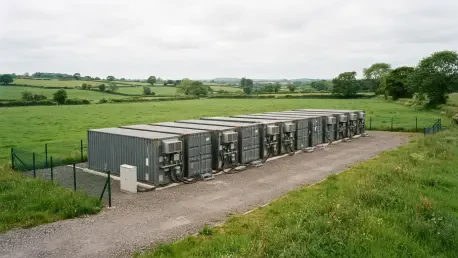
Statkraft’s Neilston Greener Grid Park near Paisley, Scotland, serves as a pioneering example of this shift, having recently entered its first 50-megawatt phase of commercial operation. Unlike conventional batteries that simply charge and discharge, this facility utilizes grid-forming inverters that mimic the physical behavior of traditional power plant generators to keep the grid steady. This specific installation marks a significant milestone as it is the first of its kind in the developer’s portfolio to provide essential stability services directly to the high-voltage network. By utilizing specialized software and hardware configurations, the Neilston site can respond to sudden drops in frequency within milliseconds, far faster than any thermal power plant could ever hope to achieve. This capability is vital for managing the increasing volume of renewable energy coming from the North Sea and the Scottish Highlands, where wind production is often highest but furthest from the primary demand centers in the southern regions of the country today.
The potential for growth at the Neilston site is immense, with the Scottish government already granting approval for a massive expansion that will eventually see its capacity reach 750 megawatts. This planned escalation is part of a much larger strategic investment framework totaling over two billion pounds, aimed at cementing a leading position in the renewable energy storage sector across both England and Scotland. As these projects move from the planning stage to active construction, they create a decentralized network of assets capable of supporting the grid during periods of low wind generation or unexpected infrastructure failures. The transition to such a high-capacity system requires sophisticated coordination between developers and regional authorities to ensure that the physical footprints of these parks do not disrupt local environments. Furthermore, the successful integration of the 50-megawatt phase provides a technical blueprint that can be replicated at other sites, significantly reducing the risks associated with deploying new power technologies at an industrial-scale.
National Implementation: Resolving Barriers to Energy Security
While technical progress is accelerating, the British storage sector still faces significant hurdles, most notably the extensive waiting list for grid connections that now exceeds 700 gigawatts. This bottleneck highlights a disconnect between the speed of private investment and the pace of institutional infrastructure expansion, prompting the National Energy System Operator to pursue comprehensive reforms. In Wales, developments like the Afon Wysg 1 project are moving forward despite these challenges, with components arriving for a 240-megawatt-hour facility expected to reach full commercial operation by early 2027. This project utilized advanced lithium-ion technology from e-STORAGE and was designed to double its capacity in the coming years to meet rising demand. By prioritizing projects that are most ready for deployment, policymakers hope to clear the backlog and allow high-impact assets to join the network sooner. This strategy is essential for ensuring that the transition to a low-carbon system remains on track and economically viable for consumers.
The successful deployment of battery storage across the nation demonstrated that the technical challenges of a renewable-led grid were entirely manageable when supported by strategic policy and private innovation. Industry leaders focused on developing more resilient supply chains to ensure that the necessary minerals and components remained available as global demand for storage continued to surge. It became evident that regional collaboration and the streamlining of planning permissions allowed for a more rapid rollout of critical infrastructure than previously thought possible. Moving forward, the integration of artificial intelligence became a priority to manage these complex assets, optimizing their charge and discharge cycles in response to real-time market signals. Stakeholders prioritized the standardization of grid-forming technologies to ensure that disparate systems communicated effectively across the national network. By investing in domestic manufacturing and specialized workforce training, the country secured its position as a global leader in storage technology.