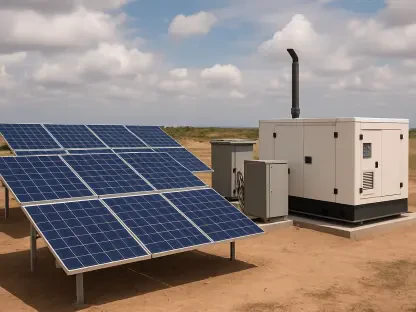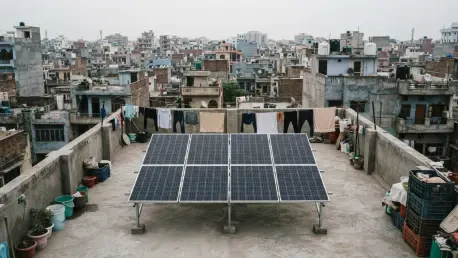

Small-scale balcony solar modules represent a potential alternative for high-rise residents who lack any legal or physical access to their building’s primary roof area. This specific technological segment has gained traction as the Delhi government pushes toward its ambitious target of installing rooftop solar systems for approximately 230,000 households by March 2027. The current initiative promises to revolutionize the local energy landscape by offering zero upfront costs to eligible homeowners, aiming to bridge the gap between renewable energy aspirations and urban economic realities. However, as the city moves through 2026, the disconnect between high-level environmental policy and the physical constraints of a densely packed metropolis is becoming increasingly apparent. While the vision for a greener skyline is robust, the daily challenges faced by residents in congested quarters reveal that the path to energy independence is often obstructed by structural, social, and logistical barriers that require nuanced solutions beyond simple financial subsidies.
Navigating the Architectural and Economic Constraints
How Does Urban Density Affect Solar Feasibility?
The architectural landscape of Delhi presents a unique set of challenges that directly impact the feasibility of standard rooftop installations. In older, historic districts such as Hauz Qazi, the sheer lack of physical space is the primary deterrent for residents who might otherwise embrace renewable energy. Statistics indicate that a significant portion of the population lives in units occupying small footprints of roughly 50 to 70 square yards, often within multi-story structures that leave very little usable roof area for energy generation. In these environments, the rooftop is rarely a vacant utility zone; instead, it serves as a critical extension of the living quarters for multi-generational families. Residents rely on these terraces for essential domestic functions like laundry and storage, or as rare open-air spaces for social interaction. When solar panels are introduced into this equation, they frequently compete with these necessary daily activities, making the sacrifice of functional square footage a difficult trade-off for many urban households.
The Hidden Financial Tradeoffs of Rooftop Access
Economic factors also play a critical role in the slow adoption rates observed among property owners who view their rooftops as productive financial assets. In many urban clusters, terraces are already utilized to host mobile signal towers or other industrial equipment that provides a steady stream of rental income. For these families, transitioning to solar energy involves an “opportunity cost” that the current subsidy model does not fully address. If the savings on a monthly electricity bill, which often range between ₹1,500 and ₹1,700 due to existing government power subsidies, do not exceed the revenue lost from decommissioned rental assets, the incentive to switch vanishes. Furthermore, the current electricity price structure in Delhi creates a psychological ceiling; many low-to-middle-income households already benefit from subsidized rates that make their current expenditures manageable. Consequently, the incremental financial benefit of a solar installation is often perceived as insufficient to justify the potential loss of reliable rental income or the inconvenience of panel maintenance.
Overcoming Administrative and Social Barriers
Identifying and Solving Critical Implementation Bottlenecks
Administrative hurdles continue to be a significant pain point for early adopters who have attempted to navigate the system during the 2026 calendar year. Residents in neighborhoods like Subhash Nagar have reported substantial delays between the initial application phase and the actual site assessment. Despite the government’s highly publicized “zero-cost” promise, the operational machinery behind the scheme appears to be lagging behind public demand. A primary bottleneck remains the limited number of authorized vendors capable of performing high-quality installations and managing the necessary technical permits. This shortage of certified professionals has created a backlog of pending projects, leading to a sense of frustration among citizens who were initially eager to participate. Without a more efficient pipeline for vendor selection and grid synchronization, the momentum for the initiative risks stalling. The administrative process must be streamlined to ensure that technical feasibility studies are conducted promptly and that homeowners are not left in bureaucratic limbo for several months while awaiting installation.
Resolving Legal Ambiguities in Shared Residential Spaces
The social and legal complexities of shared property ownership in Delhi create another layer of resistance that policymakers must address to reach their 2027 goals. In areas like CR Park, many residential buildings are three or four stories high, with different floors owned by separate branches of a family or entirely different entities. This shared ownership model leads to complicated disputes regarding rooftop access rights and long-term maintenance liabilities. For instance, a ground-floor resident may wish to install solar panels but lacks the legal authority to use a roof that is traditionally controlled by the top-floor occupant. Furthermore, the permanent nature of solar arrays is often seen as a hindrance to future vertical construction. Many property owners maintain clear rooftops with the intention of adding additional floors as their families grow or as zoning laws evolve. Without clear legal frameworks that protect the rights of all stakeholders and define maintenance responsibilities, many residents are choosing to adopt a “wait and see” approach rather than entering into potential legal conflicts.
Strategies for a More Flexible Solar Future
Can Community Models Solve Individual Space Issues?
To move past the limitations of individual rooftop installations, researchers and policy advocates suggest a shift toward collective or communal solar strategies. This transition is particularly relevant for the vertical expansion of the city, where modern apartment complexes and housing societies offer larger, unified roof areas. Instead of focusing on individual meters, the government could incentivize Resident Welfare Associations to invest in group solar projects that power common infrastructure. By utilizing renewable energy for shared utilities such as elevators, water pumping systems, and corridor lighting, the entire community can experience a reduction in monthly maintenance fees without the need for complex internal negotiations over individual terrace space. This model simplifies the logistical challenges of grid connection and allows for more efficient large-scale arrays. Transitioning the narrative from individual benefits to communal savings could unlock participation in high-density areas where personal rooftop access is nonexistent, effectively broadening the reach of the initiative beyond traditional independent houses.
Virtual Net Metering: Bridging the Space Gap
The implementation of virtual net metering represents a transformative step for residents living in congested urban pockets where on-site generation is physically impossible. This system allows consumers to benefit from solar energy generated at a remote location, such as a large government building or a suburban solar farm, with the credits applied directly to their local electricity bills. By decoupling the physical installation from the consumer’s residence, the government can provide the benefits of green energy to those residing in the narrow lanes of Old Delhi or high-rise apartments without balconies. In 2026, expanding the infrastructure for this “off-site” model has become a priority to ensure that the transition to renewables is inclusive of all socioeconomic groups. This approach also mitigates the technical difficulties of installing and maintaining thousands of small, fragmented systems across the city. By aggregating solar capacity in optimal locations, the city can achieve higher efficiency while simultaneously providing financial relief to the maximum number of households, regardless of their specific architectural constraints.
Establishing Localized Awareness and Educational Campaigns
Establishing localized awareness campaigns that address specific cultural and technical concerns is essential for bridging the information gap that currently exists among city residents. Many citizens remain skeptical of solar technology due to misconceptions regarding the durability of panels during Delhi’s extreme weather conditions or the perceived high cost of long-term maintenance. To combat this, the government must collaborate with community leaders to provide transparent data on the actual performance of existing installations. Educational programs should focus on explaining the “zero-cost” framework in detail, ensuring that homeowners understand how the financial structure benefits them over the next several years. Furthermore, providing accessible technical support through neighborhood help desks can demystify the installation process and offer immediate answers to questions regarding property rights and system upkeep. When residents feel informed and supported by local authorities, their willingness to participate increases, turning the solar initiative from a top-down government mandate into a community-led movement for a sustainable urban environment.
Conclusion: Future Pathways for Renewable Integration
As the target date of 2027 approached, the city’s energy strategy evolved to prioritize flexibility and community engagement over rigid individual mandates. The government successfully integrated more versatile technologies like plug-and-play balcony modules and expanded the use of virtual net metering to reach residents in the most congested districts. Authorities also worked to resolve long-standing legal disputes by introducing standardized agreements for shared rooftop usage in multi-owner buildings. These proactive measures ensured that the transition to renewable energy accounted for the unique density and social dynamics of the metropolis. By the conclusion of this phase, the city had fostered a more resilient grid and established a framework where clean energy access was no longer restricted by a household’s specific architectural footprint. This shift toward localized, inclusive solutions provided a scalable model for other rapidly growing urban centers facing similar geographic constraints. The initiative ultimately demonstrated that urban sustainability required a balance between ambitious environmental goals and the practical needs of a diverse population.