
The staggering expansion of artificial intelligence has officially transcended the digital confines of silicon chips to become a physical burden on the aging electrical infrastructure of the United States. Currently, data centers account for roughly six percent of all electricity consumed across the nation, but analysts now project this figure will climb to eleven percent by 2030 as compute-heavy workloads proliferate. This rapid escalation reflects a projected two hundred twenty percent increase in global energy demand over the next several years, with the American grid serving as the primary staging ground for this unprecedented industrial transformation. As utility providers attempt to prepare for this immense surge, the energy sector finds itself caught between the necessity of modernizing ancient power lines and the political imperative of keeping electricity rates affordable for the general public. This tension is no longer theoretical, as the physical limits of local distribution networks are being tested by the relentless cooling and processing needs of massive server farms that operate around the clock.
Regulatory Friction: Balancing Tech Growth and Consumer Costs
The rapid proliferation of AI infrastructure has already begun to manifest as a tangible financial weight on the average American household, specifically through rising retail electricity prices. In regions where data center construction has outpaced grid upgrades, residential power rates have climbed by approximately five percent as utilities struggle to balance the massive load requirements of tech tenants with existing demand. This fiscal strain has ignited significant political friction, leading several states to reconsider their open-door policies toward massive server developments. New York, for example, took the drastic step of issuing moratoriums on specific types of high-density computing projects to preserve local natural resources and prevent local residents from footing the bill for industrial expansion. Legislators are becoming increasingly vocal about their concerns, arguing that allowing unbridled tech growth to deplete local power supplies at the expense of their constituents is a political and economic risk that requires immediate intervention.
To mitigate these rising tensions, the White House recently expanded the Ratepayer Protection Pledge to include nearly two hundred utility companies and several of the largest technology corporations in the world. Under this renewed framework, industry giants like Amazon and Microsoft have formally agreed to shoulder the capital costs for the new generation and transmission projects specifically required to support their expansive AI operations. This paradigm shift ensures that the billions of dollars in capital investment needed for the ongoing AI revolution are funded by the tech sector itself, rather than being passed on to individual households through higher monthly utility bills. By decoupling data center growth from residential rate hikes, regulators hope to maintain public support for a modernized grid while still allowing for the rapid deployment of necessary infrastructure. This collaborative funding model represents a major turning point in how large-scale industrial consumers interact with public utilities, setting a new standard for corporate responsibility.
Corporate Strategies: Diversified Approaches to Energy Demand
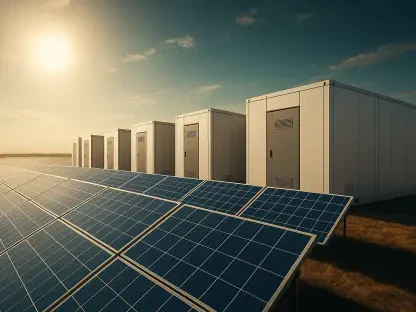
NextEra Energy has positioned itself as a frontrunner in this evolving landscape by doubling down on massive renewable energy installations and advanced battery storage solutions. Their recent one hundred billion dollar partnership in Kentucky serves as a prime example of this strategy, as it integrates natural gas generation with large-scale storage units to provide the consistent power required by data centers. By building hybrid facilities, NextEra can provide the reliability that AI providers demand while simultaneously contributing excess clean energy back to the public grid during periods of peak residential use. The company has also become adept at leveraging federal cost-sharing agreements, which allow them to pursue aggressive infrastructure growth without triggering the kind of public backlash often associated with significant price hikes. This proactive approach focuses on the intersection of decarbonization and industrial demand, proving that the expansion of the AI sector can accelerate the transition to a cleaner architecture.
In contrast to the aggressive expansion of renewable players, Duke Energy has adopted a more defensive and strictly regulated approach to managing energy growth across its territories in the Southeast and Midwest. Rather than focusing on singular, massive campus developments that could destabilize local distribution, Duke utilizes a comprehensive framework designed to prove that high-volume tech clients can actually benefit the broader community. Their model suggests that these large-scale consumers help lower overall costs for every customer by subsidizing the fixed costs of grid investments and providing a steady, predictable revenue stream for long-term maintenance. This strategy offers a sense of stability for investors who are looking for reliable returns while the broader energy market undergoes a historic and often volatile transformation. By emphasizing regulatory compliance and the shared benefits of industrial scaling, Duke Energy provides a template for how traditional utilities can integrate massive new loads without sacrificing reliability.
Strategic Landscapes: The Impact of Geographic Concentration
Dominion Energy finds itself in perhaps the most strategically critical yet difficult position of any American utility, as it serves the highest concentration of data centers on the planet in Northern Virginia. This unique proximity makes the company a pure-play for anyone looking to capitalize on AI-driven energy demand, but it also places them directly in the crosshairs of intense regulatory and public scrutiny. The ongoing battle in Virginia over infrastructure strain serves as a poignant warning to the rest of the country about the risks involved when industrial data centers and densely populated residential areas compete for the same limited power resources. As the local grid reaches its current capacity, Dominion has been forced to navigate complex permitting hurdles and community protests regarding the construction of new high-voltage transmission lines. Their experience highlights the reality that even with sufficient capital, the physical and social limitations of land use can become significant bottlenecks that threaten the pace of the AI revolution.
When evaluating the financial health of these energy giants, investors are currently observing a wide range of valuations that reflect the different strategies employed to meet the AI surge. NextEra Energy continues to lead the sector with the highest market value and strong projected sales growth, largely due to its early and aggressive entry into the renewable energy market. Meanwhile, Duke Energy offers a more value-oriented alternative for those seeking lower growth but higher long-term stability and dividend reliability. Dominion Energy sits in a unique middle ground, showing impressive growth potential that is inextricably linked to the specific, localized demands of cloud computing and AI workloads in the mid-Atlantic region. The divergence in these business models illustrates that there is no single path to success in the modern energy market; instead, companies must tailor their approaches based on their specific geography, regulatory environment, and technical expertise to remain viable in this competitive era.
Path Toward Resilience: Strategic Solutions for Future Demand
The successful navigation of this initial phase of the AI revolution required a delicate balancing act between rapid infrastructure expansion and the harsh realities of political and social acceptance. Utilities that thrived were those that operated with an unprecedented level of transparency and successfully negotiated complex agreements that protected the average consumer from bearing the financial brunt of industrial progress. As the national load shifted toward more tech-heavy consumption, the ability of these companies to build capacity without losing public support became the primary factor that determined their leadership in the new era of energy. This era was defined by a shift away from traditional rate-based funding toward specialized industrial partnerships that prioritized long-term grid health over short-term quarterly gains. By integrating advanced monitoring systems and predictive analytics, these companies also improved their ability to manage localized demand spikes without resorting to costly emergency generation.
Strategic investments in modular nuclear reactors and long-duration energy storage emerged as essential solutions for decoupling the growth of high-performance computing from the limitations of the traditional grid. Regulators ultimately realized that the path forward necessitated a fundamental redesign of how transmission costs were allocated, ensuring that the entities driving the demand were also the ones providing the capital for a more robust and sustainable electrical future. This transformation fostered an environment where tech titans and utility providers functioned as co-investors in national resilience rather than as mere service providers and customers. Leaders in the energy sector implemented decentralized microgrids that allowed data centers to operate independently during peak strain, thereby reducing the risk of wide-scale blackouts. These innovative steps successfully mitigated the primary risks of the AI-driven energy surge, paving the way for a more reliable, efficient, and technologically advanced national power network.