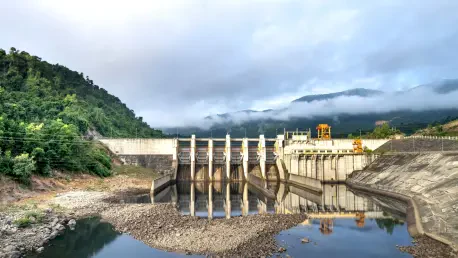

The silent hum of America’s massive hydroelectric turbines represents nearly a century of engineering prowess, yet this foundational strength now faces an unprecedented threat from a crumbling global supply network. As the primary provider of carbon-free baseload power, the domestic hydropower fleet serves as the bedrock of the national energy grid, providing a level of reliability that intermittent solar and wind cannot yet match. However, the physical reality of this infrastructure is increasingly precarious, as many of the most vital facilities reached their intended operational lifespans decades ago. The current necessity for a complete overhaul of these aging assets coincides with an era of extreme volatility in the international manufacturing sector. Consequently, the industry finds itself at a crossroads where the technical demand for modernization is met with an acute lack of available hardware and expertise.
The Aging Backbone of American Renewable Energy and the Transformer Crisis
The current state of the U.S. hydropower fleet is defined by a paradox of longevity and vulnerability, where units built during the mid-twentieth century continue to function while their critical supporting components fail. At the heart of this crisis is the Large Power Transformer, a massive and specialized piece of equipment that serves as the literal gateway for electricity to enter the high-voltage national grid. Without these units, the energy generated at remote river sites cannot be transported to the urban centers where it is most needed. The aging process of these transformers is irreversible, and as they approach their 80-year milestones, the probability of catastrophic failure increases exponentially, threatening the stability of the entire regional power structure.
Modernization efforts are no longer a matter of proactive maintenance but have become a high-stakes race against equipment obsolescence and systemic collapse. The primary participants in this struggle range from federal power marketing administrations, which manage some of the largest dams in the world, to private utilities and municipal operators. These organizations are forced to compete in a hyper-competitive procurement market that was not designed to accommodate the irregular and massive demand signals of the hydropower sector. International equipment manufacturers currently hold the majority of the market share, leaving domestic energy security tied to the logistical and geopolitical whims of foreign production schedules.
Market Dynamics and the Intensifying Global Race for Equipment
Emerging Trends in Grid Modernization and High-Voltage Demand
The explosion of energy-intensive data centers and the simultaneous push for nationwide grid hardening have fundamentally altered the availability of high-voltage components. In the current market, hydropower operators are not merely competing with other renewable energy developers but are also in direct opposition to the massive capital of the technology sector. This surge in demand has siphoned off the limited production capacity of global manufacturers, leaving hydropower projects to face the back of the queue. Moreover, the transition from legacy analog systems to modern digital interfaces requires custom-engineered protection mechanisms that further complicate the manufacturing process and extend lead times beyond historical norms.
Utility behavior has shifted dramatically in response to these pressures, moving away from traditional “just-in-time” procurement toward a more aggressive strategy of strategic stockpiling. Large-scale operators are now securing equipment years before a project even breaks ground to ensure that they are not left without critical spares when a failure occurs. This shift toward long-term planning is a direct reflection of a market where the supply of critical components is no longer guaranteed. The necessity of protecting legacy systems while integrating modern digital protection has created a hybrid engineering challenge that requires specialized skill sets currently in short supply across the domestic labor market.
Market Projections and the Escalating Financial Burden of Procurement
Data-driven forecasts indicate that the financial burden of maintaining the hydropower fleet will continue to grow as lead times for critical equipment expand to unprecedented windows. Historically, a Large Power Transformer could be procured within eighteen months, but current projections show that lead times now frequently span 30 to 60 months for the most specialized units. This delay creates a massive bottleneck for rehabilitation projects, as construction cannot proceed without the certainty of equipment delivery. The resulting uncertainty drives up project costs, as labor and raw materials continue to fluctuate while the core components remain in a state of manufacturing limbo.
Capital expenditure in the hydropower sector is projected to face a significant upward trajectory, with price surges for transformers and related gear estimated at 70% compared to levels seen only a few years ago. These irregular demand signals are particularly damaging because they discourage the domestic manufacturing investment needed to alleviate the crisis. Manufacturers are often hesitant to build new facilities for a market that requires massive, custom-engineered units rather than standardized, mass-produced parts. This misalignment between what the hydro sector needs and what the manufacturing sector is willing to produce has left a void in the domestic supply chain that shows no immediate sign of closing.
Structural Obstacles to Domestic Production and Logistical Complexity
The United States currently suffers from a zero-supplier reality for many of the most critical components used in large-scale hydropower generation. There are no longer any domestic manufacturers capable of producing hydrogenerators or turbines that exceed 20 MW in capacity, forcing the industry to rely entirely on international sources for its core assets. This dependency is exacerbated by a severe shortage of high-grade Grain-Oriented Electrical Steel, a specialized material required for transformer cores that is primarily imported from Asian markets. Without a stable and domestic source for these raw materials, the U.S. power grid remains vulnerable to international trade disputes and shipping disruptions that can halt energy projects for years.
Beyond the challenges of manufacturing, the physical logistics of transporting 400-ton components to remote hydropower sites represent an engineering hurdle of immense proportions. These massive units must often be moved through mountainous terrain, across aging bridges with limited weight capacities, and through narrow, restricted waterways. The complexity of these maneuvers can account for nearly a fifth of a project’s total budget, requiring months of specialized planning and heavy-haul coordination. To mitigate these risks, industry leaders have begun implementing phased modernization schedules and forming spare equipment pools, where multiple utilities share the cost and access to a single backup transformer to ensure grid resilience.
Navigating the Regulatory Landscape and Domestic Content Mandates
The regulatory environment has become increasingly complex as the government implements stricter domestic content mandates through the Inflation Reduction Act and the Big Beautiful Bill Act. These pieces of legislation are designed to revitalize American manufacturing by offering federal tax credits to projects that meet specific thresholds for U.S.-sourced iron and steel. However, for the hydropower industry, these mandates are difficult to meet when the necessary components are simply not produced within the country. The “Safe Harbor” framework provides some clarity, yet many operators find themselves struggling to balance the need for rapid modernization with the escalating cost of compliance.
The implementation of the “80/20 Retrofit Rule” has added another layer of strategic difficulty for facilities seeking to upgrade while maintaining their eligibility for federal incentives. Under this rule, a modernized facility can qualify for credits if the new components account for at least 80% of its total value, but reused legacy hardware does not count toward domestic content requirements. Furthermore, starting this year, mandatory restrictions on “foreign entities of concern” have forced a systemic shift away from adversarial supply chains. This regulatory pivot requires a complete audit of existing procurement contracts to ensure that no critical components are sourced from restricted regions, a process that is both time-consuming and expensive for already strained utility budgets.
Future Projections: Disruptors and the Path to Domestic Self-Reliance
Innovation in modular transformer design and the push for standardized components offer a potential pathway to reducing the current lead times that plague the industry. By moving away from purely custom-engineered solutions, the sector could leverage more predictable manufacturing schedules and lower costs. Furthermore, the growth of Pumped Storage Hydropower is emerging as a primary disruptor, serving as the most effective solution for long-duration energy storage in a decarbonized grid. These large-scale projects represent a significant opportunity for the re-establishment of a domestic supply chain, as they provide the long-term, high-volume demand signals that manufacturers require to justify new investments in specialized casting and forging facilities.
The long-term viability of the U.S. hydropower fleet will likely depend on the success of federal incentives in fostering a new generation of heavy electrical manufacturing. Trade policies and global economic conditions will continue to influence the availability of raw materials, making the creation of a domestic pipeline for electrical steel a top priority for national energy security. If the industry can successfully navigate the current procurement crisis, it will be well-positioned to play an even more prominent role in the energy transition. The transition toward domestic self-reliance is not just about avoiding delays; it is about ensuring that the nation’s first renewable resource remains a reliable part of the grid for another century.
Securing the Future of America’s First Renewable Resource
The analysis demonstrated that simple stopgap measures, such as early ordering or maintaining small spare pools, were insufficient to address the systemic vulnerabilities of the national hydropower infrastructure. It was determined that the intersection of aging assets and a hyper-competitive global procurement market created a level of risk that required a coordinated, national response. The study highlighted that the absence of domestic manufacturing for large turbines and generators left the U.S. grid dangerously exposed to international supply chain shocks. Researchers concluded that the current trajectory of price surges and lead-time expansions necessitated a fundamental shift in how energy assets are planned and funded.
The investigation into the regulatory landscape revealed that while federal incentives provided a framework for domestic growth, the lack of existing manufacturing capacity made compliance a significant challenge for most operators. It was observed that the successful transition of the hydropower fleet would rely heavily on the development of new, modular technologies and the revitalization of the domestic steel industry. Experts recommended that a national strategy be implemented to centralize the procurement of critical components and to provide the long-term demand signals required to lure manufacturing back to American soil. Ultimately, the findings suggested that securing the future of hydropower was essential for maintaining a stable, carbon-free energy future.