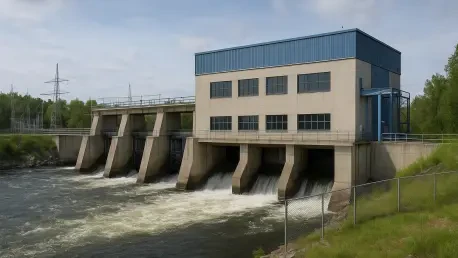

The fundamental stability of the American electrical grid depends heavily on a legacy hydropower infrastructure that currently faces a daunting bureaucratic bottleneck capable of stifling clean energy progress. As the energy sector navigates the complexities of the current year, the Department of Energy has prioritized the modernization of licensing frameworks through a strategic $5.5 million investment. This review examines how emerging analytical tools and inter-agency cooperation are transforming a historically stagnant regulatory environment. By integrating high-resolution data and predictive modeling, the industry aims to protect essential generating capacity while ensuring environmental integrity. This technological evolution represents a critical shift toward a more agile and scientifically grounded energy economy.
Evolution of Regulatory and Technical Frameworks in Hydropower
The core of hydropower regulation revolves around the rigorous evaluation cycles managed by the Federal Energy Regulatory Commission. These cycles, which occur every 30 to 50 years, require facilities to undergo extensive environmental and operational reviews to maintain their licenses. Traditionally, these processes have been characterized by long delays and high costs, as stakeholders struggled to find consensus on the ecological impact of dam operations. The technology currently emerging is designed specifically to bridge these gaps by providing transparent, evidence-based platforms for decision-making.
By shifting toward standardized datasets and plain-language resources, the recent lab initiatives aim to expedite the consensus-building phase among developers and regulators. This modern framework moves away from the siloed approach of the past, where every plant conducted independent, redundant studies. Instead, the focus has shifted toward scalable technological solutions that can be applied across diverse geographic regions. This context is essential for understanding how the sector intends to maintain its 16 gigawatts of soon-to-be-relicensed capacity without compromising on safety or environmental standards.
Advanced Tools for Licensing and Environmental Compliance
Modern compliance technology is no longer limited to manual observations and anecdotal evidence. The current suite of advanced tools leverages vast historical records and real-time monitoring to create a more accurate picture of how hydropower facilities interact with their surroundings. These tools are designed to provide regulators with site-specific information that was previously too expensive or time-consuming to gather, thereby reducing the financial burden on smaller utility providers.
Data-Driven Fish Passage Risk Assessment
One of the most significant breakthroughs is the development of the Cumulative Fish Passage Risk Index at the Pacific Northwest National Laboratory. This tool functions by synthesizing data from various sources, including the U.S. Army Corps of Engineers, to screen fish passage risks across the national fleet. By providing a standardized method for identifying migration bottlenecks, the index allows for targeted mitigation strategies that are far more effective than the broad, generalized mandates of previous decades.
The performance of this risk assessment technology is rooted in its ability to offer predictive insights rather than just reactive data. It enables operators to simulate different environmental scenarios and understand how changes in flow or turbine operation might affect local aquatic populations. This significance cannot be overstated, as it offers a way to satisfy strict ecological requirements while maintaining optimal power generation levels.
AI-Integrated Water Management and Reservoir Modeling
Artificial intelligence has become a cornerstone of modern water management, particularly through the modernization of the HEC-ResSim modeling suite. By integrating AI-driven tools into reservoir operations, management teams can now generate more precise power estimates and better meet operational constraints. These models process complex variables, such as seasonal weather patterns and grid demand, with a level of speed that traditional manual methods simply cannot match.
In real-world usage, these AI integrations allow for a more dynamic approach to water management. Instead of adhering to rigid, decades-old flow schedules, operators can use these models to justify flexible operational strategies during the licensing process. This technical advancement reduces the likelihood of delays caused by imprecise data, ensuring that the licensing process remains focused on actual performance rather than conservative, high-margin estimations.
Emerging Trends in Hydropower Modernization
The industry is currently witnessing a notable shift toward the expansion of add-on pumped storage hydropower. Rather than constructing entirely new facilities, developers are increasingly retrofitting existing dam structures with secondary reservoirs to boost energy storage. This trend is driven by the need for more versatile storage solutions that can balance the intermittent nature of solar and wind power. Consequently, labs are working to define standardized environmental impacts for these specific designs to clear the regulatory path for rapid deployment.
Another emerging trend is the transition from labor-intensive field studies to the use of digital twins and high-fidelity simulations. These digital representations of physical assets allow for continuous monitoring and testing without interrupting facility operations. This shift is influencing consumer and industry behavior by lowering the barrier to entry for technological upgrades. As these digital tools become more sophisticated, the focus is moving toward predictive maintenance and long-term asset optimization.
Real-World Applications and Sector Deployments
The deployment of specialized ecological research is already yielding benefits in culturally sensitive regions. For instance, the synthesis of juvenile Pacific lamprey passage data in the Lower Columbia River Basin highlights how technology can address tribal concerns. By quantifying predation risks and migration patterns, managers can implement action plans that protect species of immense cultural value while satisfying federal regulatory requirements. This use case demonstrates that technological advancement and cultural stewardship are not mutually exclusive.
Furthermore, international cooperation has become a vital part of the technology’s deployment strategy. Collaborations between American national laboratories and the Norwegian University of Science and Technology have allowed developers to test modeling tools in established hydro environments. By using these international testing grounds, the U.S. market can refine its data-driven methods in low-risk settings. This cross-sector deployment ensures that best practices are shared globally, accelerating the adoption of efficient licensing technologies.
Challenges and Barriers to Implementation
Despite these advancements, significant technical and regulatory hurdles remain. The primary challenge is the lingering presence of “red tape” and the complexity of aligning various federal and state agencies during the relicensing phase. While the technology provides better data, the administrative infrastructure must also evolve to accept these modern analytical methods. Without a corresponding shift in policy, even the most advanced AI models may struggle to overcome legacy bureaucratic obstacles.
Moreover, the initial cost of implementing digital twins and AI-integrated systems can be a barrier for older, smaller facilities. While the long-term savings are clear, the upfront investment requires careful financial planning. Ongoing development efforts are focused on creating more affordable, modular versions of these tools. Mitigating these limitations is essential for ensuring that the entire hydropower fleet, not just the largest plants, can benefit from modernization.
Future Outlook and Strategic Development
The trajectory of hydropower technology is moving toward a fully integrated, data-driven ecosystem. In the coming years, the industry will likely see the widespread adoption of standardized licensing resources that can be cited by developers and regulators alike. This standardization will reduce the need for custom, site-specific studies for every minor modification, significantly lowering the cost of maintaining the nation’s hydro assets. Potential breakthroughs in machine learning could further automate the compliance process, making it even more efficient.
The long-term impact of these developments will be a more resilient and flexible energy grid. As hydropower continues to serve as a reliable backbone for renewable energy, the ability to rapidly relicense and upgrade these facilities will be paramount. Strategic development will focus on expanding these tools to include newer technologies like marine energy and tidal power. This holistic approach ensures that the scientific foundations built today will support the diverse energy landscape of the future.
Assessment of Technology Impact
The evaluation of these technologies demonstrated that a shift toward standardized data was the most effective way to preserve grid stability. Analysts observed that the $5.5 million investment facilitated a critical transition from manual compliance to automated, evidence-based oversight. It was determined that the integration of AI and biological risk indices offered a viable alternative to the prohibitively expensive field studies of the previous decade. This technological pivot established a new baseline for how environmental stewardship and energy production were balanced within the federal regulatory framework.
Furthermore, the adoption of digital modeling tools successfully identified migration bottlenecks and optimized reservoir management in diverse settings. Stakeholders found that the transparency provided by these tools reduced the friction in consensus-building, effectively protecting 16 gigawatts of generating capacity. The strategic implementation of add-on storage and international testing protocols proved that the American hydropower sector was capable of rapid modernization. Ultimately, this comprehensive review confirmed that the evolution of licensing technology was the primary driver in making clean energy both affordable and ecologically responsible for the next generation.