
The landscape of global energy production has been fundamentally altered by the rapid maturation of the Chinese photovoltaic sector, which has recently transitioned from a state-subsidized growth model to a rigorous market-driven environment. This transformation represents a critical pivot point where the sheer volume of production no longer guarantees success; instead, manufacturers must prioritize technological superiority and operational cost-efficiency to remain competitive in a saturated global market. As the Chinese government scales back direct financial incentives, the industry is witnessing a massive consolidation that favors large-scale players capable of weathering price volatility while investing heavily in next-generation solar technologies. This shift has forced firms to move beyond simple module assembly toward a holistic approach involving integrated supply chains and advanced research. The result is a more resilient industry structure that relies on market signals rather than policy directives to determine the pace of capacity expansion and the adoption of cutting-edge innovations like high-efficiency n-type cells.
Evolution of Regulatory Frameworks and Subsidy Phase-Out
Building on this foundation, the regulatory environment in China has undergone a significant overhaul designed to eliminate inefficient capacity and foster a more sustainable economic ecosystem. The phase-out of the Feed-in Tariff (FiT) system marked the beginning of a new chapter where grid parity became the primary benchmark for project viability. This transition compelled developers to optimize every aspect of project design, from site selection to component procurement, ensuring that solar power could compete directly with traditional coal-fired electricity on a cost basis. Local governments have shifted their roles from being direct financiers to acting as facilitators of market infrastructure, focusing on land use permissions and grid connection priorities. This policy evolution has effectively weeded out smaller, less efficient manufacturers that relied on local government support to survive. Consequently, the industry is now dominated by a handful of Tier 1 companies like Trina Solar, which leverage their scale to drive down prices while maintaining healthy margins.
The drive toward market-driven growth has also triggered a profound restructuring of the internal supply chain, emphasizing the importance of vertical integration and localized manufacturing clusters. Companies are increasingly moving toward a model where they control everything from polysilicon production to finished module assembly, reducing their exposure to external price shocks and logistical bottlenecks. This vertical integration allows for better quality control and the rapid implementation of new manufacturing techniques, such as the transition from p-type to n-type monocrystalline wafers. In regions like Inner Mongolia and Yunnan, solar firms have established massive production hubs that benefit from clean hydropower, further reducing the carbon footprint of the manufacturing process itself. This strategic relocation highlights how market forces are pushing firms to optimize their geographic footprints for maximum cost-effectiveness. As these clusters mature, they create a secondary market for specialized services, including glass and frame manufacturing, which further entrench China’s position as a low-cost, high-tech solar powerhouse.
Technological Innovations and Grid Integration Strategies
Technological prowess has become the primary differentiator in this new market reality, with major investments flowing into advanced cell architectures such as Tunnel Oxide Passivated Contact (TOPCon) and Heterojunction (HJT). These technologies offer significantly higher conversion efficiencies compared to the previous generation of PERC cells, allowing developers to generate more power from the same physical footprint. Furthermore, the industry is aggressively exploring tandem perovskite-silicon cells, which promise to push theoretical efficiency limits even further. These advancements are not merely academic exercises; they are essential for manufacturers to maintain their market share in a global climate where buyers demand higher energy yields. The rapid adoption of these technologies demonstrates a departure from the quantity-focused mindset of previous decades. By focusing on higher power density and bifaciality, Chinese manufacturers are setting new global standards that force international competitors to innovate. This relentless pursuit of technical excellence ensures that solar energy remains the most cost-competitive source of new generation.
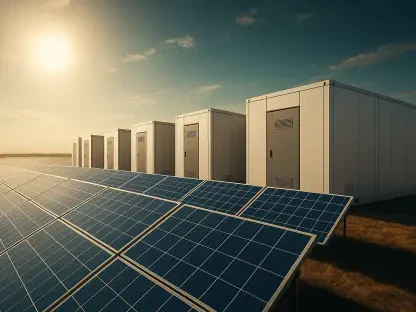
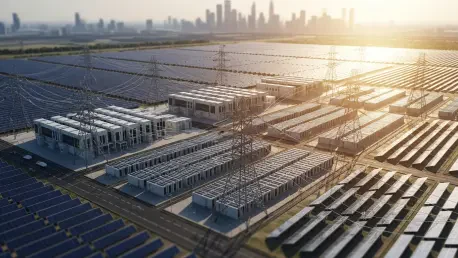
Looking ahead, the success of this market-driven shift depended on the seamless integration of intermittent solar power into the broader national and international electrical grids. The industry shifted its focus toward solar-plus-storage configurations, where massive lithium-iron-phosphate battery arrays helped stabilize output and manage peak demand. Grid operators implemented advanced software solutions to manage the variability of solar generation, utilizing artificial intelligence to predict weather patterns and optimize energy flows in real-time. Stakeholders recognized that for solar to reach its full potential, investments in ultra-high-voltage transmission lines were necessary to transport power from sunny western provinces to industrial centers in the east. Moving forward, developers prioritized the deployment of long-duration energy storage and green hydrogen production to utilize excess solar energy. These actions created a robust framework for a truly decarbonized power sector that operated without the need for traditional price supports. By embracing market-based pricing, the industry ensured that solar energy became a reliable and dominant pillar.