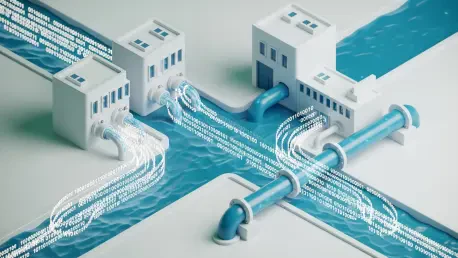

The sudden realization that invisible digital intruders could manipulate the flow of essential life-sustaining resources has sent shockwaves through municipal governments across the Midwest this month. As of 2026, these incidents signaled a troubling departure from traditional data-driven cybercrime, shifting the focus toward the physical mechanisms responsible for purifying and distributing drinking water to thousands of residents. Federal investigators from the FBI and the Cybersecurity and Infrastructure Security Agency immediately launched a multi-state probe to determine the origin and intent of these intrusions. The primary concern among officials was not the loss of sensitive financial information but the potential for unauthorized actors to manipulate water pressure or chemical levels remotely. By targeting the systems that bridge the gap between digital commands and mechanical actions, these intruders demonstrated that critical utilities remain vulnerable in an era where connectivity often outpaces security.
Geographic Impacts: Expanding the Scope of Infrastructure Vulnerability
Initial reports suggested that the breaches were isolated to a handful of small towns, yet the true scale of the operation became clear as Michigan officials identified nine compromised systems. In Minnesota, the situation appeared even more pervasive, with state IT services confirming unauthorized access to more than thirty distinct water treatment facilities. This pattern of digital trespassing was not confined to the Midwest, as federal agencies tracked similar anomalies in five additional states, suggesting a wide-ranging campaign to map the weaknesses of the American utility grid. The investigation revealed that the attackers were not necessarily aiming to cause catastrophic failure but were instead conducting a reconnaissance mission to see how deeply they could penetrate these systems. This systematic probing has raised alarms regarding the overall readiness of smaller municipalities that often lack the specialized cybersecurity personnel found in larger metropolitan areas or private corporate sectors.
Coordination between the Michigan Department of Environment, Great Lakes and Energy and various federal partners allowed for a rapid assessment of the situation across the Great Lakes region. In Minnesota, the technical response team worked around the clock to isolate infected servers and restore administrative control before any physical damage could occur. These teams observed that while the hackers managed to bypass security protocols, their activity was primarily focused on testing the boundaries of the operational software rather than executing harmful commands. This tactical choice suggests a long-term strategy of infiltration rather than a desire for immediate disruption. By understanding how these intruders navigated the networks, state officials gained valuable insights into the specific entry points that require immediate fortification. The findings from these two states are now being shared with utility providers nationwide to ensure that similar vulnerabilities are identified and mitigated before they can be exploited again.
Public Safety: Maintaining Water Standards and Health Confidence
Amidst the technical fallout of the cyberattacks, the immediate priority for state governors and health departments was ensuring that the physical safety of the water supply remained uncompromised. Rigorous testing protocols were activated in every affected municipality, with laboratory technicians checking for abnormal chemical concentrations or biological contaminants that might indicate malicious tampering. The results across both Michigan and Minnesota consistently showed that the drinking water met all federal and state safety standards, providing much-needed reassurance to the public. Officials emphasized that the mechanical safeguards within the treatment plants acted as a second line of defense, preventing digital commands from translating into dangerous physical changes in the water. This resilience was a testament to the robust engineering of modern water systems, which are designed to fail-safe in the event of unexpected interference or loss of power.
The distinction between administrative software breaches and infrastructure-level events is critical for understanding the nature of these recent threats to public safety. While most cyberattacks target email servers or billing databases, these specific incidents focused on the machinery used in the treatment process, such as pumps and chemical injectors. Because the attacks were caught in their early stages, the impact on daily operations was minimal, and no widespread outages were reported by the impacted utility companies. In a few small communities, residents were briefly asked to conserve water as a precaution while the software systems were rebooted and verified manually by local operators. However, these temporary restrictions were lifted within hours as the integrity of the distribution networks was confirmed. No residents were forced to seek alternative water sources, as the primary goal of the response teams was to maintain continuity of service while purging the malicious code from the system.
Technical Origins: Identifying Technical Exploits and Foreign Interference
Technical analysis of the breached systems revealed that the attackers focused their efforts on Operational Technology, specifically targeting the hardware that governs the physical flow of water. Programmable Logic Controllers, which are the specialized computers used to manage valves and chemical dosing, proved to be the most vulnerable point of entry during these attacks. Investigators discovered that many of these controllers were connected directly to the public internet without the protection of robust firewalls or multi-factor authentication. By exploiting these weaknesses, the hackers were able to gain a foothold in the control panels, potentially allowing them to manipulate the readings that operators use to monitor system health. This type of access is particularly dangerous because it can create a false sense of security, where the digital interface shows normal operations while the actual machinery is being tampered with in ways that are not immediately obvious.
The methods used in these Michigan and Minnesota attacks closely mirror the tactics employed by cyber groups previously linked to the Iranian government. While the process of definitive attribution is ongoing and requires a high degree of technical certainty, federal authorities noted that the choice of targets and the specific exploits used were consistent with past Iranian campaigns against industrial hardware. These groups have historically targeted equipment from major global manufacturers, seeking to exploit known vulnerabilities in older software versions that many utilities have yet to update. This geopolitical context adds a layer of complexity to the investigation, as it suggests that the attacks were part of a broader effort to undermine the reliability of critical American infrastructure. By identifying these patterns, national security agencies can better anticipate future targets and develop specialized defense strategies that account for the specific tools and motivations of state-sponsored actors.
The Strategic Outcome: Enhancing Resilience Through Defensive Modernization
To prevent a recurrence of these vulnerabilities, national security agencies recommended the immediate implementation of air-gapping for all critical industrial controllers. This process involved physically disconnecting treatment plant machinery from the public internet, ensuring that a remote digital intruder could not reach the core operational software. Utilities were also encouraged to maintain and regularly practice manual override procedures, which allowed technicians to operate pumps and valves by hand if the digital network became compromised. These structural changes provided a vital safety net that ensured the physical delivery of water remained a localized, human-controlled process rather than a purely automated one. By shifting back to these foundational engineering principles, water systems across the Midwest strengthened their defenses against invisible threats that arrived from across the globe. This shift toward mechanical autonomy represented a significant step in the ongoing effort to harden critical national assets.
The recent experiences in Michigan and Minnesota demonstrated that the safety of local utilities depended on a combination of federal oversight and community involvement. Residents were advised to stay informed through city-specific emergency notification channels, which offered the most accurate and timely information during infrastructure events. Municipalities established clear protocols for citizens to report sudden changes in water odor, color, or pressure, creating an additional layer of human monitoring for the entire system. Educational campaigns helped the public understand that maintaining secure water required more than just digital firewalls; it demanded active participation and awareness from every stakeholder. Local governments invested in new monitoring technologies that operated independently of the main control networks, providing a redundant way to verify water quality in real time. These proactive steps ensured that the communities were better prepared for future challenges, turning the lessons learned from the breaches into a comprehensive blueprint for long-term resilience.