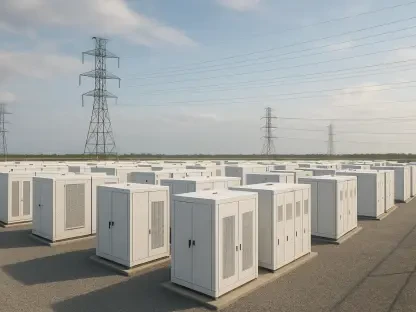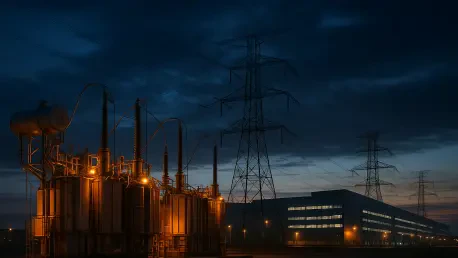

The sudden arrival of massive, gigawatt-scale data centers has transformed the American energy landscape from a predictable utility model into a high-stakes arena of financial risk and technical strain. This rapid expansion recently hit a regulatory wall when a $20 billion data center project in Illinois attempted to secure its place on the power grid with a letter of credit worth exactly one dollar. This nominal gesture, described by FERC Commissioner David LaCerte as an “embarrassing legal fiction,” has exposed a massive loophole in how the United States manages the integration of high-load infrastructure. As massive server farms threaten to overwhelm regional power supplies, the Federal Energy Regulatory Commission (FERC) is being forced to redefine the financial and physical safeguards that keep the lights on for everyone.
The dispute involving Commonwealth Edison and the PowerHouse Hillwood project in Joliet serves as a stark warning. While the developer maintained that it fulfilled its initial contractual obligations with the single-dollar deposit, the commission noted that such a figure fails to reflect the actual risks associated with a 1.8-GW development. This case has become a catalyst for federal regulators to rethink the balance between encouraging innovation and protecting the public from the costs of failed private ventures. Without meaningful credit support, the grid remains vulnerable to speculative projects that could vanish, leaving utilities and their customers to pay for unnecessary upgrades.
The Collision: Big Tech Demands and Aging Infrastructure
The tension between aggressive infrastructure expansion and grid stability has reached a breaking point as data centers transition from localized hubs to behemoths requiring more power than entire cities. The Joliet project represents a microcosm of a national crisis where the rush to power the artificial intelligence revolution risks shifting billions in potential costs onto the public. Regional transmission organizations now face the daunting task of accommodating these massive energy users while the underlying infrastructure struggles to keep pace with the sheer volume of demand.
If a project of this magnitude fails after construction has begun, the financial fallout could be catastrophic for local ratepayers. Without clear regulatory frameworks, developers might secure grid priority without providing the capital necessary to back their massive energy requirements. This creates an environment where everyday consumers essentially subsidize the risk of private tech companies. Establishing a system where developers internalize these costs is not just an economic necessity but a fundamental requirement for maintaining long-term grid reliability in a shifting energy market.
Analyzing the Regulatory Gaps: Current Transmission Security Agreements
The failure of nominal financial guarantees highlights how vague contractual language has allowed multi-billion-dollar developments to bypass meaningful credit support requirements. Current Transmission Security Agreements often lack the precision needed to handle the unprecedented scale of modern data centers. This legal ambiguity creates a jurisdictional tug-of-war, evidenced by FERC deferring specific contract interpretations to federal courts while signaling an urgent need for national policy reform. The current lack of standardization allows for inconsistent “one-off” deals that do not provide the security required for such high-load interconnections.
Furthermore, the economic danger of “large load” projects that fail to provide adequate deposits leaves the entire utility ecosystem vulnerable. When a project collapses, the costs of the transmission upgrades necessitated by that project do not simply disappear; they are often absorbed by the remaining customers on the system. This cost-shifting is a significant risk that current regulatory structures are ill-equipped to prevent. Balancing the immediate energy demands of massive projects with the long-term reliability of Regional Transmission Organizations requires a move toward transparent and scale-proportionate financial benchmarks.
Expert Perspectives: Standardizing Large-Load Interconnections
Commissioner David Rosner has emphasized the necessity of robust security deposits as a “litmus test” to ensure only financially stable and realistic projects move forward. By requiring developers to put significant capital at stake, regulators can filter out speculative applications that clog the interconnection queues. This approach ensures that the limited capacity of the American power grid is reserved for viable projects that contribute to the digital economy without endangering the financial health of the utility system.
Adding to this consensus, Chairman Laura Swett and Commissioner Lindsay See have called for the implementation of “pro forma” cost-recovery agreements. These standardized, “off-the-shelf” contracts are essential for providing legal certainty and ensuring fair cost allocation across the country. Such agreements would eliminate the need for lengthy litigation over individual contract terms and provide a clear roadmap for how large loads should connect to the grid. This reform is seen as a vital step in creating a predictable regulatory environment that supports both technological growth and public interest.
Frameworks for Resilience: Building a Fair Power Grid
Implementing standardized credit support requirements will help the industry transition away from negotiated fees toward transparent financial benchmarks. By defining clear “large load” parameters, FERC can trigger specific regulatory oversight and security protocols that are commensurate with the energy impact of a project. This ensures that a 1.8-GW server farm is held to a higher financial standard than a standard industrial warehouse. These frameworks must necessitate that developers provide security deposits that truly reflect the potential burden their projects place on the collective infrastructure.
The regulatory shift moved the industry toward a model where developers carried the weight of their own energy ambitions. The commission established new benchmarks for equitable cost allocation, ensuring that the infrastructure of the future was not built on the backs of today’s utility customers. By mandating mid-November 2026 compliance filings for regional operators, the agency created a path for consistent cost-recovery language across all systems. These actions preserved grid reliability while allowing the digital economy to flourish under a more equitable and transparent regulatory regime that protected the public interest.