
The total cost of ownership for electric vehicles is increasingly favorable as home charging expenses drop to a fraction of the cost of filling a traditional tank. This economic reality has fundamentally altered the global energy landscape, which currently remains defined by intense volatility and a precarious reliance on geopolitically unstable regions. With a significant portion of the world’s crude oil supply passing through vulnerable maritime corridors like the Strait of Hormuz, any regional tension quickly translates into immediate price spikes at the consumer gas pump. This persistent unpredictability has forced a structural shift in how societies view energy, moving the conversation beyond purely environmental concerns toward a matter of national and personal economic security. While the transition away from fossil fuels was once framed almost exclusively as a strategy to combat climate change, it is now viewed as a central pillar of financial survival in a world of erratic commodity pricing. As traditional petrol and diesel costs fluctuate with every geopolitical tremor, motorists and policymakers alike are assessing whether alternative fuels have finally achieved the stability required to become the primary choice for the global masses.
The Financial Case: Battery Electric Vehicles
Battery electric vehicles have successfully moved from a niche technological experiment to the primary contender for mass-market adoption within a remarkably short period. In major manufacturing hubs like China, the market has reached a level of maturity where high-volume battery production and refined manufacturing consistency have brought several electric models to direct price parity with internal combustion engine counterparts. This achievement represents a critical milestone for the industry, as the initial purchase price has historically been the largest hurdle for consumers considering a switch to cleaner technology. The integration of solid-state components and more efficient thermal management systems has further reduced the cost of entry, allowing manufacturers to offer competitive pricing without sacrificing performance. This trend is largely driven by the sheer scale of investment in local supply chains, which ensures that the cost of lithium and other rare-earth minerals is managed through long-term strategic contracts rather than volatile spot market trading.
In Western markets, however, the transition continues to face significant friction due to higher upfront manufacturing costs and an infrastructure that is still evolving to meet peak demand. Despite these local hurdles, the long-term total cost of ownership is increasingly leaning in favor of electric power over traditional petroleum. With home charging costs remaining significantly lower than refueling a traditional tank, and electric motors requiring far less routine maintenance due to having fewer moving parts, these vehicles offer a level of financial predictability that fossil fuels simply cannot provide. Furthermore, the secondary market for used electric vehicles has begun to stabilize, providing more accurate residual value calculations for leasing companies and individual owners. This stabilization is crucial because it allows financial institutions to offer more attractive interest rates on electric vehicle loans, further lowering the barrier to entry for the middle class. As the charging network expands into rural areas, the utility of these vehicles will continue to grow, solidifying their position as the dominant alternative to the internal combustion engine.
Biofuels: A Seamless Transition Tool
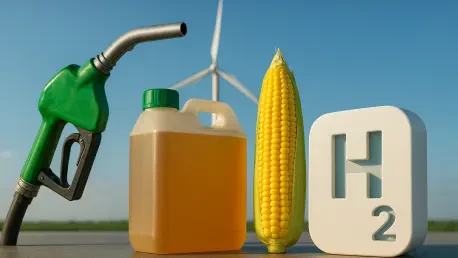
Biofuels represent a more conservative and pragmatic approach to fuel diversification because they function as drop-in solutions that require minimal changes to existing engine architectures. Most modern petrol and diesel blends already contain a mandatory percentage of bioethanol or biodiesel, making this an almost invisible alternative for the average driver. In countries like Brazil, the infrastructure for these fuels is so advanced that flex-fuel vehicles dominate the domestic market, allowing drivers to switch between high-blend ethanol and traditional petrol based entirely on current market pricing at the station. This flexibility provides a powerful buffer against global oil shocks, as domestic agricultural output can be ramped up to meet energy needs when international crude prices become prohibitive. The ability to utilize existing pipelines and fueling stations makes biofuels an attractive short-term strategy for nations that are not yet ready to commit entirely to a nationwide electrical grid overhaul.
Despite their convenience and immediate applicability, biofuels face significant ethical and economic challenges that limit their long-term scalability. The most prominent of these is the ongoing food versus fuel debate, which highlights the risk of using prime agricultural land for fuel production instead of food staples. When large swaths of land are diverted to grow corn or sugarcane for ethanol, it can threaten global food security and drive up the price of basic commodities, leading to inflationary pressures that offset the savings at the pump. Furthermore, because biofuel production is often deeply integrated into existing oil supply chains, their market prices tend to mirror the volatility of the crude oil market rather than remaining independent. This lack of price decoupling means that biofuels fail to provide the same level of protection against energy price shocks as electricity or other decentralized sources. Consequently, while they serve as a vital bridge in the current energy mix, they are increasingly seen as a secondary component rather than a permanent replacement for fossil fuels.
Specialized Roles: LPG and CNG
Liquefied Petroleum Gas and Compressed Natural Gas were once considered the most promising alternatives for budget-conscious drivers and commercial fleet operators. While these gases remain significantly cheaper per unit of energy than traditional petrol, their lower energy density means that vehicles must consume a higher volume of fuel to cover the same distance. This reduction in overall efficiency, combined with the technical requirement for heavy, specialized high-pressure tanks that often consume valuable cargo or passenger space, has limited their appeal to the general motoring public. However, for high-mileage users like taxi drivers or delivery services, the lower fuel price often justifies the initial cost of conversion and the loss of storage capacity. These fuels also offer a cleaner combustion profile, emitting fewer particulates and nitrogen oxides, which has made them popular in urban areas struggling with air quality issues and stringent emissions regulations.
The primary factor hindering the wider growth of gaseous fuels is the lack of a comprehensive and widespread distribution network. As governments and major automotive manufacturers pivot their massive infrastructure investments toward electric charging grids, the incentive to build out or maintain specialized gas refueling stations has largely evaporated in most developed regions. Consequently, the use of these fuels has been relegated to specialized niches and captive fleets, such as municipal public buses and refuse trucks, where vehicles can easily return to a central hub for refueling at a private station. In these controlled environments, the economic benefits of gas are maximized, and the infrastructure limitations are effectively mitigated. Without a massive and unlikely influx of new capital to expand the public refueling footprint, it is expected that these fuels will continue to serve a declining share of the passenger vehicle market while remaining a viable tool for specific industrial and public service applications.
Hydrogen: The Future of Heavy Industry
Hydrogen fuel cell technology is frequently viewed as the ultimate alternative to fossil fuels because it offers the long driving ranges and fast refueling times that consumers have come to expect, all with zero tailpipe emissions. However, the current high costs of manufacturing these specialized vehicles and the near-total lack of a public refueling infrastructure make them unviable for the average consumer in the current market. Additionally, the energy-intensive process of producing, compressing, and storing hydrogen remains a significant economic barrier that prevents it from competing with the relative simplicity of battery storage. Most hydrogen today is still produced from natural gas through steam methane reforming, which undercuts the environmental benefits and keeps the fuel price tied to the fluctuations of the natural gas market. Transitioning to green hydrogen produced through electrolysis requires massive amounts of renewable electricity, adding another layer of complexity to the supply chain.
The true economic potential for hydrogen lies in heavy-duty commercial applications rather than standard passenger cars. Industries that require immense power and cannot afford the long downtime associated with battery charging, such as long-haul trucking, international shipping, and heavy construction, are the most likely candidates to adopt hydrogen technology. A large freighter or a transcontinental semi-truck would require batteries so heavy that they would displace a significant portion of the vehicle’s payload, making electricity an inefficient choice for heavy logistics. Hydrogen provides the high energy density needed for these demanding tasks while allowing for refueling speeds comparable to diesel. As the maritime and logistics sectors face increasing pressure to decarbonize, the investment in hydrogen hubs at major ports and along primary freight corridors is expected to accelerate. This targeted infrastructure development will likely create a specialized hydrogen economy that exists alongside the passenger-focused electric grid.
Resilience: The Path Toward Energy Sovereignty
The global pivot toward alternative fuels has ceased to be a movement driven solely by environmental idealism; it has matured into a strategic maneuver intended to achieve national energy independence. By diversifying the energy mix through a combination of local electricity production, biofuels, and hydrogen, nations have begun to insulate themselves from the geopolitical shocks that traditionally disrupt the international oil markets. This shift is supported by a growing focus on the total cost of ownership, where consumers have started to look past the initial sticker price to the long-term savings offered by more stable and predictable energy sources. Governments have also recognized that domestic energy production through renewables and alternative fuels keeps capital within the local economy rather than exporting it to oil-producing regions. This economic retention has fueled further innovation in storage technology and grid management, creating a self-sustaining cycle of technological advancement and financial resilience.
In retrospect, the transition toward a diversified fuel ecosystem represented the most significant shift in transportation since the invention of the assembly line. It was observed that the internal combustion engine’s century-long monopoly finally eroded as stakeholders prioritized long-term fiscal stability over short-term convenience. Policymakers successfully implemented tiered incentives that encouraged the development of localized energy solutions, which effectively decoupled the cost of mobility from the volatility of global crude prices. The integration of various technologies allowed different sectors to adopt the specific fuels that best suited their operational requirements, creating a robust and flexible infrastructure. As the global community moved toward these diversified systems, the focus shifted toward optimizing the efficiency of these new platforms and ensuring equitable access to charging and refueling networks. This era was defined by a collective realization that true energy security required a mosaic of solutions rather than a single, universal fuel source.