
The volatility of the Texas power grid has shifted from a localized concern to a catalyst for a global revolution in residential energy management. Tesla is no longer just a vehicle manufacturer; it has effectively transformed into a digital utility company by integrating its Powerwall hardware with a specialized retail electricity plan known as Tesla Electric. This shift represents a fundamental change in how homeowners interact with the electrical grid, moving away from passive consumption toward a model where every household acts as a miniature power plant. By leveraging the unique deregulation of the Texas market, the company is demonstrating that energy storage and intelligent software can solve the long-standing issues of reliability and cost. As the state continues to grapple with extreme weather and aging infrastructure, this strategic pivot provides a glimpse into a world where the distinction between a car company and a power company completely vanishes. This transition is set to define the next decade of American energy infrastructure.
Transforming Home Energy Through Vertical Integration
Financial Mechanics: Breaking Down the Texas Bundle
The primary obstacle to widespread home energy storage has always been the staggering upfront investment required for high-capacity battery systems. Tesla has addressed this hurdle by introducing a bundled lease program that fundamentally alters the financial barrier for the average Texan household. Instead of asking customers to provide thousands of dollars for the purchase of equipment, the company maintains ownership of the hardware while providing comprehensive installation and maintenance services. This arrangement includes two Powerwall units, which offer enough storage capacity to keep a standard home functional during significant grid outages or peak demand periods. By retaining the title to the assets, Tesla ensures that the technology remains updated and properly managed, which removes the technical anxiety often associated with complex renewable energy systems. This shift from an ownership-based model to a subscription-style service mirrors the broader trend of energy-as-a-service in modern economics.
Economic Incentives: The Impact of Virtual Power Plant Credits
The financial logic of this program becomes even more compelling when examining the interaction between the hardware lease and the Virtual Power Plant credit system. While the nominal lease price for the battery equipment is set at $122 per month, participating homeowners receive a recurring monthly credit of $87 in exchange for allowing Tesla to manage their stored energy during grid events. This reduces the net monthly hardware expense to a mere $35, which is often less than the price of a basic streaming subscription or a couple of daily coffee runs. When combined with a fixed electricity rate through Tesla Electric, the customer gains a level of budgetary predictability that is virtually unheard of in the volatile Texas energy market. This system allows the homeowner to benefit from backup power and energy independence while simultaneously earning revenue from the grid-stabilization services their batteries provide. It is a symbiotic relationship where the customer provides storage space.
Competing in the New Decentralized Energy Landscape
Market Competition: Strategic Responses to Grid-Service Rivals
Tesla is not the only player recognizing the immense potential of the Texas energy market, as several agile startups have begun to challenge the established order with similar decentralized models. Companies like Base Power have emerged as formidable rivals, focusing on a strategy that integrates battery ownership with retail energy services to undercut traditional utilities. These competitors often install oversized battery systems that exceed the immediate needs of a single home, specifically to maximize the amount of energy that can be traded back to the grid during periods of peak demand. This competitive pressure has forced Tesla to refine its approach, ensuring that its software ecosystem remains the most efficient at predicting when to charge from the grid and when to discharge for profit. The resulting market environment is one where the value of a home battery is no longer measured solely by its storage capacity, but by its ability to participate in high-frequency energy trading at any time.
Value Shift: Managing Energy Capacity Versus Hardware Sales
As the home energy storage market matures, the industry is witnessing a significant shift in value away from physical hardware and toward the intelligent management of energy capacity. The era of the early adopter has largely concluded, giving way to a period where batteries are viewed as essential infrastructure rather than luxury gadgets. By controlling both the physical Powerwall units and the retail electricity contract, Tesla can optimize energy flows with a level of precision that third-party aggregators cannot match. This vertical integration allows the company to capture the spread between wholesale and retail prices, using those profits to subsidize the customer’s monthly costs and maintain a competitive edge. This strategy effectively turns the residential sector into a vast, distributed battery that can be manipulated in real-time to stabilize the entire regional network. In this new landscape, the winner is the company that can most effectively orchestrate thousands of individual batteries.
Utilizing Texas as a Laboratory for Grid Stability
Laboratory: Virtual Power Plants and Regional Grid Support
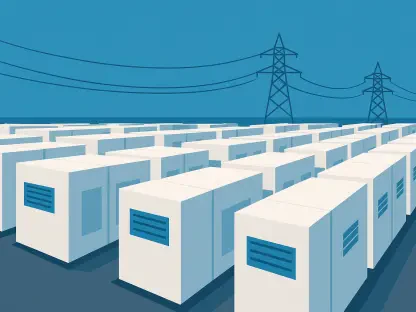
Texas represents a unique laboratory for these energy innovations due to its distinct, deregulated market structure managed by the Electric Reliability Council of Texas, or ERCOT. Unlike other regions where utility monopolies control both production and distribution, the Texas system allows for the flexible movement of electricity and decentralized participation from small-scale assets. This regulatory environment is the foundational requirement for a Virtual Power Plant, where thousands of scattered batteries are aggregated into a single, massive storage resource that behaves like a traditional power station. When the grid faces a sudden spike in demand or a drop in supply, Tesla can remotely signal its network of Powerwalls to stop drawing power and start injecting it back into the system. This collective response happens in milliseconds, providing a layer of resiliency that is far more responsive than waiting for a large gas plant to spin up. The scale of this operation in Texas is now immense.
Utility Transformation: Tesla as the Retail Electricity Provider
The current strategy in Texas is a significant evolution from previous pilot programs seen in states like Massachusetts or California, where Tesla often acted merely as an equipment provider or a secondary aggregator. In those older frameworks, the customer maintained their primary relationship with a traditional utility company, which often created friction in terms of billing and operational control. In Texas, however, Tesla has taken the bold step of becoming the retail electric provider itself, assuming the role of the primary utility for the homeowner. This total control over the customer relationship allows Tesla to deploy its distributed energy resource strategy without interference from legacy power companies that might see home batteries as a threat to their business models. By replacing the traditional utility, Tesla can offer a more seamless experience where the hardware, the software, and the electricity bill are all integrated. This model helps the state avoid massive capital costs.
Scaling Long-Term Growth in a Competitive Market
Growth Model: Building an Energy-as-a-Service Business
The expansion of Tesla’s energy division has been characterized by explosive growth, with battery storage deployments across the globe doubling year over year as demand for grid stability increases. While massive industrial-scale projects for large utilities continue to represent the majority of the total energy capacity deployed, the residential sector remains a vital component of the company’s long-term brand identity. The transition to a lease and service model is a calculated move to protect against the inevitable commoditization of battery hardware, which sees falling prices as more manufacturing capacity comes online. By shifting the focus toward recurring service revenue, the company builds a more resilient business model that is less vulnerable to the price wars typically seen in the hardware industry. This pivot ensures that the company remains profitable not just by selling a box on a wall, but by managing the valuable energy that flows through it every day to serve the local grid.
Strategic Evolution: The Blueprint for Future Grid Resiliency
The implementation of the Texas model demonstrated that the path toward a stable and affordable energy future required a departure from centralized, top-down infrastructure. Stakeholders and homeowners who moved toward these integrated battery leases found that they could mitigate the risks of high energy costs while contributing to the overall health of the local grid. For policymakers in other regions, the success of this decentralized approach suggested that deregulation and technological incentives were necessary to unlock private investment in grid resiliency. Those who participated in these early programs discovered that the value of their homes increased as they became part of a larger, more reliable energy network. Moving forward, the focus shifted toward expanding these Virtual Power Plant frameworks to include electric vehicle batteries, further deepening the pool of available storage. This strategic evolution proved that the best way to handle grid instability was to empower consumers.