
Unlocking the Earth’s Deepest Thermal Secrets
The search for a carbon-free, baseload power source has led the global community to investigate the extreme thermal potential located miles beneath the Earth’s surface. As the race to decarbonize the energy grid intensifies, the limitations of intermittent sources like solar and wind have become more apparent, necessitating a reliable 24/7 alternative. The geothermal sector has recently emerged as a primary contender for this role, particularly with the arrival of substantial capital injections into deep-crust exploration. A recent infusion of $135 million into companies like Mazama Energy signals a shift in market sentiment, moving the technology away from experimental curiosity toward industrial-scale deployment. This investment, backed by venture capital and oil industry leaders, aims to unlock the virtually inexhaustible heat stored in the bedrock of volcanic regions like Oregon’s Newberry Volcano.
The current market analysis suggests that superhot rock technology is no longer a peripheral concept but a central pillar of the future energy strategy. By targeting depths where temperatures exceed 600 degrees Fahrenheit, engineers are attempting to access energy densities that dwarf those of traditional geothermal plants. This article explores how these engineering feats and financial commitments are establishing a roadmap for a world powered by the core of the planet. The focus remains on the transition from shallow, natural steam vents to the deep, engineered reservoirs that could soon define the modern energy landscape. Consequently, the progress made in these volcanic “laboratories” serves as a benchmark for the global energy transition.
From Natural Hot Springs to Engineered Reservoirs
For a significant portion of the last century, geothermal energy remained a niche resource restricted to regions where tectonic activity brought steam or hot water to the surface. Conventional facilities in Iceland and parts of Northern California flourished by tapping into these rare geological accidents. However, the vast majority of the Earth’s thermal energy is trapped in dry, impermeable rock far deeper than traditional drilling technology could reach. This historical limitation meant that geothermal power contributed only a fraction of the global renewable output. The current shift toward Enhanced Geothermal Systems (EGS) represents a paradigm shift, effectively decoupling geothermal potential from specific surface-level geography.
The evolution of EGS is often compared to the shale revolution in the oil and gas industry because it involves creating a resource where nature did not provide one. Instead of searching for natural aquifers, engineers are now developing methods to build their own plumbing systems deep within the Earth’s crust. By creating man-made fractures in solid bedrock, it becomes possible to circulate water through a closed-loop system, harvesting heat from almost any location with sufficient depth. This transition from passive harvesting to active reservoir engineering is what allows the market to project geothermal as a scalable, global solution rather than a regional specialty.
Breaking the Depth Barrier: The New Frontier of Heat
Engineering High-Temperature Geothermal Systems
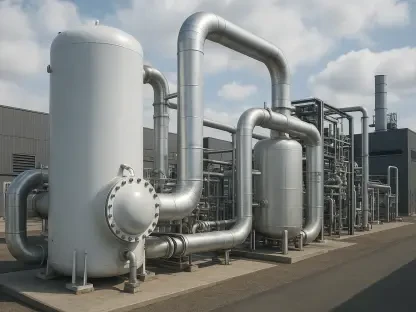
The primary technical challenge in the current market involves moving beyond the constraints of shallow drilling to reach the “superhot” environment. Mazama Energy and similar firms are utilizing EGS to engineer reservoirs in solid basement rock miles beneath the surface. This process requires drilling into formations that reach temperatures exceeding 600 degrees Fahrenheit, far beyond the limits of standard geothermal operations. In this high-temperature environment, water is injected into man-made fractures where it absorbs intense thermal energy. The water then returns to the surface as high-pressure steam, driving turbines before being cooled and reinjected. This closed-loop cycle ensures that the process remains carbon-free and sustainable, as the water is constantly recycled through the deep-earth heat exchanger.
Scaling Through Multi-Phased Development Projects
Commercial viability is being pursued through aggressive, multi-phased initiatives that aim for rapid output increases between 2026 and 2030. Project Ceres, a prominent developmental phase, focuses on utilizing horizontal drilling to generate 15 megawatts of power by 2027. This capacity is sufficient to power thousands of homes, providing a critical proof-of-concept for the scalability of horizontal techniques in volcanic rock. Following this, Project Athena aims to push the boundaries of energy density by drilling to depths of 15,000 feet. By accessing hotter rock at these greater depths, a single well can produce significantly more electricity than its predecessors. This evolution is vital for reducing the physical footprint of energy plants and lowering the number of wells required, making the technology more competitive with fossil fuels.
Overcoming Technical and Economic Hurdles
Despite the immense potential, the superhot rock environment presents extreme operational difficulties that have historically deterred investment. Traditional drilling equipment often fails under the intense pressure and corrosive heat found five miles below the surface. However, recent operational milestones suggest that the learning curve is being conquered with remarkable speed. Recent trials at the Newberry Volcano showed that subsequent wells could be drilled 80% faster than initial attempts, a metric that is crucial for economic feasibility. With daily drilling costs often exceeding $100,000, these efficiency gains are essential for attracting long-term private capital. Furthermore, the convergence of expertise from the oil and gas sector is providing the technical “know-how” and massive capital needed to scale these capital-intensive projects.
The Evolution of the Geothermal Energy Landscape
As the technology matures, a distinct “gold rush” of innovation is appearing in volcanic regions across the Pacific Northwest. New technologies, such as millimeter-wave drilling which uses high-frequency energy to vaporize rock, are currently being tested to reach depths previously thought impossible. For instance, companies are aiming for plants with 50-megawatt capacities by the end of the decade. The economic landscape is also shifting as the demand for “always-on” green energy grows, driven largely by the massive power requirements of AI data centers. These facilities require a constant supply of electricity that solar and wind cannot provide without massive battery storage, making the geothermal baseload model highly attractive to tech giants.
Moreover, the regulatory and institutional environment is beginning to favor deep-heat projects through federal auctions of geothermal rights on public lands. In recent months, thousands of acres on Mount Hood National Forest were auctioned to energy developers, signaling that the infrastructure for a deep-heat economy is officially under construction. This institutional support, combined with private sector competition, is creating a robust ecosystem for geothermal growth. We can expect a continued trend toward the integration of geothermal power into national grids as a primary defense against energy price volatility and weather-dependent power shortages.
Strategic Paths for a Geothermal Transition
For the potential of superhot rock to be fully realized, energy planners must transition from pilot programs to large-scale industrial integration. One strategic recommendation involves the creation of “geothermal hubs” where shared infrastructure and shared drilling data can reduce the overhead costs for multiple developers. This collaborative approach would mirror the success of early industrial parks, allowing for a more rapid expansion of the geothermal footprint. Additionally, the workforce must be prepared for this transition. There is a clear path for pivoting skills from the fossil fuel sector toward high-temperature drilling and reservoir management. The technical similarities between oil exploration and geothermal drilling provide a unique opportunity for a “just transition” for thousands of workers.
Furthermore, educational institutions are encouraged to follow the lead of programs in Oregon, which have established benefits agreements to train the next generation of geothermal technicians. By establishing specialized curricula in high schools and community colleges, regions can ensure they have the local expertise to maintain these complex energy systems. Treating geothermal as a vital component of national security and grid stability will allow nations to secure a steady supply of power that remains immune to global fuel price fluctuations. The strategic focus must remain on scaling the technology while simultaneously building the human capital required to sustain it.
Embracing the Heat Beneath Our Feet
The analysis of the superhot rock geothermal sector revealed that the technology stood at the threshold of a major commercial breakthrough. The transition from harvesting natural steam to engineering deep-crust reservoirs provided a clear path toward a limitless, carbon-free baseload power source. It was observed that the $135 million investment in the Newberry Volcano site served as a catalyst for a broader regional energy shift. Stakeholders identified that the success of projects like Ceres and Athena relied heavily on the integration of oil-industry drilling techniques and aggressive efficiency improvements. Furthermore, the findings suggested that the rising demand from data centers and the industrial sector made geothermal’s constant output more valuable than ever before.
The investigation into local economic impacts showed that workforce development and community agreements were essential for long-term project viability. The results indicated that the Pacific Northwest was successfully positioning itself as a global leader in geothermal innovation. Ultimately, the progress made during this period demonstrated that the heat beneath the surface was not just a theoretical resource but a practical solution for a modern power grid. The actions taken by regulators and private firms during this phase established the foundational infrastructure for a future independent of fossil fuels. It was concluded that the continued refinement of deep-drilling technology remained the most significant factor in achieving global energy security.